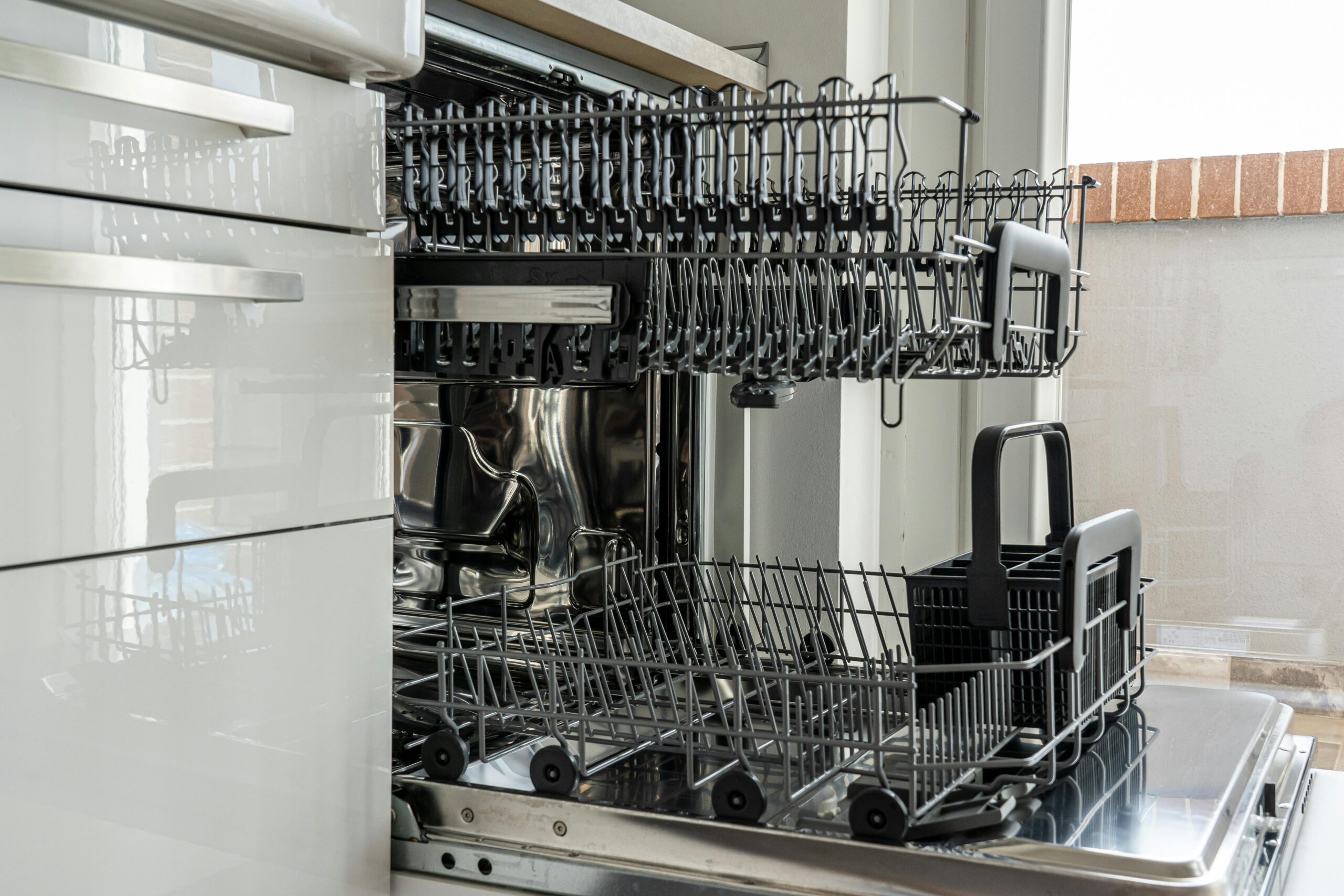
You’ve been there. You unload the dishwasher only to find crusty bits stuck to your plates, cloudy glasses, or that one fork that somehow came out dirtier than it went in. The problem isn’t always your dishwasher; it’s how you’re loading it.
Most people treat dishwasher loading like a game of Tetris, cramming in as much as possible. But getting truly clean dishes requires strategy, not just space efficiency.
The Science Behind Clean Dishes
Your dishwasher works by spraying hot water mixed with detergent from rotating arms at the bottom and sometimes the top. Water needs to hit every surface of your dishes to clean them properly.
When you block the spray arms or nest dishes together, you create dead zones where water can’t reach. That’s why you pull out dishes with dried food still attached.
The water typically comes from below, which means angling dishes correctly makes a huge difference. Face dirty surfaces downward and toward the center where spray pressure is strongest.
Bottom Rack Strategy
The bottom rack handles your heaviest, dirtiest items. Plates, pots, pans, and large bowls belong here.
Place plates in the slots provided, facing the center. Don’t overlap them—even slightly. That gap between plates isn’t wasted space; it’s the pathway for water to reach both sides.
Large bowls and pots should go along the sides or back, angled downward. Never lay them flat or place them face-up. Water will pool inside instead of draining, leaving you with dirty dish soup.
Cutting boards fit better along the outer edges. Position them so they don’t block the detergent dispenser door from opening mid-cycle.
Baking sheets and large platters can go on the bottom, but only if they don’t block the spray arm’s rotation. Test it by spinning the arm manually before starting the cycle.
Top Rack Tactics
The top rack is for delicate items: glasses, mugs, small bowls, and plastic containers.
Place glasses and mugs between the tines, not over them. Angle them downward so water doesn’t collect inside. If you notice water pooling in your mugs after a cycle, you’re not angling them enough.
Small bowls should nest at an angle, not straight up. A 45-degree tilt lets water reach inside while still draining properly.
Keep plastics on the top rack only. The heating element at the bottom can melt or warp them. Even “dishwasher-safe” plastic has its limits.
Wine glasses need extra care. If your dishwasher has fold-down glass holders, use them. Otherwise, space glasses far apart so they can’t knock into each other during the wash cycle.
Silverware Secrets
The silverware basket causes more debate than any other dishwasher feature. Here’s what actually works.
Mix up spoon and fork directions. If all your spoons nest together bowl-to-bowl, they won’t get clean. Alternate some handles up, some handles down.
Knives should always go handle-up for safety. You don’t want to reach in and grab a blade.
Keep similar items separated. Group one section of forks, another of spoons, but don’t let them cuddle together. They need water flow between them.
Some dishwashers come with a third rack specifically for flatware. Use it. Laying silverware flat on this rack gives each piece maximum water exposure.
The Pre-Rinse Question
You don’t need to pre-rinse your dishes, but you should scrape them.
Modern dishwashers and detergents are designed to handle food particles. The enzymes in the detergent actually need some food residue to work effectively. Pre-rinsing can make your dishes less clean, not more.
That said, chunks of food don’t belong in your dishwasher. Scrape plates into the trash or compost. Let your dishwasher handle the rest.
Hard, dried-on food is the exception. Soaking or a quick scrub will save your dishwasher from extra work.
What Never Goes in the Dishwasher
Some items will get ruined, or worse, ruin your dishwasher:
- Cast-iron skillets lose their seasoning.
- Wooden cutting boards and utensils crack and warp.
- Sharp kitchen knives get dulled faster.
- Fine china and hand-painted dishes fade.
- Crystal can etch or crack.
- Nonstick pans deteriorate faster.
- Copper and brass tarnish.
- Insulated mugs and travel cups can lose their seal.
- Anything with a “hand wash only” label.
Loading Mistakes That Guarantee Dirty Dishes
Blocking the detergent dispenser is dishwasher loading mistake number one. If a large plate or pot prevents the dispenser from opening, your dishes will wash in plain water. Check that the dispenser door can swing open freely.
Overloading seems efficient, but it wastes water and energy. Dishes come out dirty, so you either wash them again or hand-wash the problem items. One properly loaded cycle beats two poorly loaded ones.
Nesting items is tempting but counterproductive. Bowls stacked inside each other, spoons cuddling in the basket, or plates pressed too close together create barriers that water can’t penetrate.
Detergent and Rinse Aid Matter
Use the right amount of detergent. Too little won’t clean effectively. Too many leaves can cause residue and even damage your dishwasher over time.
Most modern detergents are concentrated. One tablespoon of powder or one pod is usually enough. Soft water needs less detergent than hard water.
Rinse aid isn’t optional, it’s essential for spot-free dishes and faster drying. It reduces water surface tension, helping water sheet off instead of beading up.
Fill the rinse aid dispenser when the indicator light comes on. Set the dispenser to the middle setting and adjust based on results.
Special Cases and Problem Items
Pots and pans take up valuable space, but they can go in the dishwasher if positioned correctly. Angle them along the sides of the bottom rack, ensuring they don’t block spray arms or other dishes.
Water bottles and containers with narrow openings need special attention. Place them upside down over the tines, not between them. The tines help prop them open so water can spray inside.
Graters, sieves, and other items with small holes should go on the top rack, where water pressure is gentler but still effective. Face the dirtiest side downward.
Reusable straws and small items can fall through the racks. Use a small basket or mesh bag designed for baby bottle parts.
The Spin Test
Before you start any cycle, spin both spray arms with your hand. They should rotate freely without hitting anything. If they’re blocked, rearrange your load.
This simple check prevents an entire cycle from being wasted on partially washed dishes.
Cycle Selection Matters
Match your wash cycle to your load. Light cycles use less water and work fine for lightly soiled dishes. Heavy cycles are for pots, pans, and dishes with dried-on food.
The quick cycle might seem efficient, but it’s really just for dishes that are already mostly clean—think rinsed wine glasses after a dinner party.
Auto or sensor cycles are your best bet for mixed loads. The dishwasher adjusts water temperature, pressure, and cycle length based on how dirty the dishes are.
Maintenance Keeps Everything Working
Check and clean the filter monthly. A clogged filter reduces water pressure and cleaning power. Most filters twist out easily from the bottom of the dishwasher.
Run the dishwasher empty with a dishwasher cleaner every three months. This removes buildup, grease, and odors.
Wipe down the door edges and gasket weekly. Food particles and grime collect there and can cause odors or poor sealing.
When Dishes Still Aren’t Clean?
If you’re loading correctly but still getting dirty dishes, the problem might be your dishwasher, not your technique.
Check water temperature. Your dishwasher needs water at least 120°F (49°C) to clean effectively. Run your kitchen sink until the water is hot before starting the dishwasher.
Hard water causes problems in many areas. Consider a water softener or use a detergent with built-in water softening agents.
Old detergent loses effectiveness. Replace the detergent that’s been sitting open for more than a few months.
Spray arms can get clogged with mineral deposits or small food particles. Remove them and clean the holes with a toothpick.
The Real Goal: Efficiency and Results
Proper dishwasher loading isn’t about following rigid rules. It’s about understanding how water flows and giving every dish the exposure it needs to come out clean.
You’ll save water, energy, and time. More importantly, you’ll stop rewashing dishes by hand or pulling out crusty plates at dinner time.
Start with these principles, adjust based on your specific dishwasher and dish types, and you’ll quickly develop a loading pattern that works every time.