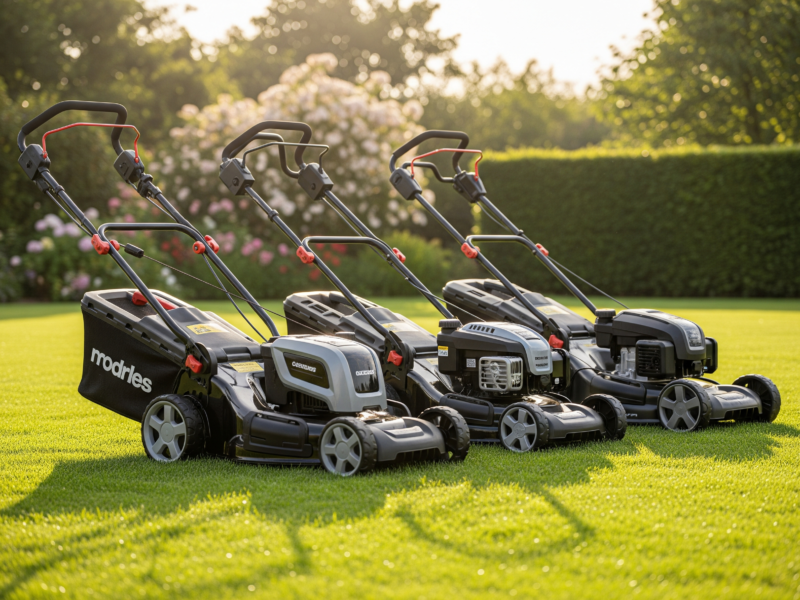
Whoever is hiding in your garage is probably responsible for your grass looking like it just got a poor haircut. Everyone here has been there. The engine produces a cloud of blue smoke as it coughs out the cord twenty times; nevertheless, when it does start, it rips the grass instead of cutting it.
Even if it’s annoying, the worst part is that you won’t need to spend $500 on a brand new computer.
Restoring a worn-out lawnmower to its former glory serves a practical purpose beyond just self-indulgence. Engine health and turf longevity are the key considerations. A poorly functioning mower does more than look terrible; it actually promotes the spread of lawn diseases.
Let’s dissect the process step by step so that you can turn that old beast back into a precision cutting machine.
The Secret is in the Blade: Sharpening and Balancing
When a mower doesn’t cut grass, it’s usually because the blade is dull. Imagine trying to shave with a dull, rusted razor. There will be pain and chaos as a result. The blade is the enemy if the tips of your grass remain brown or appear “shredded” even after a day of mowing.
Why Sharpening Isn’t Enough?
Most people think a little file grind will do the trick. No, it is incorrect. Consider the edge’s angle and balance before anything else. The extreme vibrations produced by an unbalanced blade could damage your engine’s internal seals or crankshaft.
- In terms of angle, shoot for 30 degrees. “Razor” sharp isn’t what you’re after; once it made contact with a twig, it would simply roll over. A clean, sharp “butter knife” is what you’re after.
- The Base: A simple nail in the wall will do the trick, or you can use a blade balancer. If the heavy end dips, grind off a bit more metal.
- As a general rule, you should cease using your blade if it has large chips or if the “wings” (the components that provide lift) are excessively worn down. Replumb it. We must prioritise safety.
How to Sharpen Like a Pro?
- Unplug the ignition coil. We will not budge on this. Keep your fingers off the blade so the engine doesn’t start.
- Prop it up properly. The air filter should be facing up at all times when you tip the mower. Oil will overflow your carburettor if you tip it the other way, which will cause a much worse problem.
- Make use of a file or bench grinder. Stick to the preexisting bevel. Do not make another one.
Deep Cleaning the Deck: Why Airflow Matters?
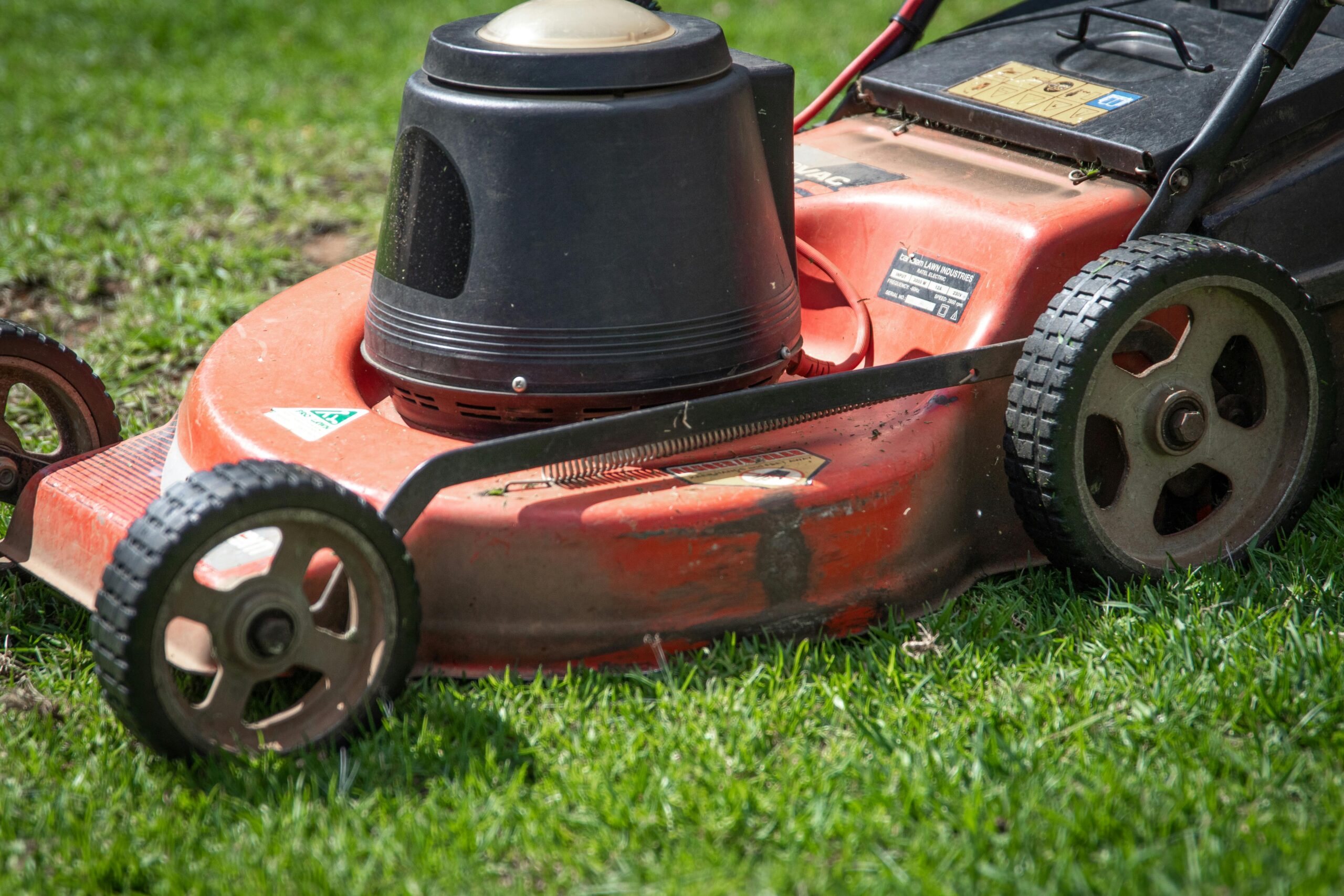
The number of individuals who fail to inspect the underside of their mower is shocking. The “crust” beneath the deck is formed over time by damp detritus, mud, and grass. This isn’t only unpleasant; it hinders the performance.
The Physics of the Cut
Just like a vacuum, your mower. A spinning blade lifts the grass into an upright position, which it then chops. Dried grass compacted on the deck eliminates any possibility of airflow. The blade glides across the flattened grass.
Scrubbing the deck clean can give it that “like new” look. To do this, you’ll need a deck scraper or a putty knife. Applying a graphite-based spray lubricant once you’ve reached the metal may be a good idea. Thus, the air remains swift, and no accumulation is allowed to occur in the future.
Tip: Never leave a high-pressure hose wet on your mower deck after washing it. Any standing water on the spindles or close to the mandrels can hasten the rusting process more rapidly than you can say “lawn care.” After washing, always give the mower a quick run for five minutes to dry everything out using the heat and wind.
Wake Up the Engine: The Tune-Up Trio
You have to get to the “heart” of the lawnmower if you want to know how to have it cutting like new again. The engine needs a tune-up if it gets stuck in a dense patch of grass. This is just routine upkeep; it’s not complicated.
1. The Spark Plug
“Searching” (in which the RPMs bounce up and down) and hard starts are symptoms of a fouled spark plug. One can get a fresh plug for approximately $4.
- Evaluate the space using a feeler gauge.
- To avoid stripping the threads in the engine head, be careful not to overtighten it.
2. The Air Filter
Attempting to complete a marathon while inhaling through a thick wool sock must be quite an ordeal. If your mower’s filter is dirty, it will feel like that.
- Toss out any paper filter that won’t let light through.
- After rinsing with warm, soapy water and letting them dry entirely, apply a little amount of clean motor oil to the foam filters. Flatten it till it’s only “tacky.”
3. Fresh Oil
Oil in a small engine doesn’t just lubricate; it cools. Old, black oil is full of microscopic metal shards and carbon. Drain it while the engine is slightly warm; it flows better and carries more gunk out with it. Most walk-behind mowers take SAE 30 or 10W-30. Check your owner’s manual for the exact capacity.
Annual Maintenance Checklist
| Task | Frequency | Why it Matters |
| Blade Sharpening | Every 25 hours | Ensures a clean cut and prevents grass disease. |
| Oil Change | Once per season | Prevents engine overheating and internal wear. |
| Air Filter Check | Every 10 hours | Maintains fuel efficiency and power. |
| Deck Scraping | After every 2nd mow | Maintains airflow for proper “lift” and mulching. |
| Spark Plug | Once per year | Ensures easy starting and smooth idling. |
The Fuel System: Dealing with the “Ethanol Headache”
Whether you’re using an old or new lawnmower, modern fuel is your biggest enemy. Roughly 10% of all gas is ethanol. The substance attracts moisture like a magnet. After 30 days of sitting, gas in a mower can transform into a varnish-like sludge that can block the carburetor’s small passageways.
Fixing a Surging Engine
The carburettor needs cleaning if your lawnmower “hiccups” when started or only runs when the choke is engaged.
- The Simple Solution: Clean the fuel system using a good-quality product. Put some in the tank and turn it on.
- The Actual Solution: Remove the bowl from the base of the carb. Use a tiny wire to clean the “jet”—the bolt that holds the bowl on. In most cases, the little hole in this bolt becomes clogged.
The Golden Rule of Fuel
For tanks that won’t be empty in a month, a gasoline stabiliser is an absolute must. A better option would be to locate a petrol station that offers “Ethanol-Free” (Rec-90) gasoline. While it may be more costly initially, it will end up saving you hundreds of dollars in repair costs during the machine’s lifetime.
Adjusting the Cutting Height and Deck Level
Your lawn will resemble a topographical map of the Andes even if you have a brand-new engine and a razor-sharp blade. The wheels may get “wobbly,” or the adjustment levers may become worn out over time.
How to Level the Deck?
- Prepare a level area (such as the floor of your garage) to park the mower on.
- Locate the centre of gravity and measure both sides up to the blade’s tip.
- Make sure the wheels are the same height by adjusting them.
Expert Tip: Keep your cuts to no wider than a third of the blade length. Do not instantly reduce the mower height to 2 inches if the grass is 6 inches tall. The engine and the plant will be overworked. Start with a 4-inch cut, give it two days to rest, and then trim it shorter.
Cables, Belts, and Wheels: The “Smoothness” Factor
With a well-designed mechanical linkage, a mower can go from feeling like a luxury vehicle to a shopping cart with a flat tyre.
- Get the Cables Lubricated: Run a little silicone lubricant or WD-40 down the throttle and brake cable sleeves. It keeps the controls from slipping and gives them a responsive feel.
- If your self-propelled mower isn’t moving quickly enough, check the drive belt. Check for fissures or “glazing,” a glossy look, if any are present. If it appears worn, replace it.
- Lubricating the wheel axles with grease or oil makes pushing the mower easier, which in turn decreases your physical exertion.
The Verdict: Is It Worth the Effort?
Fixing up a beat-up lawnmower is a do-it-yourself effort that will pay for itself in the end. Being a better steward of your gear means more than just saving money. If your 20-year-old mower starts on the first pull and leaves a professional-grade stripe in the grass, you’ve got some “baller energy” on your hands.
You shouldn’t allow the “shiny object syndrome” to make you throw out your old lawnmower. The majority of these devices are constructed from sturdy steel and equipped with basic engines that are eager to move. All they really need is some tender loving care, a sharp edge, and some new fluids.
FAQs
When is the best time to sharpen my lawnmower blade?
Two times a year, in the spring and again in the middle of summer, is more than enough sharpness for the majority of residential lawns. But sharpen it right away if you hit anything significant, like a boulder or a branch.
Will motor oil work in my lawnmower?
In most cases, yes. Modern compact engines can easily use 10W-30 motor oil. In warmer climates, air-cooled engines frequently use “straight 30” (SAE 30) oil because it doesn’t thin out as much when heated.
My lawnmower is producing white smoke; what gives?
If you’re burning oil, you should expect to see white smoke. Incorrectly tipping the mower during cleaning is a common cause of this. Just give it a few minutes to run, and it should burn off. A blown head gasket or damaged piston rings could be to blame if it continues.