
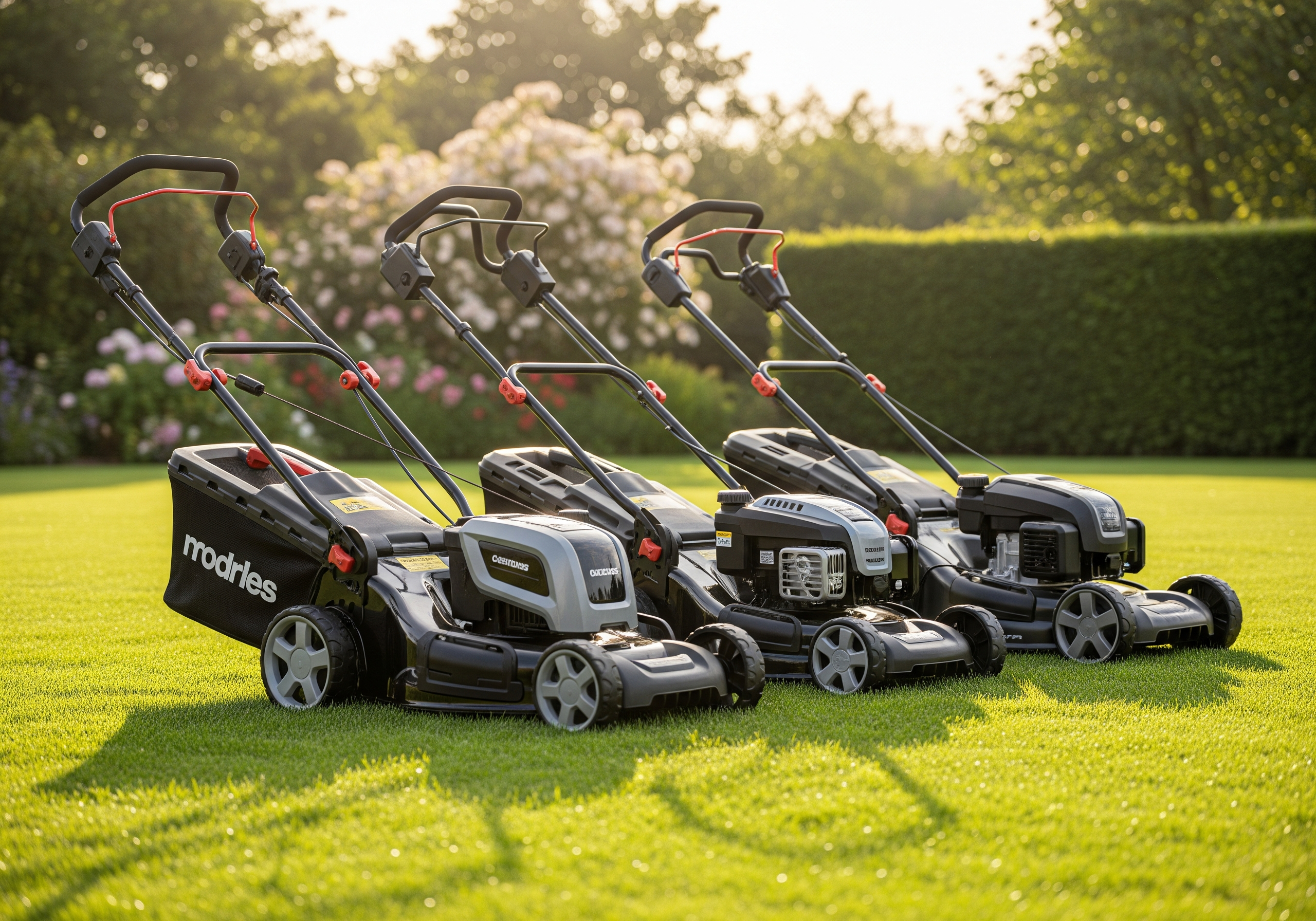
I am fully aware of your current location. You may have ten tabs open in your browser, or you may be standing in a hardware shop. You have a pressing question as you gaze at these streamlined, plastic-looking devices.
You want to know if cordless lawnmowers are powerful enough to cut your grass or if they are merely toys that will choke every weed patch they come across.
I’ve been there. I grew up hearing the draw cord yank-yank-yank and the scent of gasoline. It doesn’t feel right to rely on a battery to power dense spring grass. However, we must have a serious discussion about the state of technology today.
The central question will be answered. We’ll examine the data, the voltage, and the practicality of giving up the gas can. We are here to evaluate if these products can truly cut it, not to sell you a dream.
The Short Answer (For the impatient)
Here’s the deal: if you’re pressed for time and want the verdict.
Do Cordless Lawnmowers Have Enough Power?
- For 80% of homeowners, the answer is unquestionably yes. The torque of domestic gas mowers is equal to or greater than that of contemporary high-voltage mowers.
- For the “Jungle” Owners: Gas is still your friend if you only mow once a month and the grass is knee-high.
- The Sweet Spot: Seek out systems with 40V or more. Anything less is merely a mobile trimmer.
Understanding the “Power” in Battery Mowers
This question, “Cordless Lawnmowers: Are They Powerful Enough,” typically asks about torque. When the blade strikes a dense patch of clover, we want to know if it will stop spinning.
We examined cubic centimeters, or cc, in the context of gas. Marketing in the battery industry can be challenging. 20V, 40V, 60V, and even 80V are visible.
Here’s how to interpret these figures to avoid being taken advantage of.
Voltage is the New Horsepower
Consider the muscle to be the voltage (V). The mower may exert greater force through the motor when the voltage is higher.
- Entry-level voltages range from 20V to 36V. For a well-kept, level piece of grass, they work well. These may suffer if you don’t mow for a week.
- The current standard is between 40V and 56V. There is a lot of grunt from these machines. They are a great alternative to a typical 140cc gas engine.
- The animals are 60V to 80V+. The torque of some of these is actually higher than that of gas mowers. Wet leaves from an 80V mower have been observed to stall a gas engine.
Amp Hours (Ah) is the Gas Tank
“Ah” (Amp Hours) is the other number you see. This alters how long you can utilize the power, but it doesn’t actually modify the power itself.
- Low Ah: Ideal for tiny yards (2.0–4.0).
- High Ah (5.0–10.0): Required for thick grass or large yards.
The motor uses more energy when mowing dense grass. Without overheating, a larger battery maintains that power flow.
Cordless vs. Gas: The Reality Check
Regarding gas mowers, let’s remove the rose-colored glasses. We forget the headaches, but we do remember their strength.
The Torque Curve
There is a power curve for gas engines. To obtain their power, they must rev up. The engine bogs down, the RPMs drop, and you lose power when you need it most, when you hit thick grass.
Electric motors are not the same. Their torque is instantaneous.
- When a cordless mower hits a thick patch, the computer inside senses the resistance.
- It instantly dumps more power from the battery to the motor.
- The blade speed stays consistent.
This explains why, oddly enough, a 56V electric mower frequently trims long grass more effectively than a gas mower in the mid-range. It simply becomes louder and continues without bogging down.
The “Stall” Test
Mowers have been used in experiments on overgrown rye grass, as I have witnessed.
- The Gas Mower: Sputters, chokes, and dies. You have to tilt it back, restart it, and go slow.
- The Cordless Mower: The motor whines, the battery meter drops faster, but it keeps cutting.
Therefore, in 2026, the response to the question, “Are Cordless Lawnmowers Powerful Enough?” is frequently, “Yes, and they are smarter too.”
The Secret Weapon: Brushless Motors
When purchasing a cordless mower, you should search for the following words on the box: Without a brush.
Avoid purchasing a brushed motor. Said, don’t.
Why Brushless Matters?
Electricity was conducted via physical brushes in older electric motors. They squandered battery life and produced heat and friction.
Computers and magnets are used in brushless motors.
- More Power: They transfer energy more efficiently.
- Longer Life: No brushes to wear out.
- Smart Sensing: This is the tech that detects thick grass and revs up the motor automatically.
If the inexpensive mower you’re looking at doesn’t say “Brushless,” put it back. For you, it won’t be strong enough.
When Are They NOT Powerful Enough?
Sometimes a battery-operated lawnmower will not work. Regarding this, we must be practical.
1. The Neglected Lawn
Stick to gas if you’re the kind of person who mows every three weeks.
Mowers that run on batteries are meant to be maintained. When attempting to bush-hog a field with 12 inches of grass, it will take three batteries to complete the task.
The runtime is severely hampered, but it’s not that they can’t do it.
2. The Wet Grass Morning
Gas mowers produce heat. This keeps the deck somewhat tidy.
Electric lawn mowers are cool to operate. The grass will clump together under the deck more readily if it gets drenched. The cut quality decreases if the deck is obstructed by wet mush, even while the motor is capable of spinning.
3. The Massive Acreage
If you have two acres, logistics, not power, are the problem. Are you sure you want six batteries?
Large properties have “fuel” storage issues rather than “power” issues.
The User Experience: It’s Not Just About Power
Despite our obsession with “power,” let’s discuss what it’s really like to use these things. Because if the machine is difficult to use, power is pointless.
The Sound of Silence
You can mow at 7:00 AM on a Sunday.
- Gas Mower: 95 decibels. Your neighbors hate you.
- Cordless Mower: 75 decibels. It sounds like a box fan.
Weight and Maneuverability
Cordless lawn mowers are substantially lighter due to the absence of a strenuous internal engine block.
This is revolutionary if you have hills or a complicated garden with numerous flower beds. You are guiding the mower, not battling it.
In actuality, this influences how “power” is perceived. You can tackle slopes and corners more forcefully than you might with a hefty gas clunker because it’s easier to push.
Top Features to Look For
Don’t just pick up the first orange or green box you see if you’re ready to switch. To be sure you are receiving power, you must look for these specifications.
1. High Voltage Platform
Stay with the big companies that sell 40V, 56V, or 60V systems.
- EGO: Famous for their 56V ARC Lithium.
- Greenworks: Offers a solid 60V and 80V line.
- Toro: Their 60V Flex-Force uses the same deck technology as their gas mowers.
2. Dual Battery Ports
Two batteries can be stored simultaneously in some of the most potent mowers. It immediately switches to the other when one dies. By doing this, the voltage sag is prevented.
3. Steel Deck vs. Plastic Deck
This is controversial.
- Plastic (Poly): Lighter, better airflow, won’t rust.
- Steel: Heavier, feels more “solid,” better for rough terrain.
Steel decks have more momentum for sheer power feel, while poly decks are better designed for battery efficiency.
My Personal Take
For a while, I kept my gas mower. I enjoyed the sound. The mechanical feel was fantastic.
However, I was convinced when I clicked a button, and the mower started without any pulling, choking, or swearing. And the motor buzzed louder and cut straight through the tall fescue in the backyard when I struck it? For me, that marked the end of the gas era.