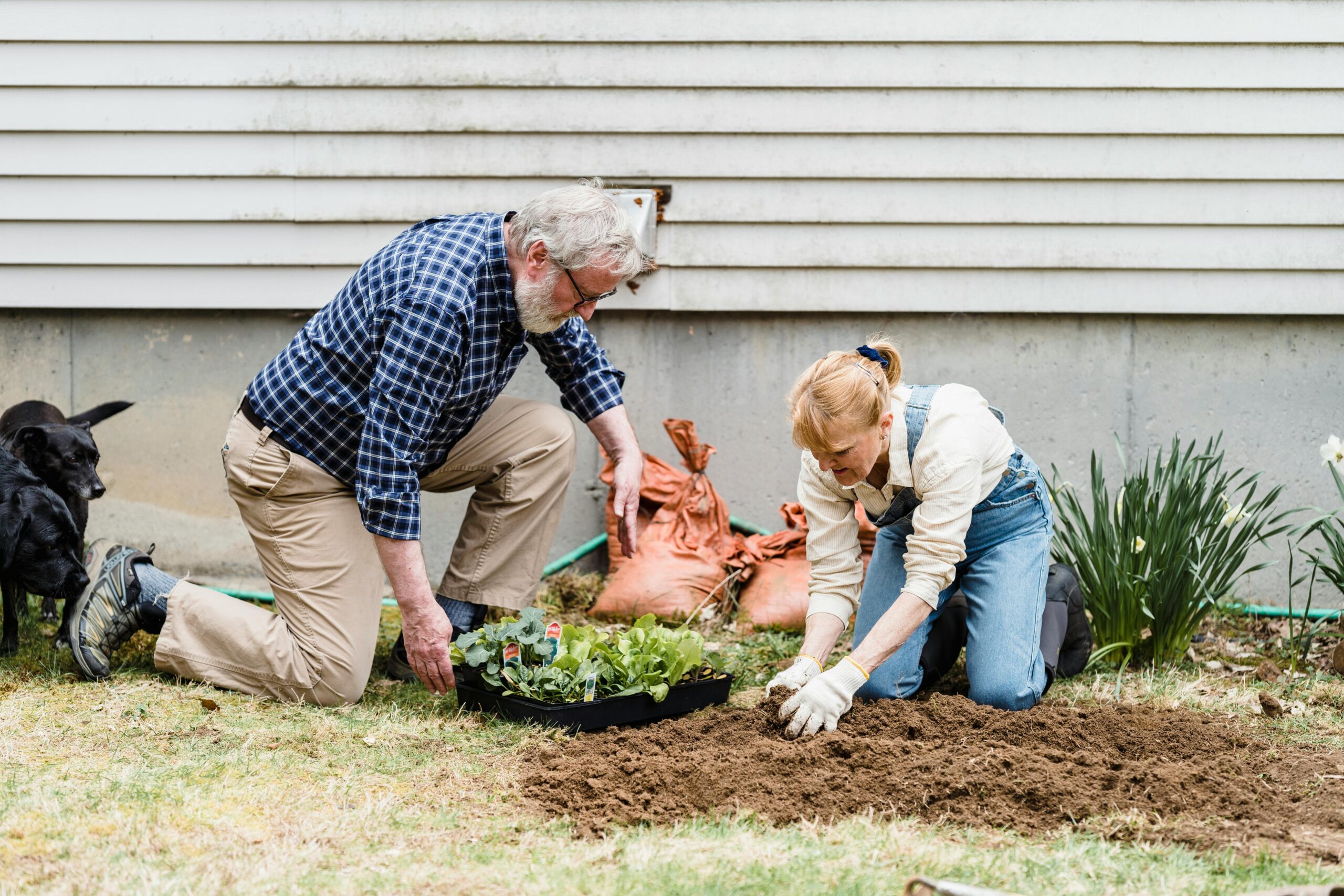
I wanted to get this guide out right as the planting season kicks off because, honestly, there is nothing worse than watching your flower beds go to seed just because your hands won’t cooperate. We’ve all been there: the sun is out, the soil is perfect, but your grip strength says “no way.”
We’ll cover the “why” behind hand fatigue, the specific tech like ratchet mechanisms, and the absolute must-haves for your shed. Plus, I’ll share some tricks to keep you planting longer without feeling like you went ten rounds in a boxing ring.
Why Traditional Tools Fail Seniors and Those with Weak Grips?
Most standard garden tools were designed for people with massive hand strength and zero joint issues. They are heavy, poorly balanced, and require a “death grip” just to pull a stubborn weed.
For anyone dealing with arthritis or just the natural loss of muscle as we age, those old-school tools are basically useless. They put way too much pressure on the small joints in the fingers and the carpal tunnel in the wrist.
According to the Arthritis Foundation, repetitive motions combined with heavy lifting are the fastest ways to flare up joint pain. If your tools are fighting you, you’re going to stop gardening. It’s that simple.
The Science of Ergonomics in the Garden
When we talk about “ergonomic” tools, we aren’t just using a fancy buzzword. It’s about anatomy. A good tool should keep your wrist in a neutral, straight position.
When your wrist bends, you lose power and increase the risk of injury. The best garden tools for seniors or people with weak grip focus on shifting the work from the fingers to the larger muscles in the arm.
Think of it like this: would you rather use a tiny screwdriver or a power drill? Ergonomic tools are the “power drills” of the manual gardening world. They do the heavy lifting so your joints don’t have to.
Must-Have Hand Tools for Arthritis and Weak Hands
If you’re going to invest in anything, start with the hand tools. These are what you use most often, and they are usually the biggest culprits for hand cramps.
Ergonomic Hand Trowels and Transplanters
Most trowels have a straight handle that forces you to cock your wrist downward. That’s a recipe for a bad time. Look for “Easi-Grip” styles.
These tools have a vertical handle. Instead of gripping a horizontal bar, you hold it like a steering wheel. This keeps your wrist straight and lets you use your forearm strength to dig.
Another game-changer is the “natural grip” trowel. These often have a large, padded handle with a thumb rest. It spreads the pressure across your whole palm rather than just your finger pads.
Ratchet Pruners: The Secret to Effortless Cutting
If you only buy one thing from this list, make it a pair of ratchet pruners. Standard bypass pruners require one big squeeze to cut through a branch. If that branch is thick, your hand is going to scream.
Ratchet pruners work like a car jack. You squeeze a little, the tool clicks and holds its place, then you squeeze again. It cuts through thick stems in four small, easy stages.
It’s a total “cheat code” for gardening. You can cut through branches that would normally require loppers, all with a fraction of the hand strength. For people with carpal tunnel, this is a literal lifesaver.
Long-Reach Tools: Saving Your Back and Knees
Gardening isn’t just hard on the hands; it’s a workout for the whole body. Bending over for hours is a “no-go” for many seniors.
The Power of Telescopic Handles
You shouldn’t have to crawl on the ground to reach a weed in the back of the border. Telescopic tools allow you to stand upright while you work.
Look for lightweight aluminum shafts. Steel is durable, sure, but it’s heavy. Aluminum gives you the reach without the weight.
Many of these tools come with “O-grips” or “D-grips.” These large, circular handles allow you to use both hands to guide the tool, which is much easier than trying to balance a long pole with one weak hand.
Standing Weed Pullers
Stop using a hand fork for every dandelion. Standing weeders use a foot pedal to drive claws into the ground. You just lean the handle back, and the weed pops out.
No bending, no kneeling, and zero grip strength required. You’re using your body weight and your leg muscles to do the work. It’s efficient, fast, and honestly kind of fun.
Watering Made Simple: Lightweight Hoses and Easy Nozzles
Have you ever tried to lug a 50-foot rubber hose across a yard? It feels like wrestling an alligator. It’s heavy, it kinks, and it’s a massive trip hazard.
Expandable and Coiled Hoses
Switch to an expandable hose. These things are incredibly light, usually under five pounds, and they shrink down to nothing when the water is off.
Alternatively, a coiled “pigtail” hose is great for small patios. It stays out of the way and doesn’t require you to spend ten minutes coiling it back up.
Just make sure you get one with high-quality brass fittings. The cheap plastic ones can be hard to screw onto the spigot if your fingers are stiff.
“One-Touch” Spray Nozzles
Traditional sprayers have a trigger that you have to hold down the entire time you’re watering. That’s a nightmare for weak grips.
Look for “thumb-control” or “one-touch” nozzles. You flick a lever with your thumb to turn the water on, and it stays on. You can relax your hand entirely while you soak your hydrangeas.
The University of New Hampshire Extension often recommends these “low-force” tools for older gardeners to prevent repetitive strain. It’s a small change that makes a huge impact on your comfort level.
Garden Seating and Kneelers: Taking the Load Off
If you do need to get down low, don’t do it on the bare ground. Your knees (and your ability to get back up) will thank you for using a proper bench.
The Multi-Functional Garden Kneeler
The best ones are the flippable benches. One way, it’s a padded seat. Flip it over, and it’s a padded kneeler with sturdy side rails.
Those side rails are the most important part. They give you a solid place to push off from when you need to stand up. It’s like having a built-in grab bar in the middle of your flower bed.
Check the weight capacity and look for “heavy-duty” models. You want something that feels stable on uneven soil. A wobbly bench is worse than no bench at all.
| Tool Type | Benefit for Seniors | Why It Works |
| Ratchet Pruners | 75% less force needed | Cuts in stages like a jack |
| Easi-Grip Trowel | Neutral wrist position | Shifts work to the forearm |
| Expandable Hose | Ultra-lightweight | Easy to move and store |
| Standing Weeder | No bending or kneeling | Uses leg power instead of hands |
| Thumb-Control Nozzle | No constant squeezing | Stays on with one click |
Smart Tips for Pain-Free Gardening
Choosing the best garden tools for seniors or people with weak grip is only half the battle. How you use them matters just as much.
Warm Up Like an Athlete
Gardening is a sport. Don’t just walk out and start digging. Spend five minutes doing some gentle wrist circles and shoulder rolls.
Get the blood flowing to those joints. It sounds a bit “extra,” but it significantly reduces the stiffness you’ll feel the next morning.
The 20-Minute Rule
Set a timer on your phone. Every 20 minutes, switch tasks. If you’ve been pruning, go do some light watering.
Changing your movement pattern prevents you from overtaxing one specific set of muscles. It’s the “marathon, not a sprint” approach to yard work.
Use Your Body Weight
Whenever possible, lean into your work. If you’re digging, use your foot to push the shovel. If you’re raking, use your core, not just your arms.
Think of your body as a lever. The more you use your “big” muscles (legs and torso), the less stress you put on your “small” muscles (fingers and wrists).
Conclusion
At the end of the day, gardening is about the joy of seeing things grow. It shouldn’t be a source of physical dread.
The best garden tools for seniors or people with weak grip aren’t just “handy,” they are essential for keeping your passion alive. Whether it’s switching to a ratchet pruner or finally getting that standing weeder, these upgrades pay for themselves in the form of fewer aches and more blooms.
FAQs
What are the best garden tools for someone with severe arthritis?
Look for tools with “Easi-Grip” vertical handles and ratchet mechanisms. These are specifically designed to keep the wrist straight and multiply the force you apply.
Are lightweight tools as durable as heavy ones?
Modern materials like reinforced fiberglass and high-grade aluminum are incredibly strong. You don’t need a 10-pound steel shovel for home gardening. Lightweight tools often last just as long if they are cared for.
How can I make my existing tools easier to use?
You can add foam pipe insulation to the handles of your current tools. Secure it with duct tape. This creates a larger, softer grip that requires less “squeeze” to hold onto.
What is the best way to carry tools around the yard?
A rolling garden cart or a bucket on wheels is much better than a shoulder bag. Don’t carry weight if you can roll it.