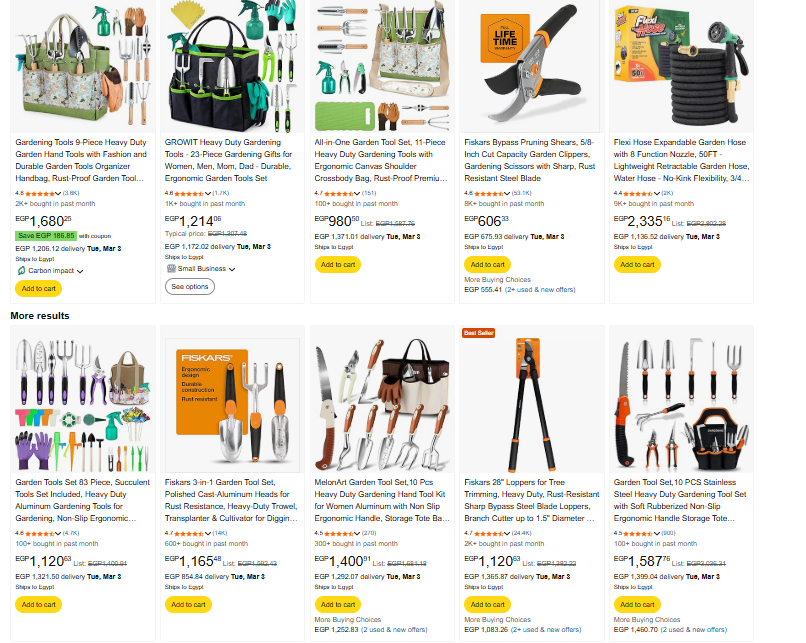
Amazon has turned into a digital jungle. One minute you’re looking for a simple hand trowel, and the next you’re scrolling through fifty brands with names that appear as if someone sat on a keyboard (you know the ones, like “ZHEN-GLO” or “QUICK-GARD”).
It’s tiring. You want something that will really dig a hole and not break when it strikes a rock, but everything looks the same on a screen.
I’ve wasted a lot of time and money testing technology that promised the world but only gave me a twisted piece of tin. This tutorial is for you if you’re sick of “disposable” tools that you have to throw away after one season.
Why is Amazon Flooded with Low-Grade Garden Gear?
You aren’t imagining it if you think that the quality of things on your screen has gone down lately. The way the market works currently makes it very easy for “no-name” companies to build generic goods, put a random brand name on them, and send them to a warehouse. They are not toolmakers; they are marketing experts.
These dealers generally use the same templates from the factory. That’s why there are ten listings for the same pruning shears, but with handles in different colors. Instead of the actual strength of the metal, they compete on pricing and dazzling pictures.
They utilize inexpensive alloys, skip tempering, and hope you won’t bother with the return process when the tool breaks six months later to keep costs down.
The “Alphabet Soup” Brand Red Flag
You’ve seen them: XYJGRDN, VIVOSUN, GARTOL. These are what I call “alphabet soup” brands. Most of these aren’t real companies with a history of craftsmanship. They are often temporary entities created to move high volumes of cheap inventory.
How to spot the risk:
-
The Name Test: If you can’t pronounce the brand name and it’s all caps, proceed with caution.
-
Zero History: Try searching for the brand’s actual website. If it doesn’t exist, or it looks like a generic landing page with no “About Us” section detailing their manufacturing process, they probably don’t care about long-term quality.
-
The Storefront: Click on the seller’s name. If they sell garden rakes, iPhone cases, and dog leashes all in the same shop, they aren’t specialists. You want to buy tools from people who actually know what a garden is.
How to Avoid Fake Reviews and Find the Real Dirt?
You see a set of shears with 4.8 stars and 5,000 reviews, and you think, “This must be the one!” Not so fast. The review system is heavily gamed.
Look for the “Review Merge” Trick
Some shady sellers will take an old listing for something completely unrelated, like a USB cable, and change the product to a garden spade. They keep all the 5-star reviews from the cable to make the spade look amazing. Always scan the actual text of the reviews. If people are raving about “fast charging” on a listing for a lawn aerator, run away.
The “Vine Voice” Filter
Amazon Vine is a program where people get products for free in exchange for a review. While many Amazon Vine reviewers are honest, there’s a subconscious bias to be nicer when you didn’t pay $40 for the item. I always look for “Verified Purchase” reviews from people who clearly used the tool for more than a day.
Look for photos of the tool actually covered in dirt; those are the people I trust.
The “Same Day” Surge
If you see fifty 5-star reviews all posted within the same 48-hour window, that’s a massive red flag. Real customers buy things at different times. A sudden surge usually means the seller hired a “review farm” to boost their ranking.
Forged vs. Stamped: The Secret to Metal Strength
If you remember one thing from this entire article, let it be this: Always look for the word “Forged.”
Stamped Tools
Most cheap tools on Amazon are “stamped.” This means they take a flat sheet of metal and punch out the shape of a shovel or trowel, kind of like a cookie cutter. These are thin, they have no structural “spine,” and they will bend the moment you try to pry up a dandelion.
Forged Tools
Forged tools are hammered into shape while the metal is red-hot. This aligns the grain of the steel and makes it incredibly dense and tough. A forged trowel won’t just bend; it’ll fight back. You can usually tell a forged tool by its thickness—it’s beefier where the handle meets the head.
Expert Tip: Look for “Solid Socket” or “Solid Shank” construction. This means the tool head and the part that holds the handle are one solid piece of metal. According to the Royal Horticultural Society (RHS), forged steel is the gold standard for any tool meant to move soil.
Carbon Steel vs. Stainless Steel: The Great Debate
People often get confused here. They think “stainless” means “better,” but that’s not always true in the dirt.
Carbon Steel: The Workhorse
-
The Good: It is much harder than stainless steel. It stays sharper longer, which is why the best hand pruners are almost always carbon steel.
-
The Bad: It rusts. If you leave it in the rain, it’ll look like an antique by morning.
-
The Verdict: Choose this if you want a tool that performs like a beast and you don’t mind wiping it down with a bit of oil occasionally.
Stainless Steel: The Low-Maintenance Choice
-
The Good: It won’t rust, and the soil slides right off it because it’s so smooth. Great for sticky clay soil.
-
The Bad: It’s a softer metal. It can snap under heavy pressure and dulls more quickly.
-
The Verdict: Perfect for trowels and light digging tools, but maybe not for heavy-duty prying.
The Handle Test: Ash Wood vs. Plastic
Don’t just look at the business end of the tool; look at what you’re holding. A tool is only as strong as its weakest point, which is usually where the handle meets the metal.
Why Ash Wood is King?
Traditional tool makers use Ash or Hickory. Why? These woods have long fibers that can absorb shock. When you hit a rock, the wood flexes slightly instead of snapping. On Amazon, check the description. If it just says “wood handle,” it’s probably cheap pine or poplar that will splinter in a month. You want it to explicitly say “Weather-resistant Ash.”
The Plastic and Fiberglass Trap
Fiberglass is strong, but cheap plastic handles are a nightmare. They get brittle in the sun and eventually crack. If you’re going for a non-wood handle, look for “fiberglass-reinforced” or “ergonomic grip” from reputable brands like Fiskars.
The “Anatomy of a Lemon” Checklist
Before you hit “Add to Cart,” run through this mental checklist:
-
Is the price too good to be true? A 10-piece garden set for $19.99 is 10 pieces of trash. A single high-quality trowel should cost you $15-$25.
-
Does it have a warranty? Legitimate companies like Felco or Spear & Jackson offer 10-year or lifetime guarantees. “Alphabet soup” brands offer a “30-day satisfaction guarantee,” which is basically useless once the return window closes.
-
Check the “Frequently Bought Together.” If people are constantly buying “replacement blades” or “repair kits” for that specific tool, it’s a sign the original parts are weak.
-
Zoom in on the photos. Look at the “neck” of the tool. If you see a messy weld (it looks like a glob of metal where the handle meets the blade), it’s a weak point waiting to fail.
Brands You Can Actually Trust on Amazon
You don’t have to guess. There are several legacy brands that sell on Amazon and maintain their standards. If you stick to these, you’re almost guaranteed to get something that lasts:
-
Fiskars: Great for beginners and intermediate gardeners. Their power-gear tech is legit.
-
Felco: The absolute kings of pruning shears. They’re expensive, but you can replace every single part if it wears out.
-
Corona: Very solid forged tools that won’t break the bank.
-
Spear & Jackson: A British classic. Their “Neverbend” line is exactly what it sounds like.
-
Burgon & Ball: If you want something that looks beautiful and works even better.
-
DeWit: These are old-school forged tools from the Netherlands. They are indestructible.
Maintenance Secrets: How to Save a “So-So” Tool?
Sometimes we buy a budget tool anyway, or we inherit some “okay” gear. You can actually make a lower-quality tool last way longer with just five minutes of effort.
The Sand and Oil Bucket
Fill a 5-gallon bucket with play sand and mix in some motor oil or linseed oil. After you’re done in the garden, plunge your tools into the sand a few times. The sand scours off the dirt, and the oil leaves a protective coating that prevents rust.
Sharpening is Key
A dull tool is a dangerous tool. It makes you use more force, which is when cheap metal tends to snap. Get a simple diamond file and give your trowels and shovels a quick edge once a month. You’ll be shocked at how much easier it is to cut through roots.
Final Thoughts
We’ve all been there, attempting to save five dollars by choosing the glossy, highly-rated generic option. But in the world of gardening, that five-dollar save usually means a trip to the trash can and a second purchase.
When you browse Amazon, don’t pay attention to the Photoshop and the thousands of reviews that look like they were written by the same person. Look for handles made of solid ash and forged steel, and check the brand’s history. You shouldn’t be frightened to use a decent tool since it feels like an extension of your arm.