
The difference between a garden that fails and one that does well isn’t always luck. Time plays a big role almost all the time. Growers with a lot of experience know that a garden is a talk with the weather all year long.
If you plant your tomato plants too early, a late spring frost will kill them. If you prune your spring-flowering bushes in the middle of winter, they won’t bloom at all this year.
Plan your yard by season, instead of against it, so that you can use it to your advantage. To do this correctly, you need to know the specific limits of your climate, take care of your soil’s fertility before you plant a single seed, and use spatial tactics that increase yields while reducing pests.
Defining Your Growing Window
Before you buy a single packet of seeds, you must know your area’s average last spring frost date and first fall frost date. These two dates act as the bookends of your primary growing season.
The last spring frost is the average date when temperatures might drop to 32°F (0°C), marking the point when it becomes generally safe to plant tender, warm-weather crops outdoors.
You can use the NOAA Climate Data Center or a local agricultural extension office to find the exact dates for your ZIP code. Once you have these dates, you fall into one of three general planting categories:
- Warm Climates (Frost date passed or non-existent): If your frost date passes by February, March is one of your most critical planting months. You should be directly sowing pole beans, zucchini, and cucumbers into the warming soil.
- Mild Climates (Last frost in March/April): You are in the sweet spot for cool-season crops. Early spring is the time to sow frost-hardy roots like carrots and beets directly outdoors, while using indoor grow lights to start your warm-season tomatoes and peppers.
- Cold Climates (Last frost in May/June): Your outdoor soil may still be frozen or wet early in the year. To warm the soil faster, you can lay down organic frost cloth over your beds a week or two before planting. Once workable, you can sow cold-hardy staples like spinach, radishes, and sugar snap peas.
The Groundwork: Soil and Layout Strategy
Plants are only as resilient as the soil they grow in. Good garden soil serves as a storehouse for nutrients, air, and water, and it should crumble easily when forced between your fingers rather than forming a hard crust.
To prepare for spring, you should deeply till the soil to a depth of 8 to 12 inches during the winter, which allows vegetable roots to penetrate deeper.
Heavy clay soils often hold too much water and restrict airflow, but you can loosen them by working in 3 to 4 pounds of gypsum per 100 square feet, along with 2 inches of clean sand and 3 inches of organic matter.
If you are applying manure to boost fertility, ensure it is fully composted; fresh manure can burn young plants and introduce dangerous pathogens. A standard application is 30 to 40 pounds of composted manure per 100 square feet.
The Necessity of Crop Rotation
When deciding where to plant your crops each season, you must look at what grew in that exact spot the previous year. Vegetables belong to specific botanical families, and plants within the same family extract similar nutrients from the soil while attracting the same insect pests and soil-borne pathogens.
If you plant tomatoes (Nightshade family) in the same bed year after year, you provide pathogens with a continuous host, ensuring diseases like blight build up in the soil until the crop fails.
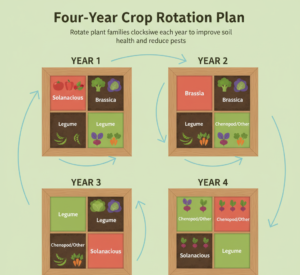
Instead, implement a simple four-year crop rotation plan to starve out pests and balance soil nutrient depletion.
A Practical 4-Year Rotation Layout:
| Bed Number | Year 1 | Year 2 | Year 3 | Year 4 |
|---|---|---|---|---|
| Bed 1 | Nightshades (Tomatoes, Peppers, Potatoes) | Brassicas (Kale, Broccoli, Cabbage) | Legumes (Peas, Beans) | Chenopods (Beets, Spinach, Chard) |
| Bed 2 | Brassicas | Legumes | Chenopods | Nightshades |
| Bed 3 | Legumes | Chenopods | Nightshades | Brassicas |
| Bed 4 | Chenopods | Nightshades | Brassicas | Legumes |
The Planting Timetable: A Month-by-Month Approach
Strategic planting requires staggering your efforts. You cannot sow the entire garden on the first warm Saturday in April and expect sustained success.
Late Winter / Early Spring: While it is still freezing outside, start seeds indoors for crops that require a long runway. Tomatoes need about 6 weeks indoors, while peppers and eggplants require up to 8 weeks to reach transplant size before moving outside. Outdoors, you can plant bare-root fruit trees, asparagus crowns, and onion bulbs.
Mid-Spring: As the soil warms, directly sow fast-maturing cool-weather crops. This is the time for lettuce, radishes, and peas. If you are growing in a cold climate, spinach is incredibly frost-tolerant and will push through cold nights effectively.
Late Spring / Early Summer: Once all danger of frost has passed, transplant the warm-season seedlings you started indoors (tomatoes, peppers, eggplant)—direct sow heat-lovers like sweet corn, cucumbers, squash, and melons.
Late Summer / Early Fall: Start planning your fall garden in August. Sowing seeds for cool-season crops like beets, turnips, and kale now allows them to mature as the autumn weather cools down. To determine your exact fall planting dates, count backward from your first fall frost date, factoring in the crop’s “days to maturity” plus an extra 18 days for the actual harvesting window.
Maximizing Yield: Succession and Companion Planting
If you have limited space, planting your entire crop at once leads to a feast-or-famine harvest cycle. Succession planting solves this.
Real-World Case Example: The Continuous Carrot Harvest
Many novice gardeners will buy a packet of carrot seeds and plant all of them in a single weekend. About 70 days later, they are overwhelmed with 100 carrots that all need harvesting simultaneously.
Instead of a single planting, try a staggered succession approach. Plant one short row of carrot seeds. Two weeks later, plant a second row. Two weeks after that, grow a third. By spacing out the sowings, you ensure a continuous, manageable harvest of fresh carrots throughout the entire growing season.
The Logic Behind Companion Planting
Companion planting involves placing two different crops close together so that they mutually benefit each other. This is not just folklore; it is an evidence-based strategy to deter pests, regulate shade, and improve soil health.
High-Impact Companion Pairings:
- Tomatoes and Basil: Basil is a natural companion that repels thrips, deters the moths that lay tomato hornworms, and masks the scent of the tomato plants from pests.
- Corn and Lettuce: Lettuce is a cool-weather crop that easily bolts (goes to seed) in the harsh summer sun. Planting it in the shadow of tall corn stalks provides natural, cooling shade.
- Cabbage and Nasturtiums: Nasturtiums are an exceptional “trap crop.” They attract hungry caterpillars and aphids away from vulnerable brassicas like cabbage and kale, taking the brunt of the pest damage to keep your food crops safe.
- The Three Sisters (Corn, Beans, and Squash): This ancient indigenous pairing is brilliant. The tall corn acts as a trellis for the climbing pole beans. The beans fix essential nitrogen into the soil. The large, sprawling squash leaves act as a living mulch, suppressing weeds and retaining soil moisture.
Scaling Up: The Vertical Advantage
When ground space is at a premium, you must grow up. Vertical gardening dramatically reduces the footprint of rambling plants. For example, a single squash plant left to roam on the ground requires about 20 square feet of space.
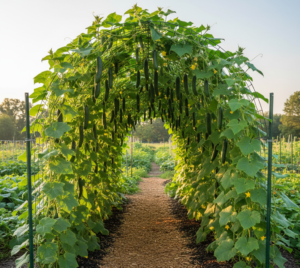
By training that same plant up and over a sturdy arched trellis, you reduce its footprint to just a few square feet, freeing up valuable raised bed space for other crops.
Beyond saving space, vertical gardening improves plant health. When foliage is sprawling in the dirt, rain splashes soil-borne bacteria and fungal spores directly onto the leaves, leading to blight and wilt. Elevating the plant keeps foliage dry, increases air circulation, and keeps the developing fruit out of reach of ground-dwelling critters.
Trade-off to consider: Commercial vertical trellises can be prohibitively expensive, often costing up to $35 to support just one cucumber plant. To keep costs down, use livestock “cattle panels” bent into arches and secured with $4 metal T-posts. You can construct a massive, highly durable arch trellis this way for around $30.
Common Seasonal Planning Mistakes
- Over-mulching ground-nesting pollinators: It is highly recommended to mulch your vegetable beds to conserve water in July. However, heavy, impermeable layers of mulch or synthetic weed barriers can trap ground-nesting bees. Always leave a few areas of bare, undisturbed ground on the perimeter of your garden to support these crucial pollinators.
- Leaving garden beds fallow: After the summer harvest is pulled, it is tempting to leave the dirt bare. However, fallow soil is highly prone to erosion, nutrient runoff, and aggressive weed colonization. Instead, plant a winter cover crop like fava beans, rye, or oats. You can till these “green manures” directly into the soil the following spring to dramatically boost nitrogen and organic matter.
- Planting double-flowered hybrids: While visually stunning, hybrid double-flowering plants are often bred in ways that make their nectar inaccessible or their foliage inedible to butterfly caterpillars. Stick to native, single-flower varieties if you want a garden that actively supports local ecosystems.
The Rhythm of the Gardening Year
A really good yard is constantly changing. In order to make room for late-summer eggplants, you have to pull up tired pea vines in June, test your drip watering lines in March, before it gets hot in July, and clean your pruning tools very well with alcohol in November so that you don’t bring fungal diseases into the following spring.
By respecting frost dates, rotating crop families, and using clever companion planting, you can align your actions with the natural progression of the seasons. This will take you from fighting the elements to managing a highly productive, self-sustaining ecosystem.
It’s the planning you do in the quiet, cold winter that pays off in late summer with lots of crops.
Frequently Asked Questions
Can frost happen after my last spring frost date?
Yes. Frost dates are statistical averages, typically based on a 30% probability threshold. There is always a statistical chance of a late freeze. Always check your local 10-day forecast before moving expensive or delicate warm-season crops (like tomatoes or peppers) outdoors.
Should I start all my seeds indoors to save time?
No. While crops like eggplants, tomatoes, and peppers benefit significantly from an indoor head start, many root crops despise having their taproots disturbed. Carrots, radishes, and beets should almost always be directly sown right into the garden soil where they will mature.
How do I manage watering when transitioning between seasons?
As the heat of July and August sets in, plants shift focus strictly to survival, and morning dew evaporates rapidly. During peak heat, you must water deeply and less frequently to encourage roots to dive deep into the soil. Shallow, daily watering keeps roots near the surface, making them highly vulnerable to baking heat.