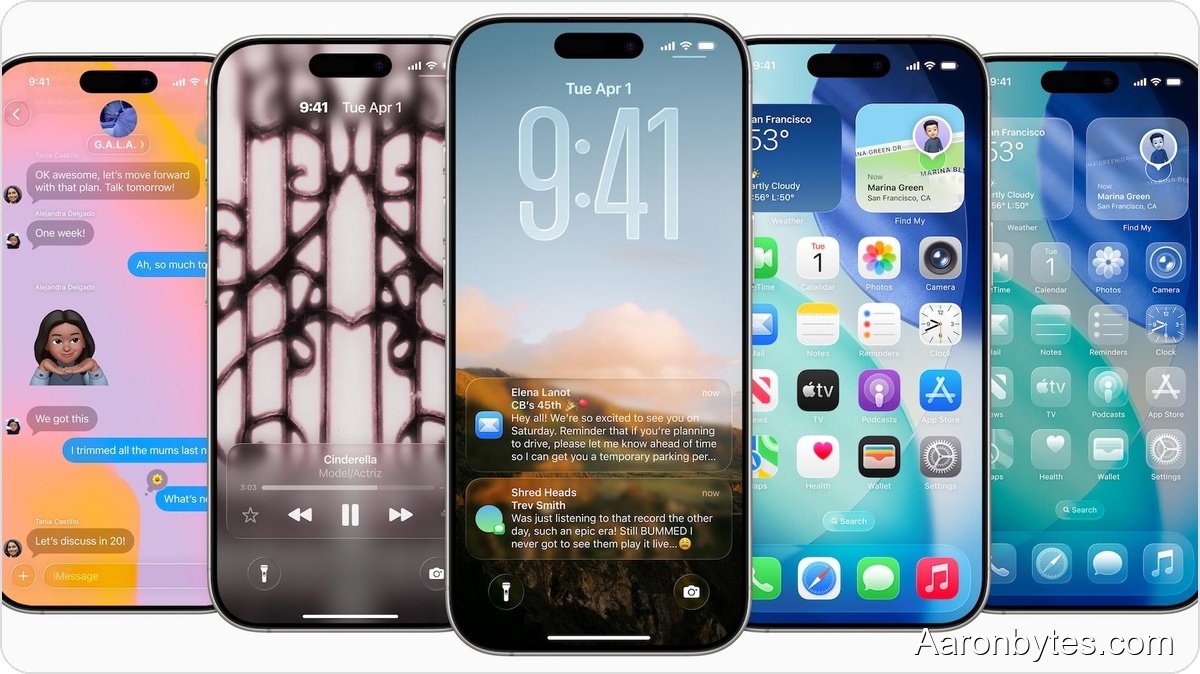
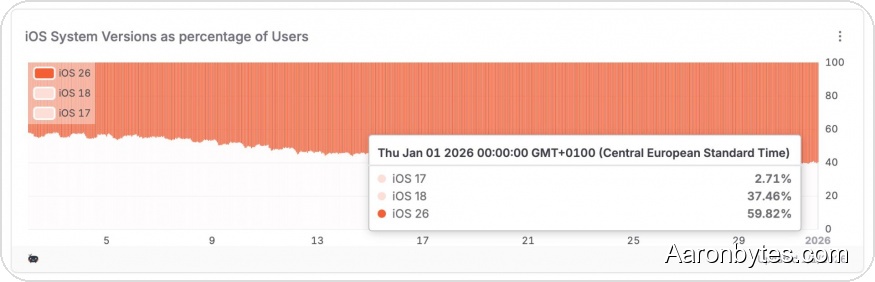
New usage figures show iOS 26 is off to a slow start. Official numbers indicate the latest version of Apple’s mobile OS is installed on just over 16 percent of iPhones.
Today’s numbers vs. last year
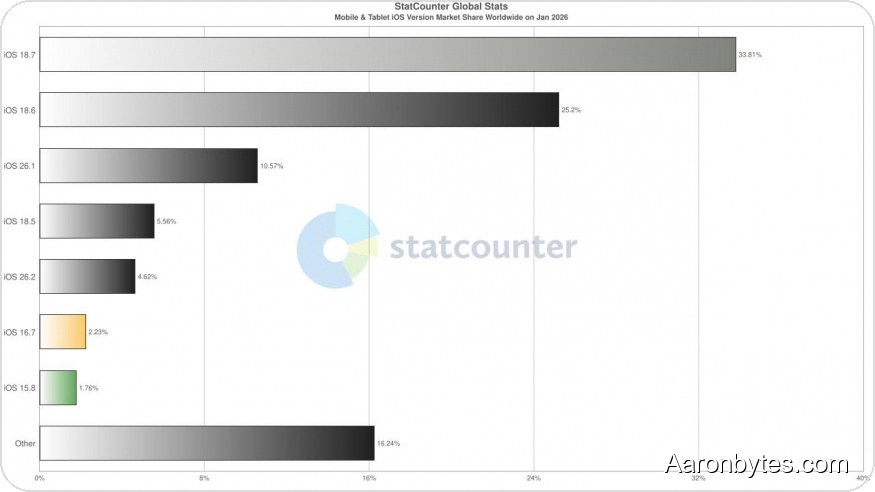
The contrast with January of last year is stark. In January, iOS 18—the then-new release—was running on more than 60 percent of devices. iOS 17, in January 2024, was present on over 50 percent of iPhones.
Why users might be holding back?
iOS 26 brings sweeping design changes across the user interface. That kind of overhaul often prompts cautious users to delay updating, especially those who dislike large visual shifts. The update was announced on schedule, but many users appear to be taking their time.
Different data sources tell different stories
Not all measurement firms report the same adoption rates. Statcounter’s methodology seems to produce notably lower figures for iOS 26 than some competitors.
TelemetryDeck data aligns with historical norms
TelemetryDeck’s telemetry paints a more familiar picture: historically, the newest iOS version typically achieves the highest market penetration. Their numbers suggest iOS 26’s rollout may be closer to past releases than Statcounter’s snapshot implies.
How iOS compares to Android?
The gap between iOS and Android remains significant. Even in January 2026, Android’s distribution pattern differs markedly from Apple’s, according to the same data sources used above.