You can spend hours debating digital-to-analog converters, amplifier classes or whether one streamer “opens up” the soundstage more than another. The practical reality is less romantic: speakers are the single component that converts electrical signal into real acoustic energy and then interacts directly with the room. Because of that interaction, speakers create the largest audible differences between systems.
In 2026 the market is broader than ever. Options range from compact monitors priced around 7,000 CZK to floor standing towers that can run many times that amount per pair. You also get award lists, branded technologies with flashy names and datasheets that promise almost miraculous performance. All that information makes decisions harder, not easier.
Most setup mistakes are not caused by bad electronics. They are caused by room size, speaker placement or choosing speakers that are disproportionate to the space you have. Big towers in a 12-square-meter room rarely produce better sound; they usually make more problems. Conversely, a well-placed monitor can yield a coherent soundstage and tonal balance that outperform many more expensive systems.
This guide is not about chasing a mythical perfect speaker. There is no single perfect option. It is about deliberate choices based on the room where speakers will live, your budget and how you actually listen to music. We will walk through how room size changes the ideal speaker type, what specifications can and cannot tell you, when to prefer active versus passive designs and how to shortlist and audition models before you buy.
How to pick the right speaker type for your space
Your room is not an accessory; it is an active part of the final result. Two identical speakers and the same amplifier will sound different in two different rooms because size, wall distance and surface materials change how sound behaves. Start with this simple rule: speaker size should be proportional to the room they must fill.
In small rooms—roughly up to 15 square meters—bookshelf or standmount speakers usually make the most sense. They do not need to move as much air to sound complete. In a bedroom or office, a good monitor will typically provide wide, balanced sound without runaway bass. Listening at close distances—under about two meters—often produces precise integration between drivers and a clear stereo image, because the speakers and your ears form a compact listening triangle.
A common mistake is equating bigger with better. A large tower in a 10 to 12 square meter room often cannot let low frequencies breathe. What should be tight and deep ends up bloated and muddy, masking midrange detail. If you want more low-end impact in a small room, adding a well-tuned compact subwoofer usually makes more sense than stuffing oversized towers into an undersized space.
In medium rooms—about 15 to 25 square meters—you have more options. Compact floorstanding towers or larger monitors on stands can work well because they usually have larger drivers and more internal volume. That lets them extend lower and fill the room without overtaxing the amplifier. The practical change is not just louder bass; these speakers often deliver better midrange authority and more convincing scale.
In large rooms—over 25 square meters—or open loft-style spaces, full-size towers begin to make practical sense. They move more air and maintain presence several meters from the listening position. In these cases speaker sensitivity becomes important. A speaker rated around 90 dB or more will be easier to drive to realistic listening levels with moderate amplifier power, meaning the system retains dynamics and clarity instead of pushing the amp into distortion.
Bass behavior also changes with room size. Low frequencies tend to develop more naturally in larger rooms, but standing waves create spots where bass is excessive or cancels out depending on where you sit. Port location—front, rear or bottom—affects how a speaker couples to walls and floors. It is not only about whether a speaker can reach 35 Hz on paper; it is about how those lows behave in your living room and how they react to placement.
Passive versus active: decide how hands-on you want to be
Before you choose a brand or model, decide whether you want passive speakers that require an external amplifier or active speakers with built-in amplification. Each approach has strengths and trade-offs.
Passive speakers are the classic, flexible option. Source + amplifier + speakers lets you swap or upgrade components over time. If in five years you want a different tonal character or more power, you can change the amplifier without replacing the speakers. That flexibility comes at the cost of more components, more cables and more decisions about matching amp power and damping factor to speaker characteristics.
Active speakers simplify the equation. Manufacturers match amplification to drivers, crossovers and cabinets, which removes guesswork and often results in an optimized combination out of the box. For a desktop system, a small living room, or anyone who prefers minimal setup fuss, active speakers are a logical choice. They reduce the number of components and common matching errors.
Active does not automatically mean superior sound. At the high end, separates still offer greater potential for refinement and customization. However, many modern active designs are excellent; midrange active systems can rival or surpass mismatched passive setups. The real question is what kind of user you are. If you enjoy tweaking and building a system piece by piece, passive speakers are probably better. If you want plug-and-play convenience with fewer compatibility concerns, active speakers may be the right fit.
There is one practical caveat: if the amplifier inside an active speaker fails, repairs usually involve the manufacturer. With passive speakers, a problematic amplifier can be replaced locally without touching the speaker cabinets.
How budget shapes what you actually hear?
Budget is not just a number; it guides where to spend to get the most audible value. The market in 2026 is competitive, and midrange models often deliver levels of performance that would have been considered high-end a decade ago. Your goal should be to match a speaker’s strengths to your room and listening habits rather than chase brand prestige alone.
At an entry level—up to roughly 15,000 CZK—you can find surprisingly capable speakers. Compact monitors such as the Dali Kupid, Elac Debut B5.2 and Wharfedale Diamond 12.1 demonstrate that you do not need to compromise to get musical, balanced sound. In small to medium rooms, properly placed and driven by a decent amp, these speakers can deliver clear soundstages, natural vocals and more than adequate bass for many genres.
The midrange is where price-to-performance often becomes especially compelling. Models like the KEF LS50 Meta, Acoustic Energy AE300 Mk2 and Fyne Audio F501E offer better extension, wider soundstages and cleaner bass articulation. The difference between entry and midrange is less about pure loudness and more about texture, resolution and the sense of music “breathing.”
At the high end, towers such as the Fyne Audio F502S, PMC Prodigy 5 and KEF R7 Meta bring increased range, dynamics and authority—especially in large rooms. Driver design, cabinet engineering and crossover implementation produce finer audible differences, but demands increase too: placement matters more and room treatment often moves from optional to necessary.
A costly speaker does not guarantee success. A poorly placed 70,000 CZK pair can sound worse than a well-integrated 25,000 CZK pair. Your budget sets a ceiling, but your room and how you plan to use the speakers determine the right choice.
Placement rules that actually help
Placement is often the cheapest, highest-impact tweak you can make. Before swapping cables or changing electronics, get placement right—small adjustments frequently produce far bigger improvements than expensive upgrades.
Start with an approximate equilateral triangle between the two speakers and your listening position. The distance between the speakers should be similar to the distance from each speaker to your ears. If you are too close or too far, the stereo image collapses and instruments lose precise placement.
Avoid pushing speakers tight against the back wall. Cabinets placed too close to a wall often create an artificially boosted bass that sounds fuller but becomes uncontrolled and boomy. As a reasonable starting point, move speakers 60 to 90 centimeters from the back wall if the room allows.
Try to maintain lateral symmetry. If one speaker sits much closer to a side wall than the other, the image will skew toward that side. You do not need millimeter precision, but avoid obvious asymmetry.
Toe-in matters. Slightly angling speakers toward each other tends to improve vocal clarity and image focus. There is no single correct angle; small incremental changes and listening are the way to find the best compromise between directness and soundstage width.
Pay attention to your seating position too. Sitting exactly in the room’s midpoint often corresponds to bass peaks or nulls. Shifting a chair or couch a little forward or back frequently changes the bass balance for the better.
Soft furnishings help tame nasty reflections: rugs, thick curtains and bookshelves reduce early reflections that can harden treble or smear imaging. Bare walls and lots of glass tend to tighten up the sound in ways that may be fatiguing. You do not need a studio full of acoustic panels; modest changes to furnishings often produce significant improvements.
What specs tell you—and what they do not?
Specifications are comforting because they look objective, but they tell only part of the story. Two speakers with similar specs can sound radically different in real rooms.
Sensitivity, recorded in decibels, indicates how loud a speaker will be for a given amplifier power. A speaker rated at 90 dB will reach listening levels more easily than one rated at 84 dB. That matters when pairing with modest amplifiers.
Impedance, in ohms, indicates the electrical load a speaker presents to an amplifier and varies with frequency. A speaker that dips to 4 ohms in parts of its range demands more from the amplifier. If the amp cannot supply sufficient current, the bass may lose control, and the overall sound may become grainy at higher volumes.
Frequency response numbers—claims such as “extends to 35 Hz”—are useful reference points but do not guarantee usable, musical bass in your room. Datasheets often omit the measurement conditions and how much level remains at the extremes. Room interaction can make the same speaker sound bass-heavy in one position and thin in another, so the spec is only a guide.
Wattage recommendations explain a safe operating range, not a strict requirement. A range of 30 to 150 watts means the speaker can cope safely within that window; it does not mean you need the top end of the range to enjoy the speaker.
Most importantly, tonal character, listening comfort over hours, and the sense of a three-dimensional soundstage do not appear on a spec sheet. Those qualities reveal themselves only by listening in a real environment.
Try before you buy
Buying speakers without listening first is the most common mistake. Reviews are invaluable for creating a shortlist, but they reflect how a speaker performs in a different room with different gear and different ears.
If you visit a dealer, bring music you know very well. Tracks you have heard hundreds of times will expose subtle differences quickly. Test with the material you actually listen to—pop, metal, jazz, or orchestral—rather than relying only on pristine audiophile tracks.
Compare in pairs. Hearing five models back-to-back overwhelms your ears and memory. A/B comparisons let you focus on differences and make clearer decisions.
Remember that dealer rooms are often acoustically treated and set up for demos. That controlled environment helps comparison, but will not reproduce your living room. Look for speakers that sound balanced and natural across varying levels rather than those that win with a single impressive demo track.
If possible, ask for a home trial with a deposit. Listening for days in your own room with your own music is the most reliable way to know if a speaker will work for you. Long-term listening reveals fatigue, tonal imbalances, or placement sensitivities that short demos cannot.
Right speaker, right place
Choosing speakers is not about buying the most awarded model or the one with the flashiest marketing. It is about selecting speakers that match your room, amplifier, and the music you play every day. Throughout this guide, we covered room size, budget, sensitivity, placement, and in-store testing because those variables determine whether a system will perform or disappoint.
The best speaker is not the most expensive or the most technically sophisticated. It is the one that fits your space and lets you rediscover music without worrying about gear. When you choose with room, real-world use, and listening habits in mind, mistakes become rare—even in a market flooded with specs and brands.
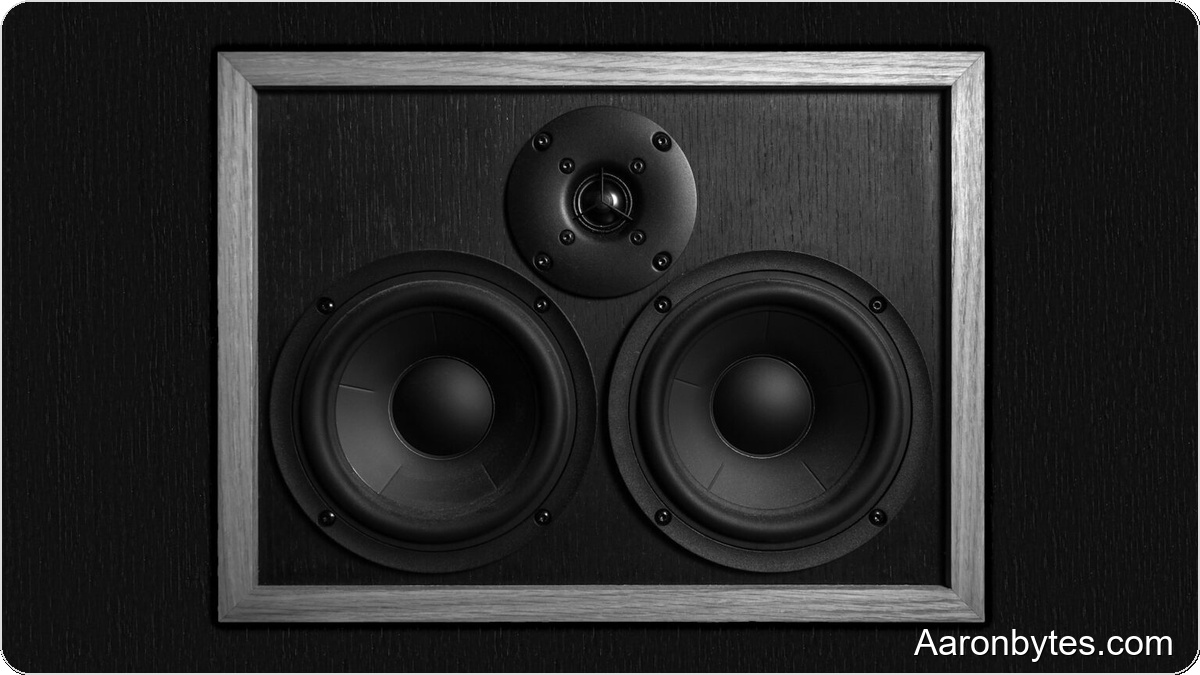
One final practical note: the tweeter should be roughly at ear height when seated. Standmount monitors usually need proper stands to achieve that. Placing monitors deep inside a bookshelf often changes the sound more than you expect, so treat that arrangement with care.
Follow these logical steps, listen patiently, and tweak placement. Your ears will tell you when things are right.