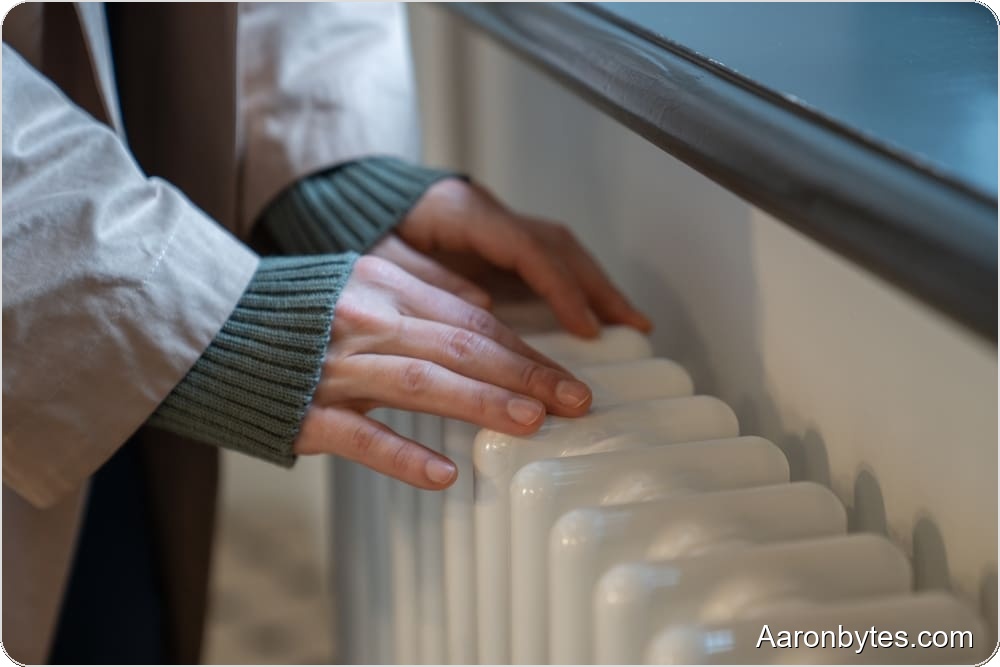
The idea is straightforward: mount a reflective insulating panel on the wall directly behind a radiator so heat that would otherwise pass into the wall is reflected into the room.
These panels are often described as a thermal mirror because they reflect radiant energy toward the living space rather than letting it dissipate into the wall. In theory, that means the room warms more efficiently, so you can set the thermostat lower and use less energy to reach the same comfort level.
What do the claims say?
Online advice and some consumer groups report measurable gains. For example, the Spanish consumer organization OCU has said a reflective panel placed between the radiator and wall can improve heat distribution and recover roughly 10 to 20 percent of heat that would otherwise be lost into the wall.
When it actually help?
Whether the trick works in practice depends on several factors, with three being most important: how much heat the radiator emits backward, the wall’s construction and insulation quality, and the exact reflective material used.
If the wall is thick or already very well insulated, there will be little backward heat loss to recover, so adding a reflective panel produces minimal benefit. By contrast, thin, uninsulated, or cold-running walls can show a noticeable difference because more heat is otherwise absorbed by the wall.
Radiator type matters
Some radiator designs emit little radiant heat toward the wall, while others do send a significant proportion of heat backward. Modern radiators and convectors are often engineered to reduce backward heat loss, so the foil trick is less effective on newer, high-efficiency units. Older, solid radiators or poorly designed units may return greater gains from a reflective panel.
Not all panels are equal
Although many products and DIY solutions use aluminum as the reflective surface, performance varies widely. Homemade panels made by wrapping cardboard in kitchen foil are a common viral suggestion, but they do not perform the same as purpose-built reflective panels.
Material properties such as reflectivity, the durability of the backing, and how well the panel sits flat against the wall all influence results. A well-constructed product specifically designed for radiator use will generally outperform a makeshift cardboard-and-foil solution.
How to DIY safely and effectively?
If you want to try a DIY version, the basic concept is simple: create a flat backing board and cover it with a reflective aluminum surface, then secure it to the wall behind the radiator. This is cheap and can provide limited improvement in heat retention in the right conditions.
However, be careful to avoid blocking the airflow around the radiator. The foil must reflect radiant heat without restricting convective circulation, because blocking airflow can reduce the radiator’s overall efficiency and comfort.
Practical caveats and broader considerations
Keep in mind that reflective panels are a short-term, low-cost measure rather than a long-term solution. They do not replace proper insulation. If walls are thin or the building is drafty, investing in adequate wall insulation, draught proofing, or upgrading the heating system will generally deliver larger and more durable energy savings.
Also consider that the seasonal benefit may vary: in a cold snap, you may notice more immediate improvement, but in a well-insulated modern home, the effect can be negligible.
Bottom line
Placing aluminum foil or a reflective panel behind a radiator can help under specific conditions: on older radiators that emit heat backward and on thin or poorly insulated walls. Typical claimed savings of around 10 to 20 percent refer to the fraction of heat that would otherwise be lost into the wall, not a guaranteed reduction in your total energy bill.
For long-term energy efficiency and comfort, treat foil panels as a temporary, low-cost tweak. For meaningful, lasting savings, prioritize proper insulation and heating system improvements.