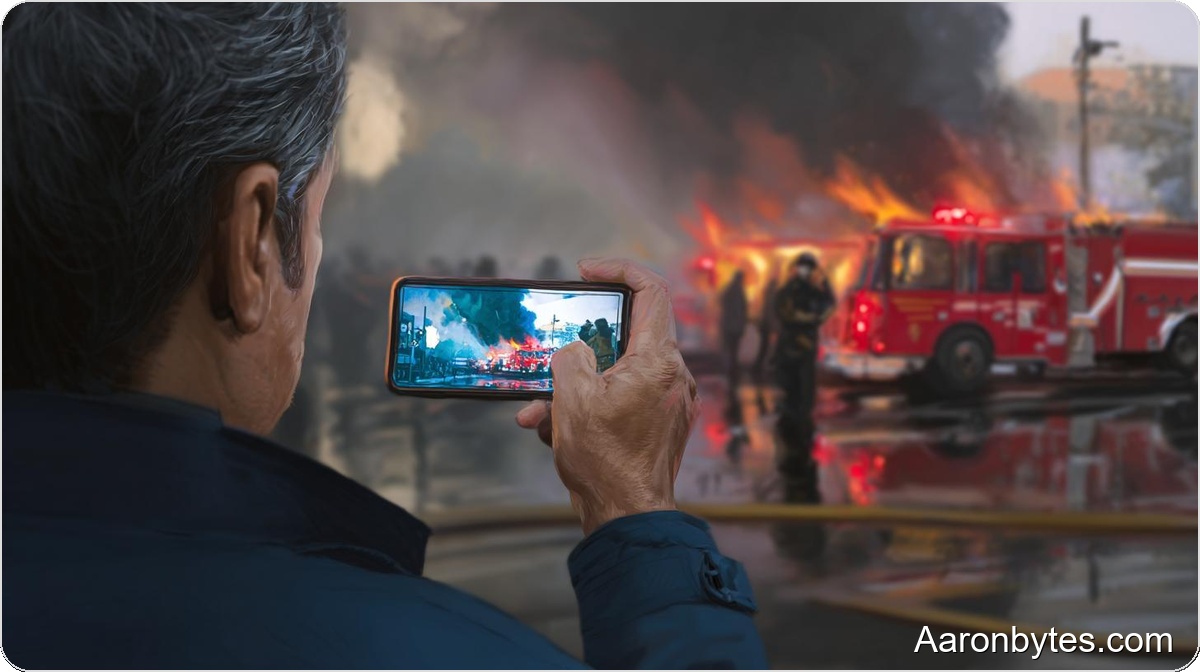
Android is rolling out a live-video option for 911 calls in the United States, letting callers share real-time footage with emergency dispatchers when every second matters.
The feature arrives first on selected public-safety platforms and requires Android 8 or later and Google Play services.
How Emergency Live Video works?

During a 911 call, a dispatcher can send a request asking the caller to start a live video stream from their phone. The caller must explicitly approve the request before any video is shared.
Streams are encrypted by default, and callers can stop sharing at any time. The intention is to give operators a clearer picture of what is happening so they can guide callers through medical interventions, help locate a lost person, or better assess other urgent situations.
Where does the rollout begin?
According to Android software engineer Alastair Breeze, the Emergency Live Video capability is launching today on three U.S. public-safety platforms: RapidSOS, Motorola Solutions, and Prepared911.
The function is currently limited to the United States and those platforms, but Breeze’s announcement makes clear the technical prerequisites: an Android phone running version 8 or newer and Google Play services enabled.
Context and similar tools
Apple introduced a similar feature called Emergency SOS Live Video in 2024, which lets iPhone users share live video or photos from the Photos app with emergency services.
Android’s iteration follows that approach, aiming to put live visual context into the hands of dispatchers while preserving user control and privacy.
What to expect next?
The initial U.S.-only rollout targets dispatch centers working with the named platforms. Wider availability will depend on additional public-safety integrations and regional regulatory decisions.
Users outside the United States will need to wait for further expansion before they can use the feature locally.