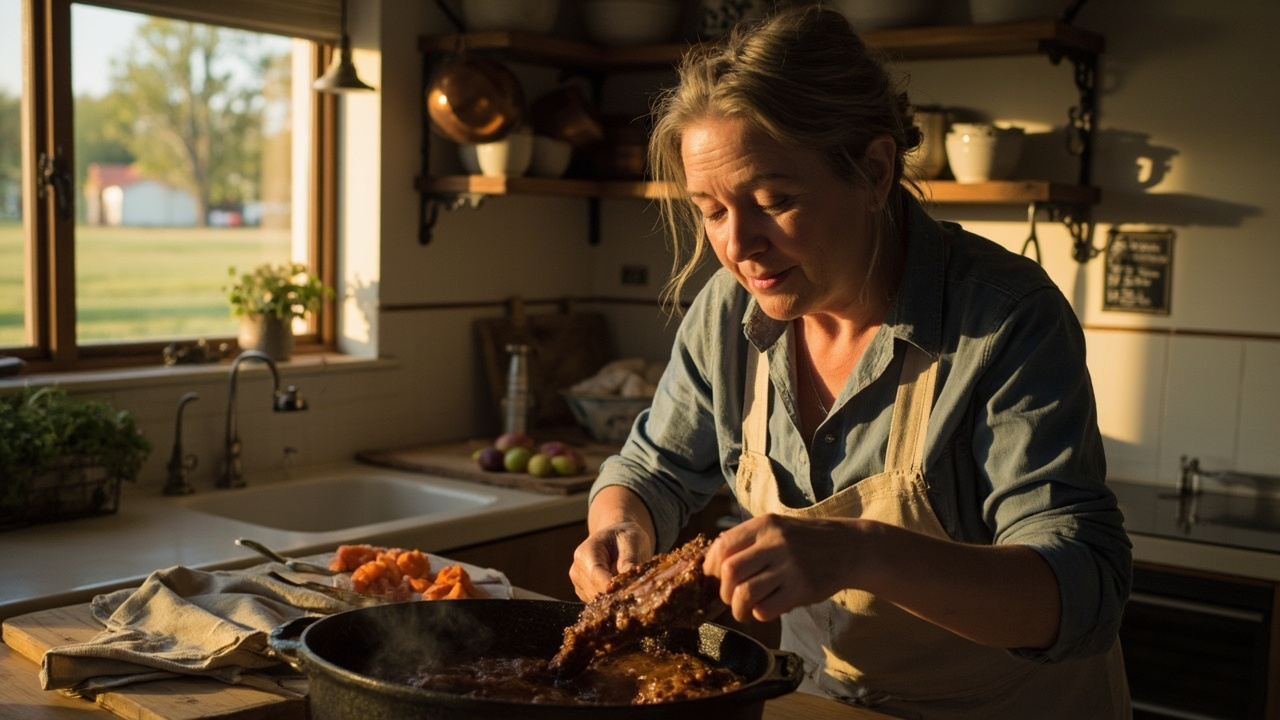
Punchy roast aroma, browned crust, and meat that yields to a fork-this basic pot roast recipe delivers all three. I learned the timing in a Paris bistro and polished it in a Southern farmhouse, so you’ll get methods that prevent tough, dry results every time.
A good pot roast gives silky shreds of beef, glossy jus, and vegetables that stay intact yet tender. You’ll catch notes of caramelized onion, earthy mushrooms, and bay leaf as it hums along in the oven.
The key is steady low heat, a confident sear to build flavor, and a proper deglaze that pulls up the fond for a sauce that keeps each slice juicy. With that rhythm, even budget cuts taste luxurious.
Why This Basic Pot Roast Recipe Works?
This recipe works because searing builds Maillard compounds that anchor roast flavor, so the crust gives more payoff than extra cooking time alone. Collagen-rich chuck melts into gelatin at low heat, which keeps fibers moist instead of stringy.
Deglazing dissolves the browned bits into the liquid, infusing the braise with concentrated flavor that circulates through the meat as it cooks. An oven braise keeps the heat even and gentle, limiting evaporation more than a hard stovetop simmer.
Adding mushrooms and tomato paste early stacks umami and gentle sweetness, so the jus tastes full and balanced. Resting the roast lets juices redistribute, which means cleaner slices and a succulent texture.
Weeknight Roast Essentials & Mushroom Magic
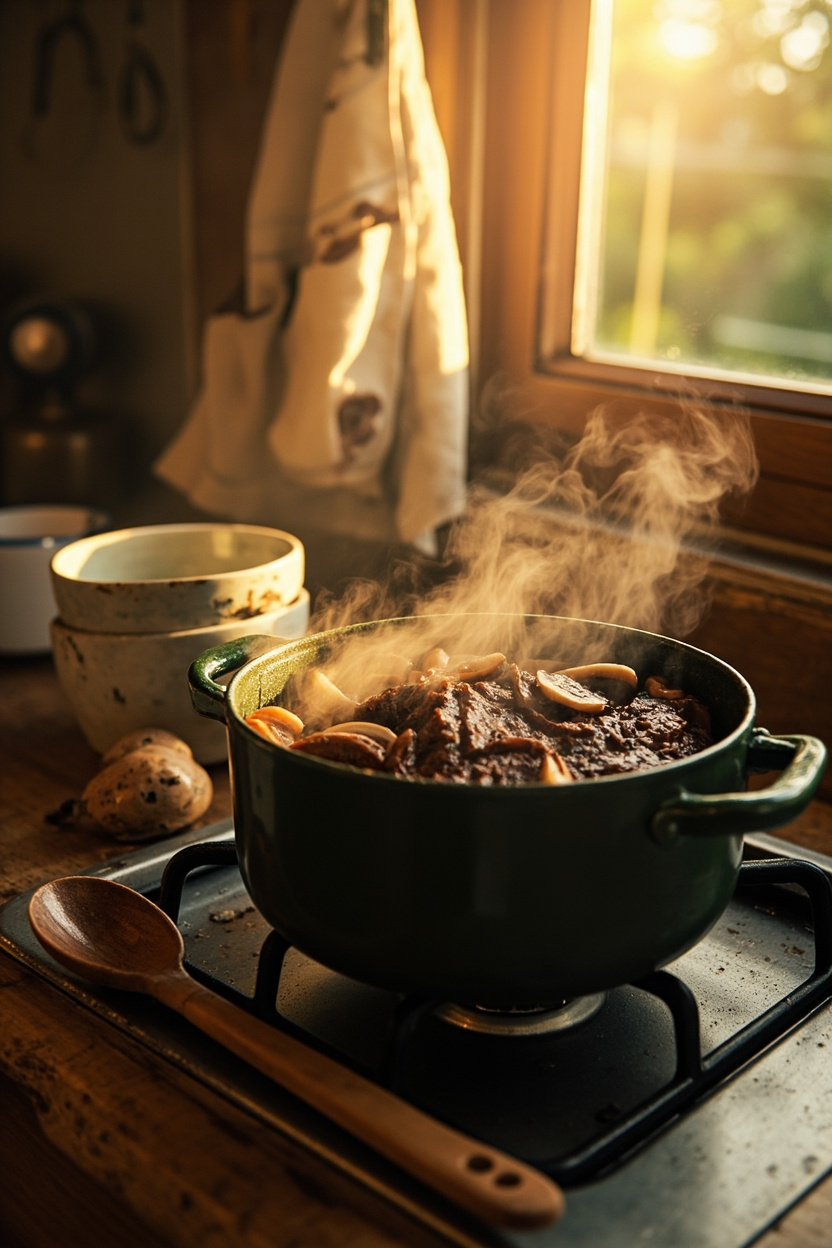
- 1.5 kg (3.3 lb) beef chuck roast – collagen turns into gelatin for a moist, tender texture.
- 30 ml (2 tbsp) olive oil – helps heat transfer and browning.
- 200 g (8 oz) cremini mushrooms – glutamates deepen savory flavor.
- 150 g (1 cup) yellow onion, diced – sugars caramelize to brighten savoriness.
- 3 cloves garlic, minced (9 g / 1 tbsp) – amplifies meaty aromas.
- 375 ml (1 1/2 cups) beef stock – enriches the braising liquid.
- 120 ml (1/2 cup) dry red wine – acidity and alcohol lift fond.
- 2 tbsp (30 ml) tomato paste – concentrated umami and acidity.
- 3 carrots, chunked (300 g / 2 cups) – mild sweetness and body.
- 2 bay leaves – subtle herbal backbone.
- Salt and black pepper to taste – heightens overall flavor.
Kitchen Tools You’ll Need
- Dutch oven or heavy ovenproof pot with lid.
- Tongs for turning meat without piercing.
- Instant-read thermometer to check doneness.
- Wooden spoon or spatula for deglazing.
Dutch Oven Deglazing Mastery
- Preheat oven to 150 C (300 F). Pat the roast dry and season well so the surface browns properly and forms a savory crust.
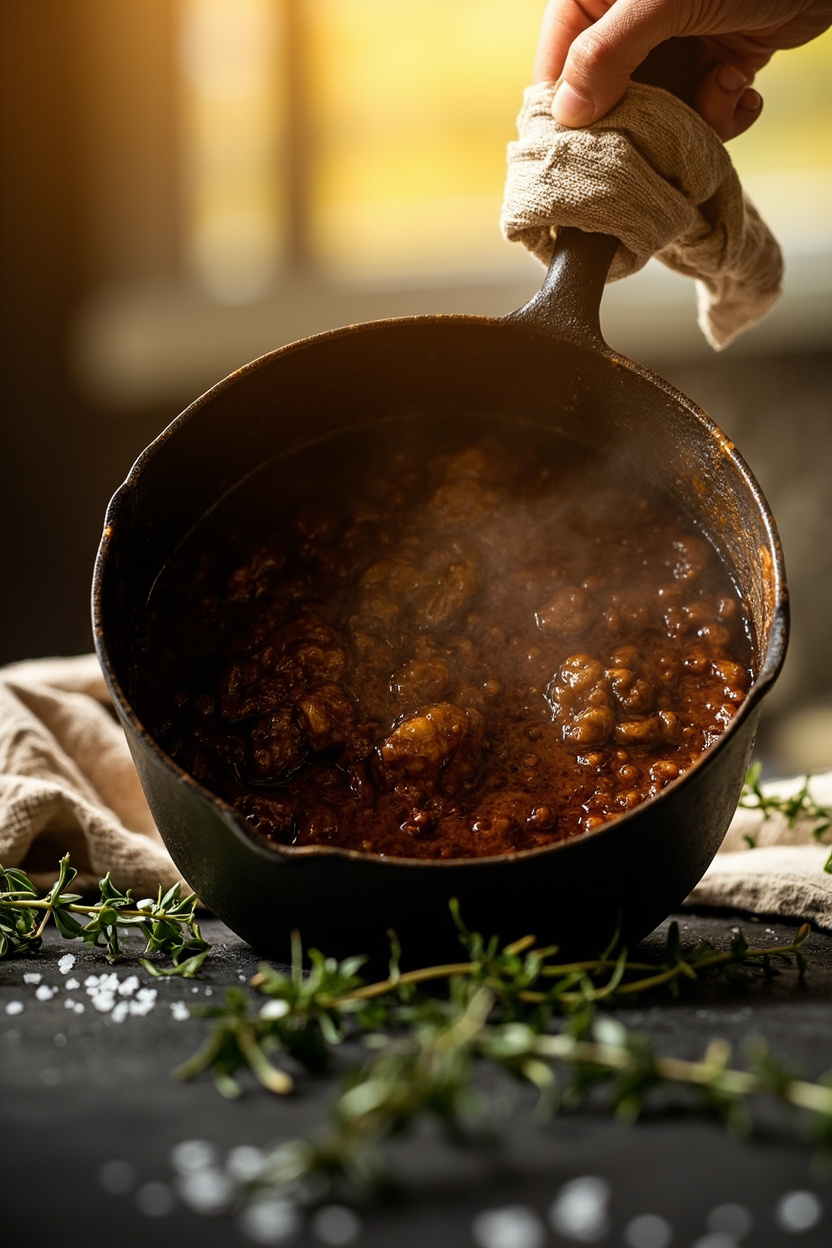
- Heat oil until shimmering, then sear 3-4 minutes per side until deeply browned. You should hear a steady sizzle and see a rich crust develop.
- Remove the meat and reduce the heat to medium. Add onions and mushrooms, stirring and scraping up brown bits as they caramelize.
- Stir in tomato paste until it darkens slightly, then add garlic for 30 seconds. Deglaze with wine, scraping as it reduces by half.
- Return roast, add stock to halfway up the meat, and tuck in carrots and bay leaves. Bring to a bare simmer with gentle bubbles.
- Cover and move to the oven. Braise 2 1/2 to 3 hours until the meat yields easily and smells richly beefy.
- Set the roast on a board and tent. Reduce and skim the sauce until glossy, season, then slice against the grain and ladle over the jus.
Sunday Southern Kitchen Secrets
Low-and-slow pays off
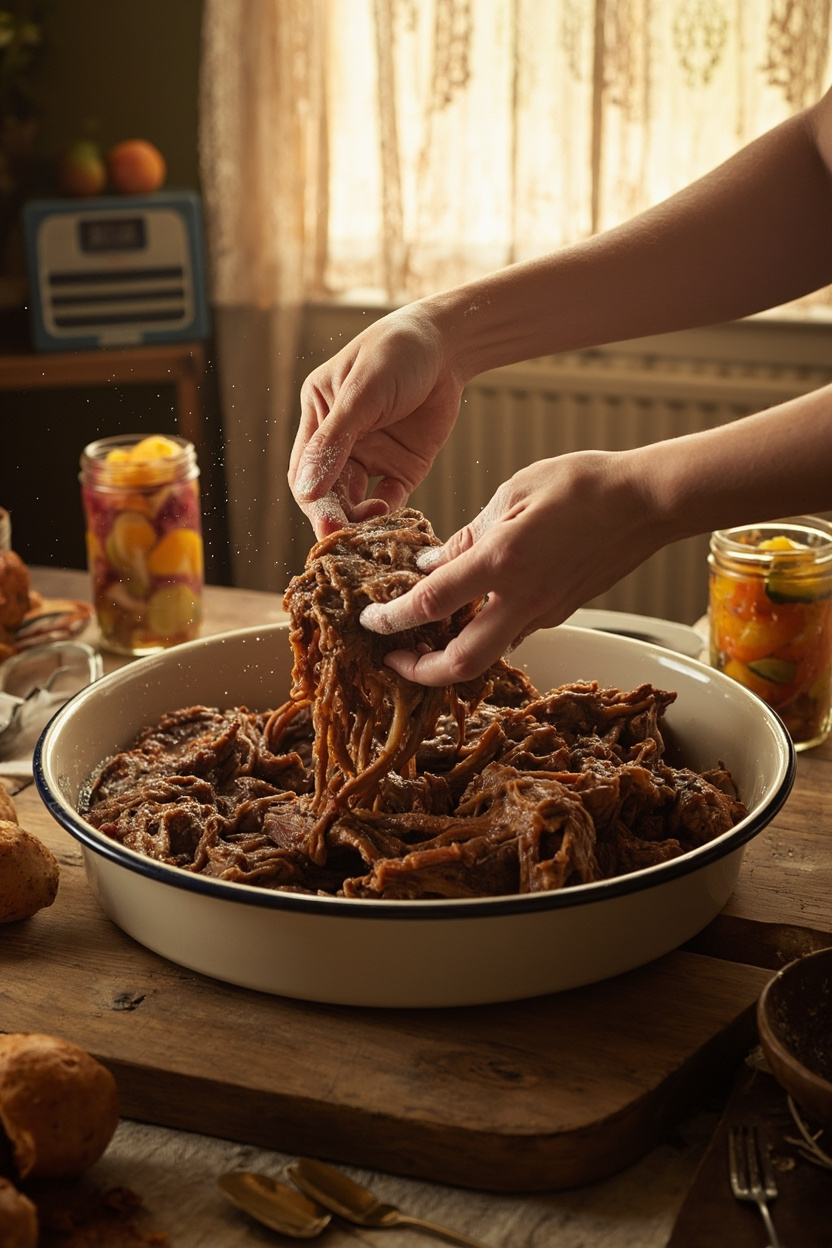
Low heat after a solid sear turns collagen into gelatin gently, delivering moist, shreddable meat. You’ll get a silkier feel than any fast, high-heat method.
Use the fond
Deglazing with wine or stock folds those browned bits into the sauce, so never skip the scrape. That flavorful base brings moisture and depth back into every slice.
How to Avoid Messing Up a Basic Pot Roast Recipe?
Over-searing or crowdingthe pan
If the pan is crowded, the meat steams instead of browning. Sear in batches and start with a dry surface for crisp, flavorful crust.
Cooking too hot
High heat drives off moisture and tightens muscle fibers. Keep the oven at 150 C (300 F) for the time, not the temperature, that does the tenderizing.
Variations and Substitutions
– Swap chuck for brisket for a beefier profile with similar collagen. – For crock pot roast, sear and deglaze, then cook on low for 7-8 hours. – Try mushroom stock or beer instead of wine for a different savory angle. – Add rosemary or thyme for a more herb-forward finish.
How to Store basic pot roast recipe?
Store leftovers within two hours in an airtight container and refrigerate for 3-4 days. Freeze in portions up to 3 months, then thaw in the fridge and reheat gently at 150 C (300 F).
Don’t leave cooked roast at room temperature longer than two hours. Keeping the meat in its jus helps it reheat moist and flavorful.
Is the Basic Pot Roast Recipe Healthy?
Yes, this pot roast is protein-rich and provides iron and B vitamins from beef plus vitamin A from carrots. It’s naturally low-carb and can be gluten-free if you choose a gluten-free stock.
Skip butter or cream to keep it dairy-free. Skim fat from the jus after chilling if you prefer a lighter plate.
Ready to make a basic pot roast recipe?
Yes, this basic pot roast recipe turns a tough cut into tender, juicy slices with a glossy, mushroom-forward jus. Follow the sear, deglaze, and low-braise rhythm, and dry, tough meat won’t stand a chance.
Frequently Asked Questions
How long should I braise the basic pot roast recipe for fork-tender meat?
Braise 2 1/2 to 3 hours at 150 C (300 F), or until an instant-read thermometer shows about 92 C (198 F) and the meat pulls apart easily.
Can I make this basic pot roast recipe in a slow cooker?
Yes, sear and deglaze in a pan, then transfer to a slow cooker on low for 7-8 hours for similar tenderness.
Will searing the roast make the meat tough in this basic pot roast recipe?
No, searing affects only the surface while the long, low braise keeps the interior tender and juicy.
Can I use other cuts for this basic pot roast recipe?
Brisket, shoulder, or rump can work; adjust time as needed and pick well-marbled cuts for the best texture.