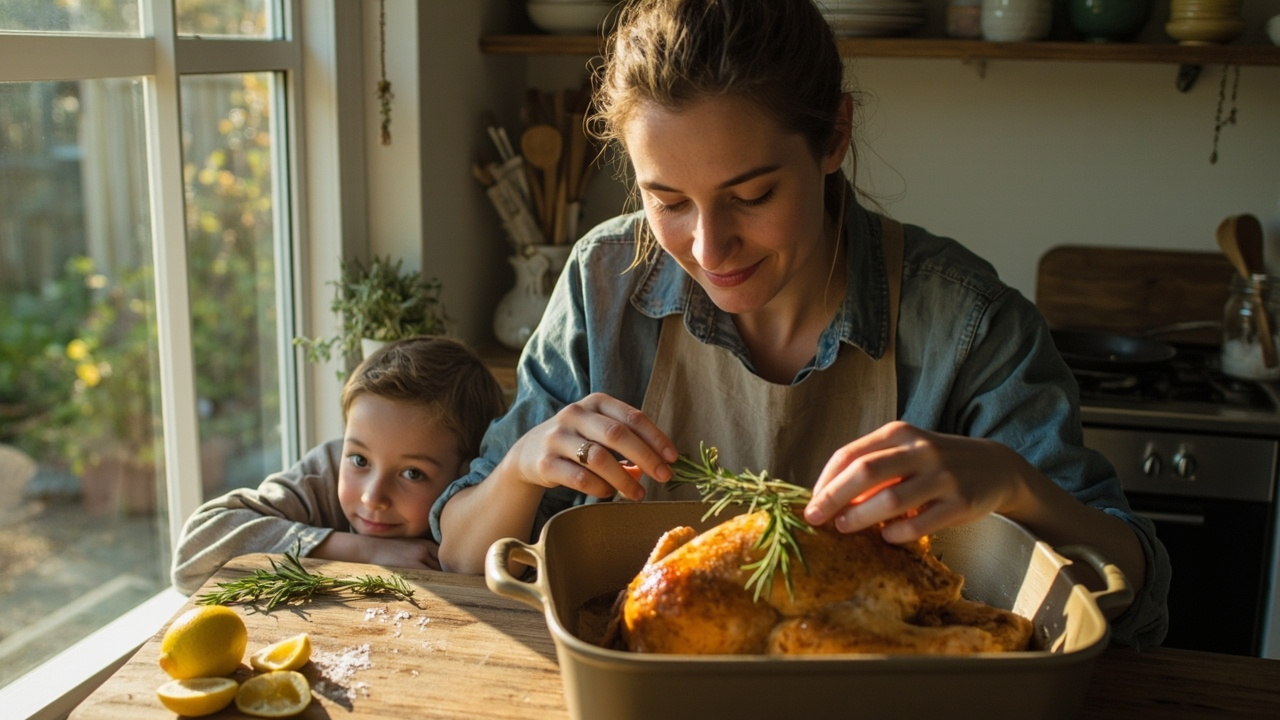
Crisp, golden skin that crackles at the first forkful and meat so tender it pulls away in soft ribbons-that’s the promise of a basic roast chicken done right. I picked up this approach from European kitchens and family Sunday roasts, and you’ll love how simple seasoning and smart heat turn a humble bird into a centerpiece.
The aroma of brown butter, garlic, and citrus fills the kitchen as the skin caramelizes. The contrast seals the deal: crunchy edges, silky juices, and herbs warming the cavity so every bite tastes intentional and homey.
How do you unlock the flavor of this basic roast chicken recipe?
High heat at the start unlocks deep flavor by driving Maillard browning for crisp, caramelized skin while the interior stays moist. Letting the bird warm slightly, tucking butter under the skin, and resting after roasting rounds out tenderness and aroma.
- High heat at the start creates rapid surface browning through Maillard reactions, giving the skin crispness and complex caramelized flavor. That first blistering roast is why the skin crackles while the interior stays moist.
- Bringing the bird to room temperature equalizes internal temperature so the center reaches doneness at the same time as the exterior browns. This avoids dry breast meat while ensuring the thigh reachesa safe temp.
- Under-skin butter and aromatics introduce fat-soluble flavor molecules directly to the meat, so herbs and garlic infuse without burning on the exterior. Fat also promotes even heat transfer for succulent texture.
- Resting after roasting allows muscle fibers to relax and reabsorb juices, producing a glossy, tender carve rather than puddles of lost moisture on the cutting board.
What are the essential aromatics for Sunday roasting?
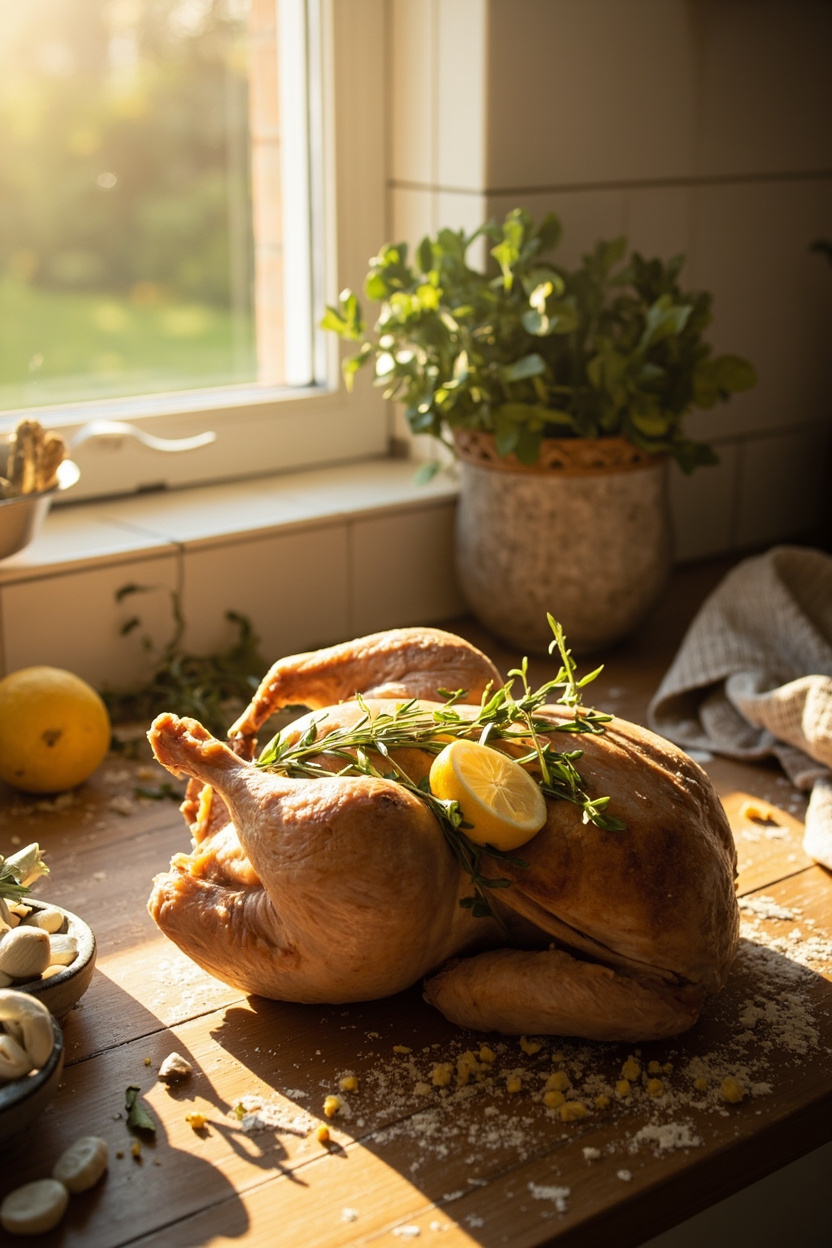
- 1.6 kg (3.5 lb) whole chicken – Balanced weight for even heat penetration and predictable cooking times based on surface-to-volume ratio.
- 15 g (1 tbsp) kosher salt – Ionic salt alters protein structure and pulls moisture to the surface to aid crisping through osmotic effects.
- 30 g (2 tbsp) unsalted butter – Saturated and unsaturated fats promote Maillard browning and carry aromatic compounds into meat.
- 1 lemon, halved – Citric acid brightens palate perception, and steam from the cavity distributes volatile aromas.
- 4 cloves garlic, crushed – Alliinase enzymes release sulfur compounds that deepen savory notes when roasted.
- Small bunch thyme or rosemary – Terpenes in herbs volatilize during roasting to scent the meat and oil.
What kitchen tools do you need?
- Roasting pan or cast-iron skillet.
- Instant-read thermometer.
- Kitchen twine.
- Paper towels.
How does the room-temperature technique yield crispy skin?
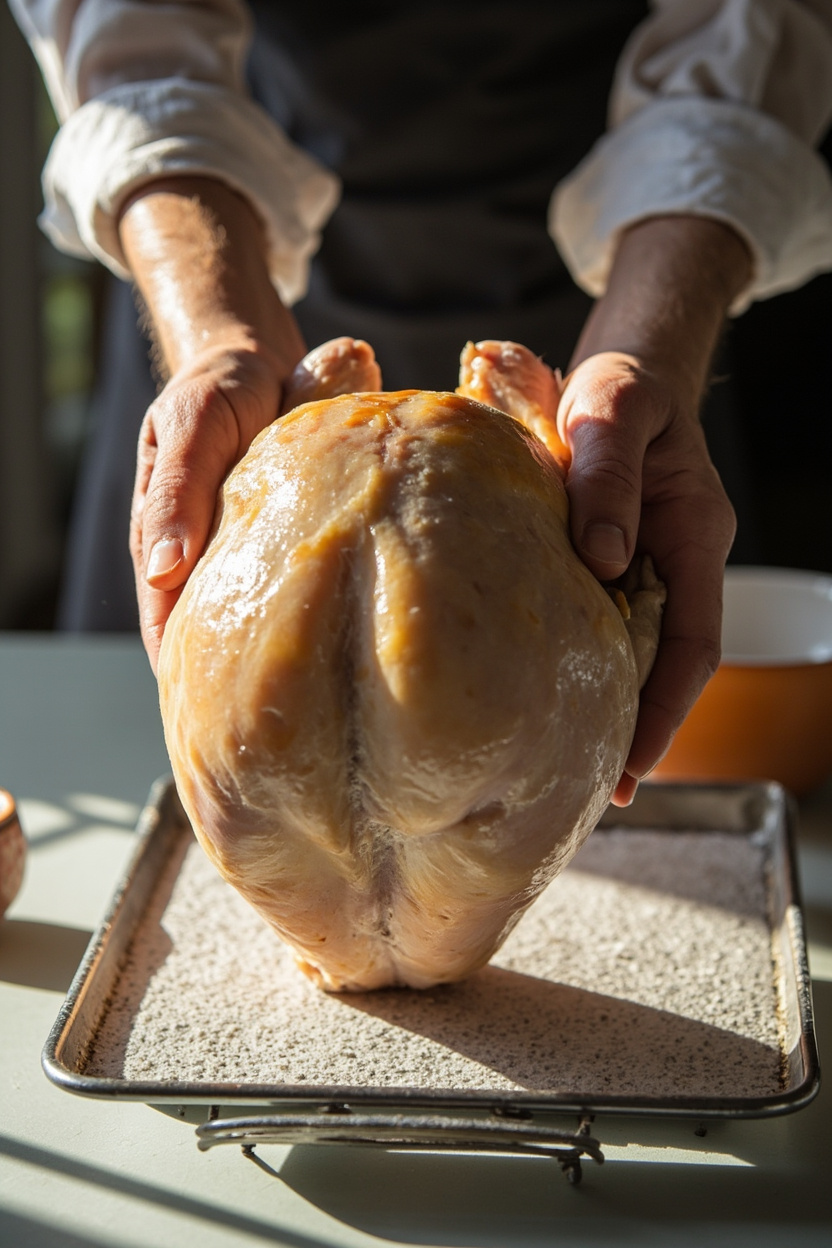
- Remove chicken from the fridge 45-60 minutes before cooking so the core warms slightly and fibers relax; the skin becomes easier to handle.
- Preheat oven to 230 C (450 F). Pat the skin completely dry until it feels slightly tacky; dry skin browns and crisps better.
- Loosen skin and massage softened butter under it; the fat melts and self-bastes the breast for silky meat and glossy skin.
- Season generously with salt and pepper on the surface and inside the cavity; set lemon, garlic, and herbs inside so steam carries aromatics inward.
- Truss legs and tuck wings to protect the tips and promote even roasting; a tidy shape cooks evenly and looks composed on the platter.
- Roast breast-side up on a rack for 45 minutes at 230 C (450 F), then lower to 190 C (375 F) and finish until the thigh hits 74 C (165 F). Watch for a nutty aroma and deep golden color.
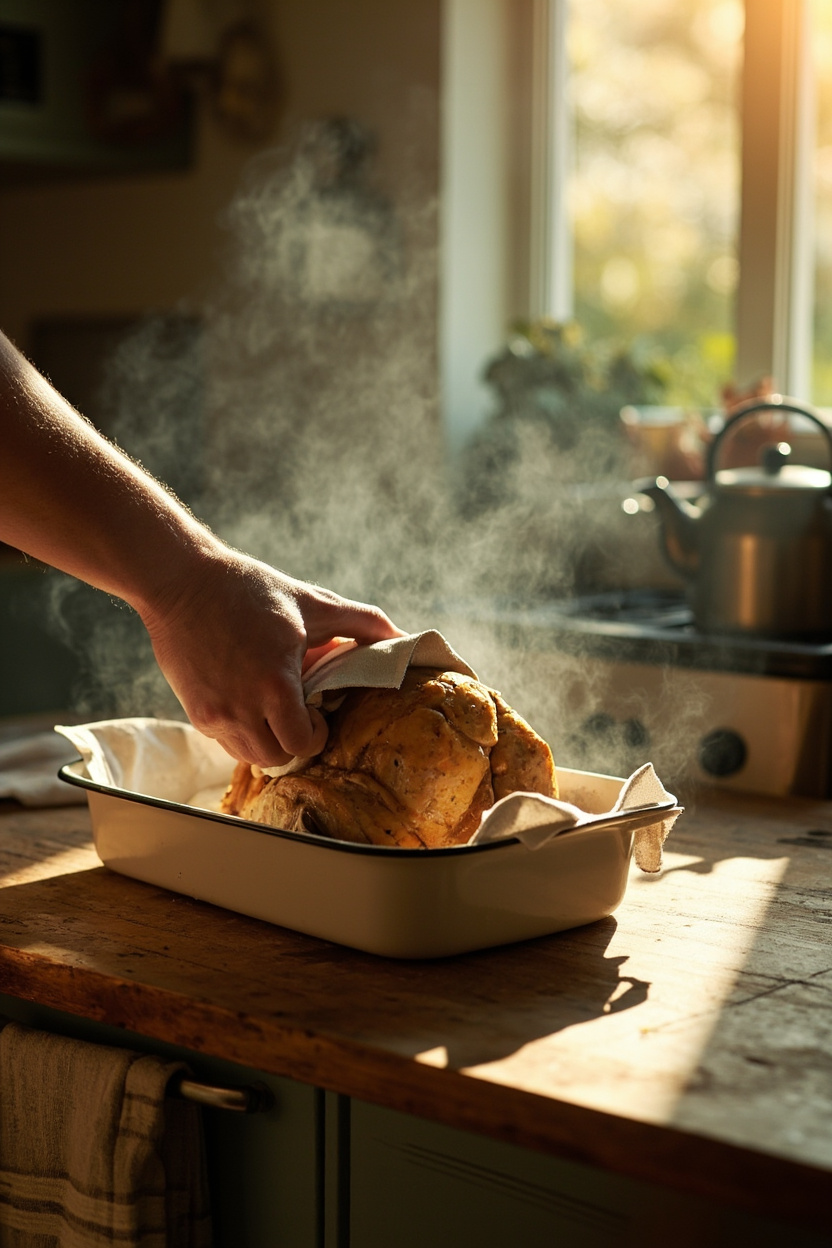
- Transfer to a cutting board and tent loosely for 15 minutes; juices settle, and the carve stays moist while the skin keeps its crunch.
Why does French-style simplicity make this perfect?
Less Is More
Keeping to salt, butter, lemon, garlic, and one herb highlights the chicken’s natural flavor. Too many add-ins can crowd the palate and mute delicate aromas.
Patience With Resting
Resting matters because it redistributes juices for a cleaner carve. Give it 15 minutes, and you’ll slice into tender meat instead of losing moisture on the board.
What are the common mistakes when making a basic roast chicken recipe?
Temperature Too High All the Way
Blasting at max heat the whole time can scorch the skin before the legs and thighs are done. Start high to brown, then reduce the heat to finish gently and evenly.
Skipping the Drying Step
Wet skin steams and turns rubbery instead of crisp. Pat thoroughly dry, and if time allows, air-chill uncovered in the fridge for an hour.
What variations and substitutions work well?
- Citrus-herb: Replace butter with olive oil and add orange zest and sage for a brighter note. – Mediterranean: Stuff with lemon and oregano, drizzle with olive oil, finish with za’atar.
- Asian twist: Rub with miso and honey under the skin, then finish with scallions and sesame. – Dairy-free: Use avocado or olive oil to keep it dairy-free.
How do you store a basic roast chicken recipe?
- Room temp: Don’t leave cooked chicken out for more than 2 hours.
- Fridge: Store in an airtight container for up to 4 days, keeping juices separate to preserve skin texture.
- Freezer: Freeze carved meat in sealed bags for up to 3 months. Thaw overnight in the fridge before reheating.
What are the nutritional benefits of a basic roast chicken recipe?
Roast chicken offers lean protein, B vitamins, selenium, and phosphorus to support muscle repair and energy metabolism. It’s low in carbs and can be dairy-free if you swap butter for oil, fitting gluten-free and many low-carb diets.
Final thoughts
This basic roast chicken recipe delivers dependable results with a dry skin prep, a room-temp start, and a high-then-moderate roast. Try it once, and you’ll see why it’s the reliable method I reach for when I want celebratory roast chicken.
Frequently Asked Questions
How long should I rest the basic roast chicken recipe before carving?
Rest it for 15 minutes under a loose tent, so juices redistribute for a juicier carve.
Can I brine this basic roast chicken recipe for extra juiciness?
Yes, a 4% salt wet brine for 4-8 hours boosts seasoning and moisture; rinse and dry thoroughly before roasting.
What internal temperature indicates doneness for this basic roast chicken recipe?
Aim for 74 C (165 F) at the thigh’s thickest point and about 68-70 C (155-158 F) in the breast before resting.
Can I roast vegetables with the basic roast chicken recipe?
Yes, add sturdy root vegetables to the pan after the initial high-heat phase so they won’t char.