Choosing the Right Sewing Machine for Hobby Use
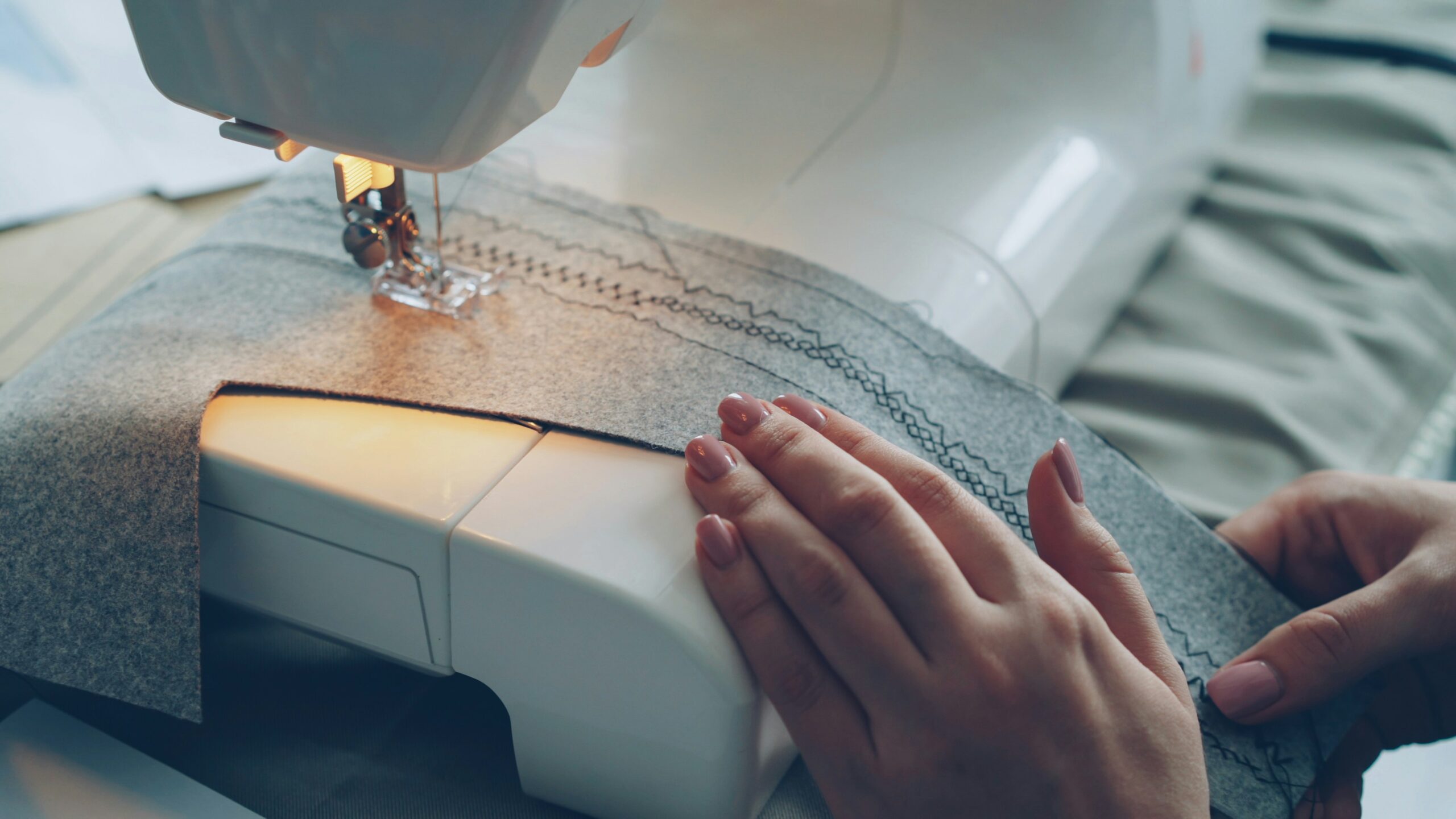
Walking into a sewing machine dealership or scrolling through online listings can feel like trying to decipher a foreign language. Manufacturers boast about wattage, hundreds of built-in stitches, and lightning-fast speeds.
But when you are sitting at your sewing table at two in the morning, trying to ease a sleeve into an armscye or push three layers of denim under the presser foot, those marketing specifications rarely matter. What matters is how the machine handles the fabric, how reliably it forms a stitch, and how long it will last before ending up in a repair shop.
Choosing a sewing machine for hobby use requires looking past the plastic casing and understanding the mechanical heart of the tool.
The Horsepower Illusion: Watts vs. Real Power
One of the most common mistakes new sewists make is judging a machine’s strength by the wattage listed on the metal tag on the back. A higher wattage should mean a stronger motor, capable of punching through thick canvas or leather.
In reality, electrical power does not equal mechanical strength. The wattage stamped on the back of a machine, calculated by multiplying volts by amps, represents the total electrical draw of everything inside the casing, including the motor, the internal computer, and the lighting.
For example, an older mechanical Janome HD3000 might list 1.0 amps (120W) on its tag, while the same newer model lists 0.8 amps (96W). The machine did not get weaker; the manufacturer replaced the old incandescent light bulb with a highly efficient LED. The mechanical performance remained identical.
Even when comparing the actual motor wattage, numbers deceive. A modern Bernina with a 90W motor can easily outperform a vintage machine with a 120W motor. Why? Because power isn’t just about input; it is about design efficiency.
A machine with a poorly engineered drive train will lose energy to friction and heat before that power ever reaches the needle. Conversely, a machine built with tight tolerances, smooth shafts, and high-quality bearings will feel significantly stronger and more responsive.
When evaluating a machine’s power, the way it sounds under a heavy load and the consistency of its stitch on dense fabric will tell you more than the spec sheet ever could.
Gears and Guts: The Metal vs. Plastic Debate
If you have ever lifted a mid-century sewing machine, you immediately noticed its extreme weight. Older machines were packed with metal gears and solid metal frames. Today, the vast majority of consumer machines are surprisingly light, heavily reliant on plastic components.
This shift began in the 1960s, not to save money initially, but to save your hearing. Early motorized metal machines were incredibly loud. Manufacturers introduced nylon gears to quiet the grinding noise and reduce the need for constant lubrication.
While they succeeded in making the machines quieter, they inadvertently put an expiration date on them. Plastic gears eventually lose their teeth or grow brittle from sitting coated in oil.
By the 1980s, the rise of discount department stores created a massive demand for cheap, mass-produced appliances. Manufacturers began replacing not just gears, but structural frames and hook assemblies with plastic to drive costs down.
The trade-off is profound. Metal parts do not just last longer; they actually improve the act of sewing. When a needle hits a dense seam, a plastic frame or gear will subtly flex under the pressure.
This flexing alters the precise timing between the needle and the bobbin hook, leading to skipped stitches or thread jams. A metal machine holds rigid, forcing the needle through the fabric with a significantly smaller margin of error, resulting in a cleaner, more reliable stitch.
The Hook System: Oscillating vs. Rotary
The hook system is the mechanism beneath the throat plate that catches the upper thread and loops it around the bobbin thread to form a lockstitch. There are two main designs, and understanding which one you are buying is crucial for your specific sewing style.
You can identify the type by removing the bobbin and turning the handwheel to watch the mechanism move.
Oscillating Hooks
An oscillating hook swings back and forth like a pendulum. It picks up the thread, carries it halfway around the bobbin cage, and then reverses direction.
- The Upside: These systems are mechanically simpler, easier to time, and highly forgiving. Because they have looser thread tolerances, a small oscillating machine can often handle thicker, heavier threads better than a more expensive rotary machine.
- The Downside: The constant changing of direction creates vibration and limits the machine’s top speed. They are also noticeably louder.
Rotary Hooks
A rotary hook spins in a continuous, full 360-degree circle around a stationary bobbin. This is the standard mechanism found in industrial machines.
- The Upside: Without the stop-and-start momentum of an oscillating hook, a rotary machine runs incredibly smooth and quiet at high speeds, completely free of vibration. They are far less prone to thread jams.
- The Downside: They require a highly precise gear or timing belt linkage. This precision means they have tight thread tolerances, and if you feed them a thread size outside of their recommended range, they can become highly temperamental.
Mechanical vs. Computerized: A Practical Comparison
The choice between a mechanical machine and a computerized one usually dictates the price tag and the lifespan of your investment.
Feature Comparison Table
| Feature | Mechanical Sewing Machines | Computerized Sewing Machines |
|---|---|---|
| Interface | Manual dials, levers, and physical knobs. | LCD touchscreens and push-buttons. |
| Buttonholes | Usually requires a 4-step sequence: adjusting the dial four separate times while manually stopping at your fabric markings. | Offers 1-step auto-sizing. High-end models (£800+) feature metal clamping plates and allow you to type the exact button size in millimeters. |
| Stitch Selection | Limited to essential utility stitches (straight, zigzag, blind hem). | Hundreds of options, including alphabets, decorative stitches, and programmable sequences. |
| Durability | Rugged, tactile, and generally easier and cheaper to repair when things go wrong. | Highly precise but delicate. Vulnerable to circuit board failures and software obsolescence. |
| Repair Costs | Typically averages around $75 for basic timing and tension adjustments. | Can escalate to $150–$300+ if the motherboard or internal sensors fail. |
Case Study: The Frustrated Quilter
Consider a hobbyist who has spent two years sewing on a basic domestic machine with a 7-inch throat space (the distance from the needle to the vertical body of the machine). When this sewist attempts to quilt a queen-sized blanket, the fabric must be tightly rolled and forcefully shoved through that tiny 7-inch harp space.
The physical fight against the fabric causes uneven stitch lengths and extreme shoulder fatigue.
The sewist assumes they need a $5,000, 18-inch long-arm machine mounted on a massive frame. However, a practical middle ground exists. Upgrading to a mid-arm machine, which offers 12 to 17 inches of throat space, provides a massive increase in working area.
This allows the quilter to handle thick batting and large patterns comfortably without the extreme financial cost or dedicated room space required by a long-arm setup. The upgrade solves a structural problem, not a software one.
Do You Need a Serger Too?
As hobbyists progress, they inevitably look at their raw, zigzagged inner seams and wonder if they should buy a serger (also known as an overlocker).
It is vital to understand that a serger does not replace a sewing machine; it is a specialist partner tool. A sewing machine is built for construction. It uses a single needle and bobbin to create a lockstitch, allowing you to insert zippers, sew buttonholes, pivot around sharp corners, and topstitch. Standard home sewing machines operate at a comfortable 800 to 1,000 stitches per minute.
A serger is built for finishing. It lacks a bobbin entirely, instead using three to five threads that loop around the edge of the fabric while a built-in blade trims the seam allowance simultaneously.
This creates an overlock stitch that stretches beautifully, making it mandatory for sewing knitwear like t-shirts, leggings, and activewear without the threads popping. Because it sews and trims in one pass, an entry-level serger can fly at 1,300 to 1,700 stitches per minute.
If you are a beginner, stick to a high-quality sewing machine to learn the fundamentals of garment construction. Once you find yourself sewing primarily stretch knits or wanting store-bought interior finishes, that is the moment to invest in a serger.
The True Cost of Ownership: Maintenance and Repairs
A sewing machine is a working mechanical engine. Failing to maintain it will drastically shorten its lifespan and ruin the quality of your output.
First, thread quality cannot be compromised. Cheap, bargain-bin thread sheds microscopic lint as it passes through the machine. This lint accumulates inside the hidden tension disks and packs tightly under the throat plate around the feed dogs.
Over time, this buildup will literally choke the machine, altering your stitch length and tension. Using high-quality, low-lint thread protects the internal mechanics.
Second, the needle is a disposable tool, not a permanent fixture. A needle begins to dull microscopically with every puncture. You should be changing your needle every 8 to 10 hours of active sewing. Pushing a dull needle through fabric causes skipped stitches, poor tension, and subtle damage to the weave of your textiles.
Even with rigorous at-home dusting and oiling, your machine requires professional servicing every two years. A technician will open the casing, clean out deeply embedded debris, check the play in the needle bar, and reset the timing.
Depending on where you live, a standard check-up and basic repair will cost between $55 and $135, with the national U.S. average hovering around $75 to $100. Be aware that if you drop off a high-end computerized machine and a circuit board requires replacement, those repair costs can easily exceed $300.
Making the Final Decision
When choosing your machine, ignore the shiny marketing decals and focus on the engineering. Sit down with a scrap of heavy denim and a scrap of lightweight cotton. Turn the handwheel toward you. A well-engineered machine will feel smooth and deliberate. Listen to the motor under load.
Whether you opt for a rugged mechanical workhorse with an oscillating hook or an exact computerized model with a rotary system and advanced auto-sizing buttonholes, ensure the machine aligns with the actual mechanics of the projects you want to sew. Hardware and reliable tension will always outlast software and decorative stitches.