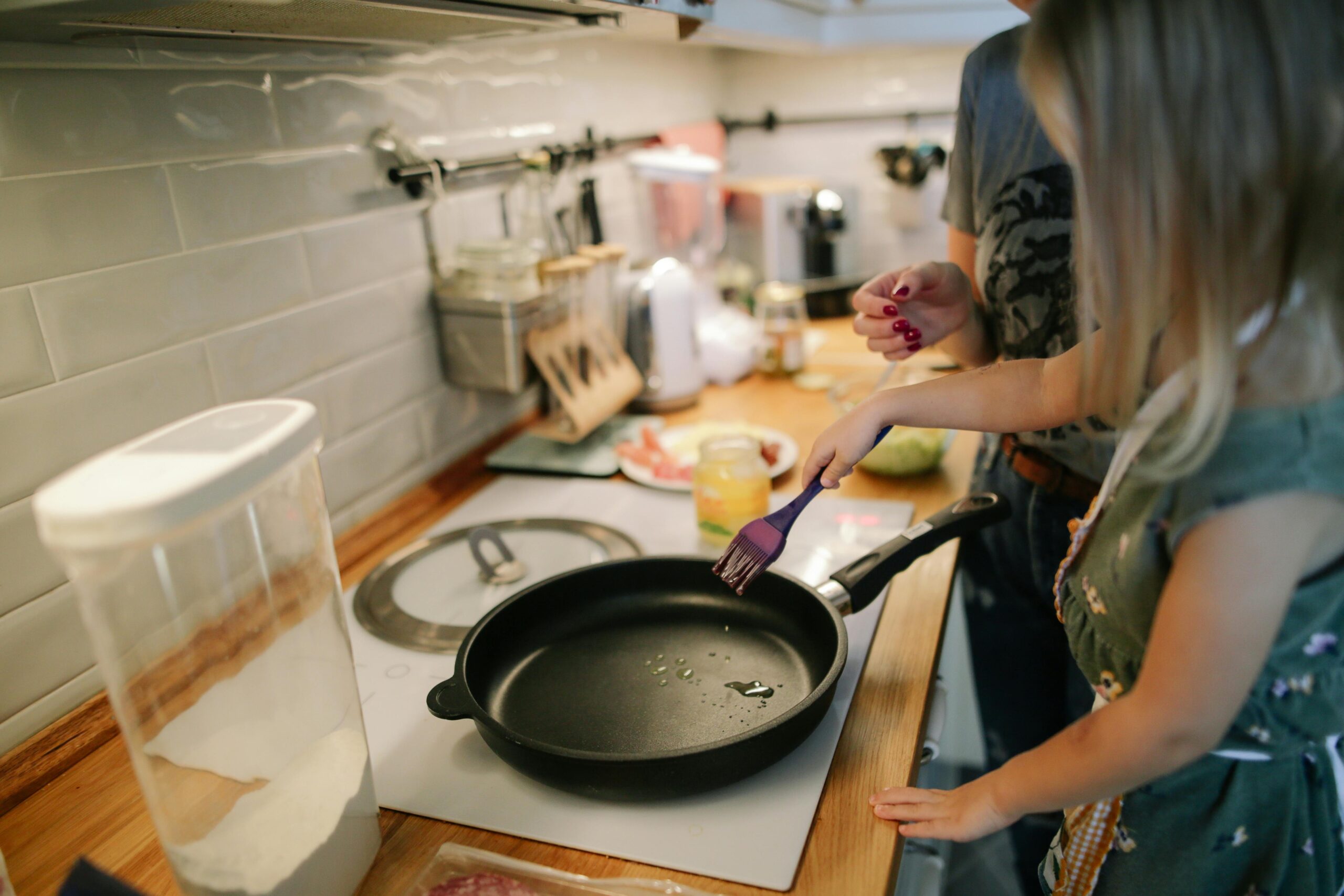
You’ve burned another dinner. The pasta is mushy, the chicken is dry, and you’re convinced cooking isn’t for you. Here’s the truth: you’re not bad at cooking, you just haven’t learned the fundamentals that make everything click.
Why Your Meals Keep Going Wrong?
Most beginners fail because they skip the basics and jump straight to complex recipes. You’re following instructions without understanding what’s actually happening in the pan. When something goes wrong, you have no idea how to fix it.
The solution isn’t more recipes. It’s mastering the core skills that apply to everything you cook.
Heat Control: The Skill Nobody Teaches You
Getting the temperature right changes everything. Too high and you burn the outside while the inside stays raw. Too low and your food steams instead of browning.
Medium-high heat is your default for most cooking. Your pan should be hot enough that a drop of water sizzles and evaporates within 2-3 seconds. If water sits there, your pan isn’t ready. If it explodes into steam instantly, you’ve gone too far.
Give your pan 2-3 minutes to preheat before adding food. Cold pans equal stuck food and uneven cooking. When you add oil, it should shimmer and move easily across the surface—that’s your green light.
Lower the heat if the food is browning too quickly. Raise it if nothing’s happening after a minute. Your stove dial isn’t set in stone.
Seasoning Food Properly (Not Just at the End)
Salt isn’t just for flavor—it fundamentally changes how food cooks. Most beginners either forget to season or dump it all on at the end, which explains why restaurant food tastes better than yours.
Season in layers as you cook. Add salt when you start cooking onions. Season the meat before it hits the pan. Taste and adjust as you go.
The basic rule: use about 1/2 teaspoon of salt per pound of food. Start with less—you can always add more, but you can’t remove it.
Pepper loses flavor when cooked too long, so add it near the end. Fresh herbs go in at the finish. Dried herbs need time to bloom, so add them early.
Taste your food constantly while cooking. If it tastes bland, it needs salt. If it tastes flat, add acid like lemon juice or vinegar. If it needs depth, add a pinch of sugar or a splash of soy sauce.
Knife Skills That Actually Matter
You don’t need to chop like a TV chef. You need consistent pieces that cook evenly.
Hold the knife with your thumb and index finger, gripping the blade just above the handle. Your other fingers wrap around the handle. This gives you control.
Your non-knife hand forms a claw—fingertips back, knuckles forward. The knife blade rests against your knuckles as you cut. This protects your fingertips.
Focus on these cuts:
- Dice: Small cubes for even cooking.
- Mince: Tiny pieces of garlic and herbs.
- Slice: Thin, even pieces for quick cooking.
- Chop: Rough, rustic pieces when precision doesn’t matter.
Keep your knife sharp. A dull knife slips and causes accidents. A sharp knife cuts where you point it. Run it across a honing steel before each use, or get it professionally sharpened twice a year.
Practice your cuts on onions—they’re cheap, and you’ll use them constantly.
Cooking Proteins Without Destroying Them
Dry, rubbery meat happens when you cook it too fast or too long. Here’s how to stop.
For chicken breasts: Pat them completely dry. Season generously. Heat oil in a pan until it shimmers. Place the chicken in the pan and don’t touch it for 5-6 minutes. Flip once. Cook until the internal temperature hits 165°F. Let it rest for 5 minutes before cutting.
For ground meat: Break it into chunks in a hot pan. Let it sit undisturbed for 2-3 minutes to develop a crust. Then break it apart and stir. Keep some larger chunks—they add texture.
For fish: Skin side down first. Press gently with a spatula for the first 30 seconds to prevent curling. Cook 90% of the way on the skin side, then flip briefly to finish.
Room temperature proteins cook more evenly. Take meat out of the fridge 15-30 minutes before cooking.
The Real Way to Cook Vegetables
Stop boiling everything. Roasting and sautéing give you flavor that boiling never will.
Roasting concentrates flavors and adds caramelization. Cut vegetables into uniform pieces. Toss with oil and salt. Spread them in a single layer on a baking sheet; crowding creates steam instead of browning. Roast at 425°F until edges turn golden brown.
Sautéing works for quick-cooking vegetables. Heat the pan, add oil, and add the vegetables. Stir occasionally, not constantly. You want some browning. Add a splash of water if things start sticking.
Dense vegetables like potatoes and carrots need more time. Tender vegetables like zucchini and bell peppers cook quickly. Add vegetables to your pan in order of cooking time—longest first, quickest last.
Season vegetables while they cook, not after. Salt draws out moisture and intensifies flavor.
Understanding When Food Is Actually Done
Relying on time alone will fail you. Stoves vary. Pan thickness varies. Starting temperatures vary.
Get an instant-read thermometer. They cost $15 and eliminate guesswork.
- Chicken: 165°F.
- Pork: 145°F.
- Ground meat: 160°F.
- Steak (medium-rare): 130-135°F.
For vegetables, use your senses. A fork should pierce easily but with slight resistance. Mushy means overcooked. Crunchy means undercooked.
Pasta should be tested 2 minutes before the package time. Bite a piece. It should have a slight firmness in the center—that’s al dente. Drain immediately when it reaches this point.
Rice is done when all the water is absorbed, and the grains are tender. If water remains but rice is cooked, drain it. If rice is hard but water is gone, add a splash more and continue cooking.
Building Flavor in Every Dish
Good cooking isn’t about complicated ingredients. It’s about layering flavors.
Start with aromatics. Onions, garlic, ginger, and celery—these form the flavor foundation. Cook them in fat until softened and fragrant.
Add your proteins or vegetables. Let them brown. Browning creates new flavors through the Maillard reaction. Don’t rush this step.
Deglaze if food sticks. Pour in wine, broth, or water and scrape the pan bottom. Those brown bits are pure flavor.
Finish with brightness. A squeeze of lemon, a splash of vinegar, or a handful of fresh herbs lifts the entire dish. This final touch is what separates good from great.
Common Mistakes That Ruin Good Ingredients
Overcrowding the pan creates steam instead of browning. Food sits in its own moisture and turns gray. Cook in batches if needed.
Not reading the full recipe first leads to missing steps and burnt food while you frantically chop vegetables. Read everything before you start.
Using cold pans makes food stick and cook unevenly. Preheat properly every single time.
Constantly stirring prevents browning. Let food sit long enough to develop color before moving it.
Skipping the resting period for meat causes juices to run out when you cut. Wait 5-10 minutes. It’s worth it.
The Essential Tools That Actually Help
You don’t need a kitchen full of gadgets. These tools solve real problems:
- Sharp chef’s knife (8-inch).
- Cutting board (large and stable).
- Heavy-bottomed pan (10-12 inch).
- Sheet pan for roasting.
- Instant-read thermometer.
- Wooden spoon.
- Tongs.
- Mixing bowls (various sizes).
Quality matters more than quantity. One good pan works better than five cheap ones.
Practice Recipes That Build Your Skills
Start with dishes that teach fundamentals without overwhelming you.
Scrambled eggs teach heat control and timing. Roasted chicken thighs teach seasoning and temperature. Stir-fried vegetables teach high-heat cooking and flavor building. Simple tomato sauce teaches layering flavors and adjusting seasoning.
Cook the same dish multiple times. Notice what changes when you adjust the heat or timing. This builds intuition that recipes can’t teach.
Moving Forward Without Fear
Cooking isn’t about perfection. It’s about making meals progressively better. You’ll still burn things occasionally. You’ll oversalt dishes. You’ll misjudge cooking times.
The difference is you’ll now understand what went wrong and how to fix it next time.
Start with one skill from this guide. Master it. Then add another. In three months, you’ll wonder why cooking ever seemed difficult.