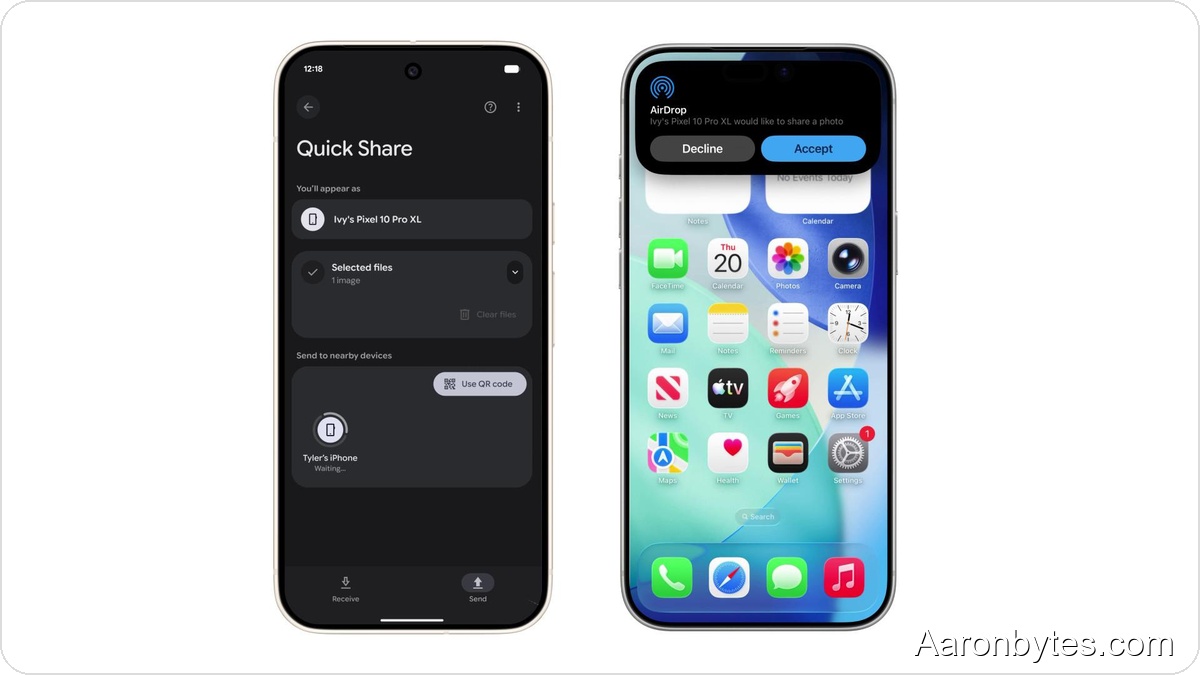
File sharing between Android and Apple devices has always been a headache. Bluetooth and other cross-platform options have long been awkward, and AirDrop and Quick Share, though similar in concept, haven’t played nice—until now.
Google has pushed a Quick Share update that enables file transfers between selected Android phones and Apple devices in both directions, without any extra apps.
How it works?
The feature is rolling out as a Google-led initiative and does not involve Apple collaboration. It relies on built-in functionality, so users do not need to install third-party software on either side to start sharing files.
According to a demonstration video Google released, transfers operate natively both from Android to Apple and from Apple to Android. Devices discover each other when Android users enable visibility in the required “Everyone for 10 minutes” mode, after which mutual detection between the two ecosystems is possible.
Current limits and plans
Right now, the capability is limited to owners of selected phones; Google says it will continue refining the system and expand support to more Android models over time. The company believes the underlying technology should make a broader rollout feasible.
Google also says it is open to working with Apple on enhancements, such as introducing contact-only sharing so users would not need to expose their device to everyone for 10 minutes. Whether Apple will engage is an open question, given that Google implemented the functionality independently.
What this means for users
For now, the change is a practical win for users who frequently move photos, documents, or other files between platforms. No extra apps, no manual transfers via cloud services, and no awkward Bluetooth pairings.
How broadly this feature will spread depends on Google’s rollout and whether Apple decides to cooperate on improvements. Either way, users on both platforms stand to benefit if Google follows through on expanding and polishing the feature.