You dropped serious money on those granite countertops. They looked stunning the day they were installed. But now? They’re starting to look dull, and you’re not sure why.
Here’s the truth: most people unknowingly damage their granite every single day. They use the wrong cleaners, follow bad advice from the internet, or skip crucial maintenance steps.
The result? A surface that loses its shine, develops stains, and eventually needs expensive professional restoration.
Why Regular Cleaners Destroy Granite?
Walk into any kitchen, and you’ll find a bottle of all-purpose cleaner under the sink. That’s the first problem.
Granite is a natural stone with a porous structure. When manufacturers polish it, they create that glossy finish you paid for. But that finish is vulnerable. Standard household cleaners contain acids, ammonia, or bleach that eat away at the sealant and eventually the stone itself.
Vinegar-based cleaners are popular for being “natural,” but they’re among the worst offenders. The acidity etches the surface, creating dull spots that never quite look right again. Windex and similar glass cleaners contain ammonia, which breaks down the sealant over time. Even dish soap, when used in high concentrations, leaves behind a film that attracts dirt and makes your counters look grimy.
The damage doesn’t happen overnight. It’s gradual. You might not notice anything wrong for months. Then one day, you realize your counters don’t shine like they used to. By that point, you’ve been stripping away protection for weeks or months.
The Right Way to Clean Granite Daily
Daily cleaning takes about two minutes. You need three things: a microfiber cloth, warm water, and granite-specific cleaner (or make your own).
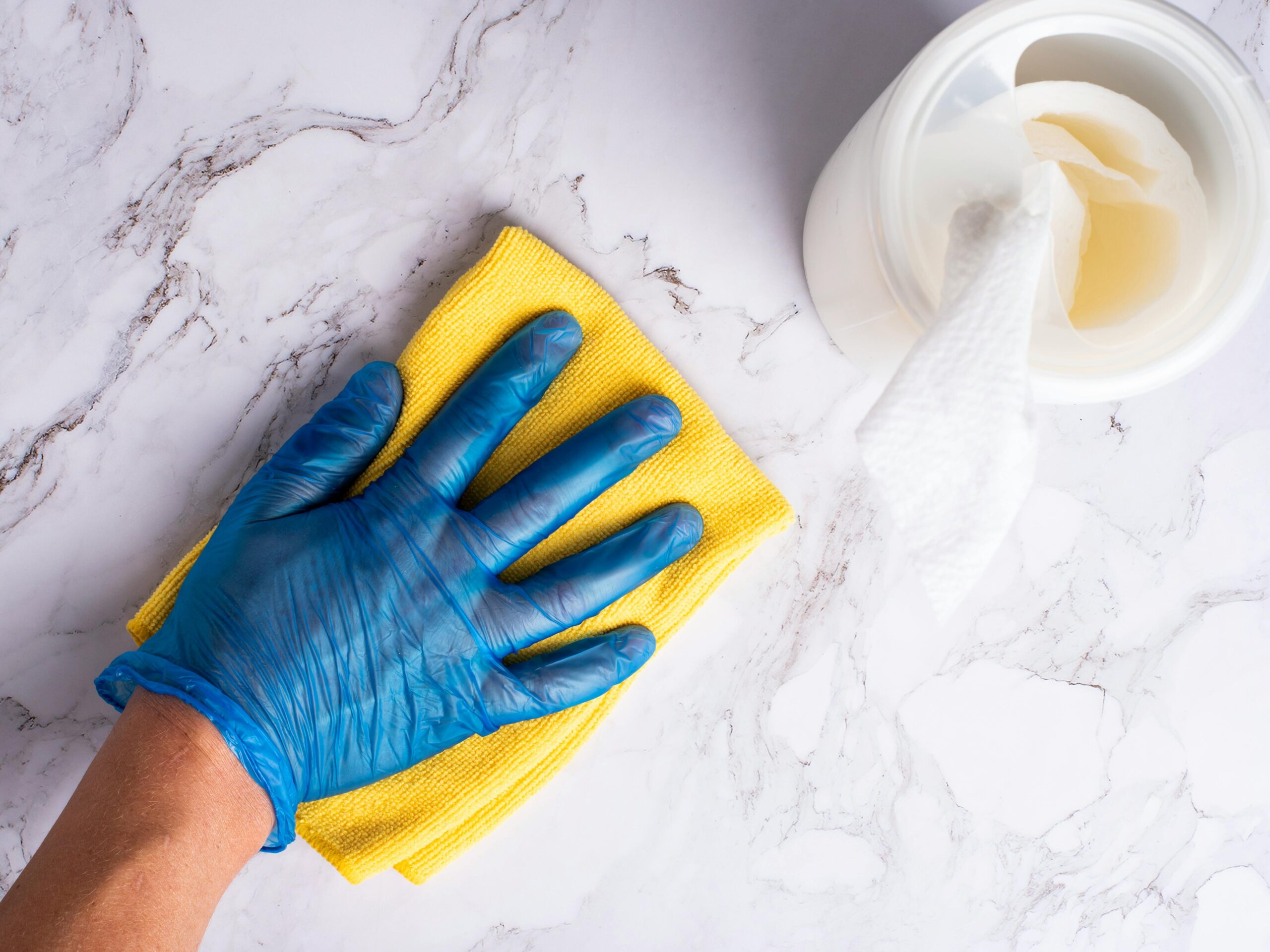
Start by clearing the counter. Remove everything so you’re working with a clean surface. Spray your cleaner directly onto the granite or onto your cloth. Wipe in circular motions, covering the entire surface. Don’t scrub hard. Granite doesn’t need aggressive cleaning for daily maintenance.
After wiping, take a dry microfiber cloth and buff the surface. This removes any remaining moisture and brings back the shine. That’s it. No complicated process, no special equipment.
For stuck-on food or spills, don’t reach for a scrub pad. Use a plastic scraper or your fingernail to lift the debris gently. Then clean as normal. Abrasive pads scratch the sealant, creating rough patches where bacteria and stains can settle.
Making Your Own Granite Cleaner
Commercial granite cleaners work fine, but you can make an effective solution at home for pennies. Mix one-fourth cup of isopropyl alcohol with two cups of water and a few drops of dish soap. Pour it into a spray bottle.
The alcohol disinfects without damaging the stone. The minimal dish soap cuts through grease. The water dilutes everything to safe levels. Shake before each use since the ingredients separate.
This mixture cleans just as well as store-bought options without the markup. A bottle costs about fifty cents to make and lasts weeks for most households.
Deep Cleaning When Daily Maintenance Isn’t Enough
Every few weeks, your granite needs more than a quick wipe-down. Oils from cooking, hand lotions, and food residue build up even with daily cleaning. You need to cut through that buildup without harming the stone.
Make a paste using baking soda and water. The consistency should be like toothpaste. Spread this paste over the problem areas or the entire counter if needed. Let it sit for five minutes. The baking soda is mildly abrasive enough to lift grime but gentle enough not to scratch.
Wipe away the paste with a damp cloth. You should rinse your clothes several times to remove all the baking soda residue. Follow up with your regular granite cleaner to remove any remaining film—dry and buff as usual.
This method handles most deep-cleaning needs without introducing harsh chemicals or risky techniques.
Dealing with Stains the Smart Way
Granite stains happen. Someone sets down a glass that leaves a ring. Red wine gets spilled during dinner. Cooking oil drips and sits overnight. Different stains need different approaches.
For oil-based stains (grease, cooking oil, cosmetics), create a poultice. Mix baking soda with water until you have a thick paste. Apply it over the stain, covering it completely with about a quarter-inch thickness. Cover the paste with plastic wrap, tape down the edges, and poke a few small holes for air. Leave it for 24 hours.
The poultice draws the oil out of the stone. Remove the plastic and let the paste dry completely. It might take another day. Once dry, wipe it away and clean the area. Stubborn stains might need a second application.
Water-based stains (coffee, wine, juice) need a different poultice. Use hydrogen peroxide mixed with baking soda instead of plain water. Follow the same application process. The peroxide bleaches the stain while the baking soda pulls it from the stone.
For ink stains, acetone (nail polish remover) works. Dampen a cloth with acetone and blot the stain. Don’t rub. Blotting lifts the ink without spreading it. Once the stain is gone, clean the area with soap and water to remove acetone residue.
Sealing: Your Granite’s Best Defense
Sealing isn’t optional. It’s the difference between countertops that last decades and ones that need replacing in a few years. The sealant fills the pores in the granite, preventing liquids from penetrating and causing stains.
Test your sealant every six months. Drip some water on the counter. If it beads up and sits on the surface, your sealant is working. If it absorbs within a few minutes, you need to reseal.
Sealing takes about an hour for an average kitchen. Clean the counters thoroughly and let them dry completely. Any moisture trapped under the sealant causes problems. Apply the sealant according to the product directions. Most require you to spread it evenly, let it absorb for a few minutes, then wipe away the excess.
Wait 24 hours before using the counters. Some sealants need 48 hours to cure fully. Check your product’s instructions.
High-traffic areas near the sink and stove need more frequent sealing. You might reseal these spots three or four times a year, while the rest of the counter only needs it twice.
What Never to Use on Granite?
Some products damage granite so quickly that a single use causes noticeable harm. Avoid these completely:
Bleach ruins sealant and discolors certain granite colors. Even diluted bleach poses risks. If you’re cleaning up something that needs disinfection, use your granite cleaner first, then follow with diluted hydrogen peroxide if necessary.
Vinegar and all acidic cleaners etch the surface. This includes lemon juice, lime-based cleaners, and anything marketed for removing hard water or soap scum. The damage from acids is permanent without professional repolishing.
Abrasive powders like Comet or Ajax scratch the surface. Those microscopic scratches add up, creating a dull finish that collects dirt. You’ll never restore the original polish without professional help.
Furniture polish makes granite look shiny temporarily, but it builds up into a sticky film that attracts every bit of dust and grime in your kitchen. Removing the buildup requires aggressive cleaning that risks damaging the stone.
Preventing Damage Before It Happens
The best cleaning is the kind you don’t have to do. A few simple habits keep your granite in better shape with less effort.
Wipe up spills immediately. Don’t let them sit, especially acidic liquids like orange juice or wine. Even with good sealant, prolonged exposure increases the risk of staining.
Use cutting boards always. Granite is hard, but knives can still cause small scratches. More importantly, cutting directly on granite dulls your knives instantly. Protect both your tools and your counters.
Place hot pots and pans on trivets or hot pads. Granite handles heat better than most surfaces, but extreme temperature changes can cause cracks, especially if there are existing weak points. The risk is small, but why take it?
Use coasters under glasses, especially those containing alcohol or acidic drinks. The condensation from cold glasses can leave rings on improperly sealed granite. Coasters take two seconds to put down and prevent potential problems.
When to Call Professionals?
Sometimes DIY methods aren’t enough. Knowing when to call an expert saves you from making problems worse.
If you have a stain that won’t respond to poultices after two or three attempts, a professional has stronger solutions and techniques. They can often remove stains that seem permanent to homeowners.
Etching from acidic damage requires repolishing. This isn’t something you can do at home without expensive equipment. Professionals have diamond polishing pads and the experience to restore the finish without creating uneven spots.
Deep scratches and chips need expert repair. Surface scratches might buff out, but anything you can catch your fingernail on requires professional attention. They fill chips with color-matched epoxy that becomes nearly invisible.
If your granite has lost its shine overall and cleaning doesn’t help, professional repolishing brings back the original finish. This typically costs a few hundred dollars but looks like new countertops when done correctly.
Long-Term Granite Care Strategies
Maintaining granite gets easier once you establish good habits. Think of it like car maintenance. Regular oil changes are easier and cheaper than replacing an engine.
Schedule sealant checks into your calendar. Every six months, do the water bead test on multiple spots around your counter. Reseal as needed. This takes an hour twice a year and prevents years of potential problems.
Keep granite cleaner accessible. If it’s under the sink behind ten other bottles, you won’t use it. Keep it on the counter or in an easy-to-reach spot. When cleaning is convenient, you do it more consistently.
Educate everyone who uses your kitchen. Kids need to know not to leave juice boxes on the counter overnight. Guests should understand that your beautiful granite needs basic care. Most people respect your property when they know why certain habits matter.
Document your granite’s details. Know what type you have, when it was installed, and what sealant was used. This information helps professionals determine if you need repairs and enables you to make informed decisions about care products.
The Bottom Line on Granite Care
Your granite countertops represent a significant investment in your home. They add value, functionality, and beauty to your kitchen. But they’re not maintenance-free, despite what some installers claim.
The good news? Proper care doesn’t require much time or money. Two minutes of daily cleaning with the right products, periodic sealing, and smart prevention habits keep your granite looking incredible for decades. The bad news? Neglect or improper cleaning methods cause damage that’s expensive or impossible to reverse.