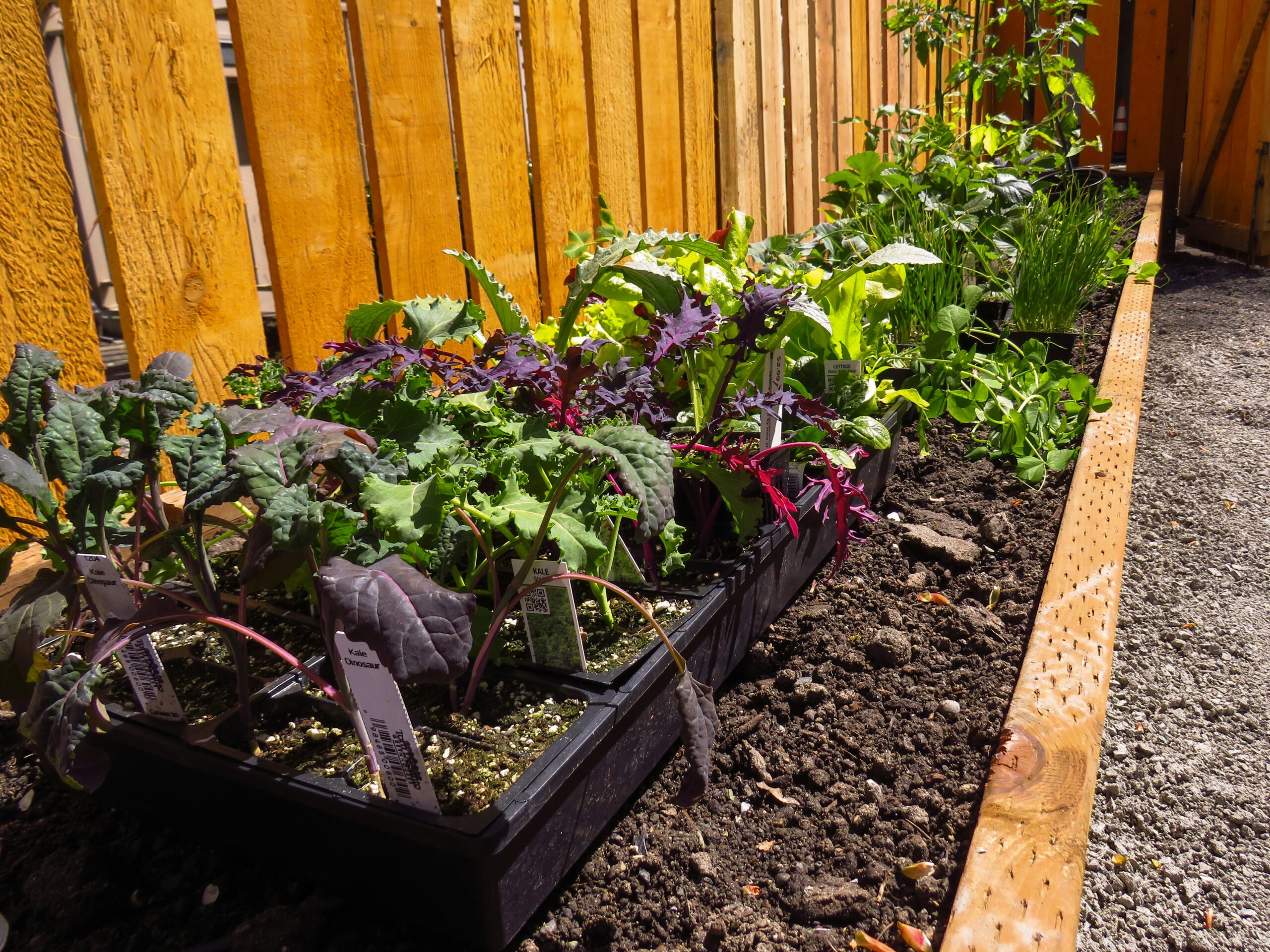
Many landscaping and growth problems can be resolved with raised garden beds. Elevating your garden is the best option if you are dealing with hard clay soil, aggressive underground weeds, or want to save your lower back from the effort of ground-level gardening.
Because you never really walk on the growing surface, elevated beds reduce soil compaction and warm up considerably faster in the spring, giving you an early start to the growth season.
While there are many cheap, easily assembled kits available at garden centers, creating a custom raised bed guarantees long-term structural integrity and lets you customise the size, composition, and soil biology to fit your unique setting.
Designing Your Layout: The Dimensions That Matter
Determine the actual footprint of your bed before you cut a single plank or move a wheelbarrow of dirt. The dimensions are determined by plant biology and human ergonomics, not by chance.
- Width: The golden rule of raised beds is never to exceed a width of 4 feet if you have access to both sides. This measurement ensures you can comfortably reach the center of the bed for weeding and harvesting without ever needing to step onto the soil. If your bed is positioned against a wall or fence where you only have one-sided access, restrict the width to 2 feet (approximately 500mm).
- Length: A length of 8 feet is standard because it maximizes standard lumber sizes without requiring excessive mid-span support, though beds can range anywhere from 2 to 12 feet.
- Depth: A common mistake is building beds too shallow. Most vegetables require a minimum of 10 to 12 inches of loose, nutrient-dense soil for optimal root establishment. Shallower beds (under 12 inches) run a high risk of poor drainage and nutrient competition. If you suffer from back pain or use a wheelchair, you may want to construct beds as tall as 24 to 36 inches (615mm to 1000mm).
Material Trade-Offs: Wood vs. Metal
The material you choose dictates the upfront cost, assembly time, and lifespan of your garden.
| Material Type | Estimated Lifespan | Pros | Cons |
|---|---|---|---|
| Untreated Pine/Spruce | 3–7 Years | Highly affordable; easy to cut and customize. | Will eventually rot; requires replacement. |
| Cedar / Redwood | 6–10+ Years | Naturally rot and insect-resistant; classic aesthetic. | Much more expensive, redwood poses sustainability concerns. |
| Galvanized Metal | 20+ Years | Rot-proof, rust-resistant, ultra-durable, and lightweight. | Can be costly upfront; DIY metal requires filing sharp edges. |
| Upcycled / Scraps | Varies | Practically free (e.g., old bamboo, pallet collars, woven branches). | Often looks temporary or ramshackle; pallets may only last 5 years. |
A Note on Toxic Materials: Never use older pressure-treated lumber preserved with chromated copper arsenate (CCA) or pentachlorophenol, as these chemicals can easily leach into the root zone of your food crops. If you want a safe, organic vegetable garden, stick to untreated hardwoods, food-safe aluzinc galvanized steel, or line the inside of your beds with a heavy-duty, fish-safe pond liner to create a barrier.
Step-by-Step Implementation: Building a Standard 4×8 Wooden Bed
This straightforward build utilizes basic untreated lumber. It yields a strong, 10-to-12-inch deep bed that is perfect for a backyard grower.
Material & Tool Checklist
- Three 2″ x 10″ x 8′ boards (untreated pine, spruce, or cedar).
- One 2.4-meter (8-foot) length of 2″ x 3″ timber for interior corner blocks OR four 9-inch Z-max metal staircase brackets.
- A box of 2.5 to 3.5-inch (65mm) rust-resistant decking screws.
- Power drill, tape measure, and a level.
- Optional: Heavy-duty damp-proof membrane or landscaping fabric.
Assembly Instructions
- Cut the Lumber: Take one of your 8-foot boards and cut it exactly in half to create two 4-foot lengths. These will serve as the short ends of your bed. Cut your 2″x3″ timber into four 12-inch lengths to act as corner braces.
- From the Short Ends: Lay a 4-foot board flat. Set a 12-inch corner block flush underneath each end of the board. Drive four decking screws through the face of the 4-foot board directly into the block. Repeat for the second 4-foot board. You now have the two ends of your bed complete with mounting blocks.
- Attach the Long Sides: Stand the pieces upright. Take an 8-foot board and butt it against the corner block of the 4-foot end piece, forming an L-shape. Drive your screws through the exterior of the 8-foot board into the hidden 2×3 block. Do not use nails, as the swelling and contracting of wet soil will inevitably force nails to back out of the wood.
- Level and Line: Position the assembled frame in your yard. Use a spirit level to ensure the bed is sitting evenly; uneven beds lead to water pooling at the lowest end, depriving high-end plants of moisture. Optionally, staple a damp-proof membrane to the interior walls of the wood. This simple step prevents wet soil from resting directly against the timber, adding years to the bed’s lifespan.
Case Study: Adapting to a Sloping Yard
Not every backyard is perfectly flat. When I was faced with installing beds on a noticeable southward slope, digging out terraced steps proved exhausting and caused extreme soil erosion.
Instead, build the rectangular wooden box as described above, and place it exactly where you want it. Go to the downhill side and lift that end of the box until your spirit level reads dead-center, then prop that floating end up with temporary wooden blocks or bricks.
Next, take a scrap piece of lumber (like a 2×4 or 2×6) and lay it on the ground against the gaping space beneath your leveled box. Trace the angle of the ground onto the wood, and cut it with a saw.
You can then slide this custom-tapered board into the gap and screw it into extended wooden corner stakes. Finally, for any bed over 6 feet long on a slope, add a metal or wooden cross-spanner across the middle of the frame, buried a few inches below the soil line.
Wet soil is incredibly heavy, and without a spanner, the downhill side of the bed will eventually bow outward.
The Sub-Surface Secret: Layering Your Soil
The most frequent mistake gardeners make is building a beautiful frame and unquestioningly filling the entire volume with expensive bagged compost. Raised beds operate as distinct ecosystems. The structural sequence of the soil matters deeply. According to soil experts, the cardinal rule of raised beds is: coarse material goes below fine material.
If you reverse this order, fine soil compacts against dense material, preventing oxygen circulation and causing water to pool. Here is the optimal layering structure for healthy root zones:
Layer 1: The Base Barrier
Your bottom layer depends entirely on your local pest and weed pressure. If you have aggressive perennial weeds, lay down biodegradable cardboard; it suppresses weeds by blocking light but rots away in a few months, allowing your plants’ roots to tap into the native soil below.
If you battle burrowing gophers or voles, staple galvanized hardware cloth directly to the bottom of the wooden frame. Do not use a thick plastic tarp at the base, as it destroys drainage and suffocates the bed.
Layer 2: Coarse Filler (The Hugelkultur Method)
To save money on soil, you can fill the bottom portion of deep beds with logs, branches, and old wood chips. However, wood alters underground nitrogen behaviors. As microbes digest fresh, carbon-heavy wood, they pull vital nitrogen out of the surrounding soil, a process known as nitrogen drawdown.
- The Depth Rule: If your bed is shallow (under 12 inches), do not use wood filler. Roots will hit the decomposing wood too fast, resulting in yellowing leaves and stunted, nitrogen-starved plants. If your bed is 18 inches or deeper, it is perfectly safe to fill the bottom third with logs, as the active root zone will remain safely above the decomposition zone.
Layer 3: The Nitrogen Buffer
If you used wood filler, you must place a buffer layer directly on top of it. Add nitrogen-rich materials like grass clippings, fallen leaves, or fully decomposed manure. This creates a transition zone that pacifies the microbes and stops them from stealing nutrients from your topsoil.
Layer 4: The Root Zone Mix
This is where the magic happens. You need a minimum of 10 to 12 inches of high-quality planting mix. A highly reliable industry standard is a ratio of 70% quality topsoil to 30% compost.
Topsoil provides essential mineral weight and structural stability, preventing the bed from collapsing, while compost retains moisture and delivers nutrients. Alternatively, for absolute maximum production in smaller beds, you can use “Mel’s Mix”—an equal blend of 1/3 compost, 1/3 peat moss (or coconut coir), and 1/3 vermiculite.
Common Mistakes to Avoid
- Leaving Soil Exposed Against Wood: Failing to line the inside walls of untreated wood with a waterproof membrane (like thick plastic or landscape fabric) guarantees premature rot.
- Using 100% Compost: Filling a bed with bagged compost might seem like a luxury, but pure compost lacks mineral structure. It will severely compact and settle within a few months, leaving your plants sinking into a fluffy but unstable medium.
- Too Wide to Manage: Building a bed 5 or 6 feet wide means you will eventually have to step into the bed to reach the center crops. Compacting the soil with your boots defeats one of the primary benefits of raised bed gardening.
Final Thoughts
Building a raised garden bed improves the production of your land. By choosing the correct structural materials, whether untreated timber is more cost-effective or galvanised metal has a multi-decade lifespan, and adhering to soil stratigraphic science, you may remove the daily problems of traditional row gardening.
Prioritise a depth of at least 12 inches, remove your coarse carbon fillers from your active root zone, and enjoy the physical benefits of a high-yield harvest.
Frequently Asked Questions
Can I use pressure-treated timber for vegetable beds?
It is strongly discouraged. Older treated woods include arsenic, and even modern treatments use strong chemicals to fight fungi and insects. Because the soil and roots press directly against the internal walls, these pollutants can enter the root zone. Stick with untreated pine, natural cedar, or galvanised steel.
Should I cover the bottom of the bed in landscape fabric?
Only if the weed pressure is extreme, heavy garden fabric efficiently inhibits weeds while also trapping soil life. It prevents native earthworms from moving into your bed and deep-rooted foods (such as tomatoes) from penetrating the native subsoil. A layer of plain cardboard is commonly preferred because it kills grass while gradually decomposing.
Do metal raised beds become too hot in the summer?
This is a prevalent myth. While metal absorbs heat and warms the soil more quickly in the early spring, high-quality galvanised steel and aluminium beds do not overheat the soil to harmful levels, even in mid-summer. The soil mass regulates the temperature well.