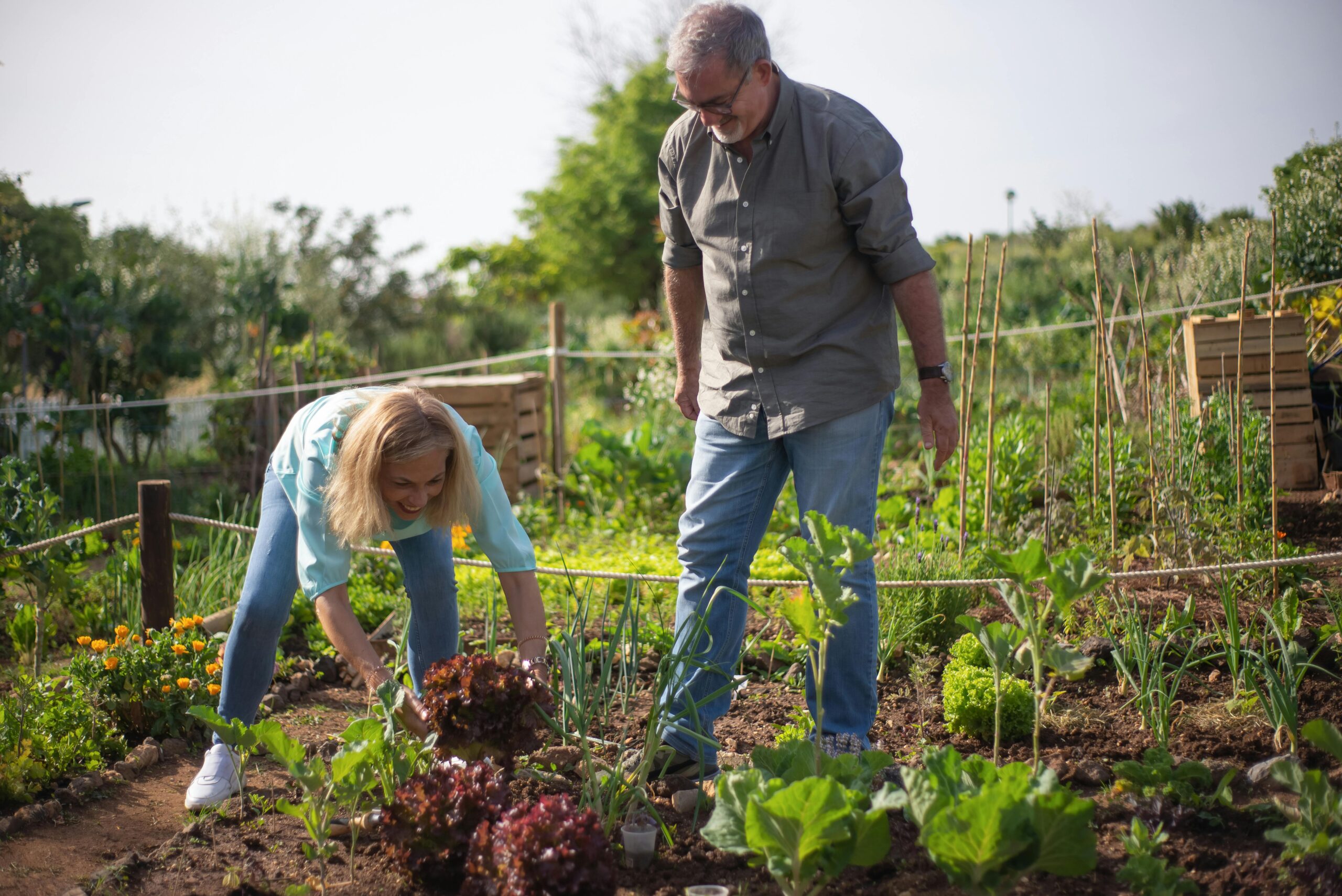
You may buy the best heirloom seeds in the world, but if you put them in a bad spot with dead soil, your money will be wasted. While it’s true that growing your own food is very satisfying, the romanticized version of gardening often skips over the hard parts, like figuring out how much sun to get and how to make sure the soil stays healthy.
You need to build a biological system if you want your yard to give you lots of food instead of stress.
The Non-Negotiables of Site Selection
Location dictates your entire gardening ceiling. You can amend terrible soil, and you can build taller beds, but you cannot manufacture sunlight.
Spend a few days observing your yard before putting a shovel into the ground. Most vegetable crops require a minimum of six hours of direct sunlight per day to photosynthesize enough energy for fruiting.
If you only have a partially shaded yard, you will need to pivot your expectations away from tomatoes and peppers, and instead focus on cool-weather, shade-tolerant crops like lettuce, spinach, and brassicas.
When mapping your site, account for the hidden underground environment. Never place a vegetable garden within the root zone of a black walnut tree. These trees exude juglones—a chemical compound that stunts or kills many common vegetables, particularly tomatoes. Keep in mind that a tree’s root system often extends three to five times the height of the tree away from its trunk.
Consider proximity to your water tap. If your garden is a hundred feet from the nearest hose bib, your plants will inevitably suffer. Hauling water by hand in the middle of a July heatwave is a guaranteed recipe for garden failure.
Architecture of the Garden: In-Ground vs. Raised Beds
You have two primary options for structuring your growing space: planting directly into the native earth or building raised beds.
Direct sowing into the ground is cost-effective, but requires intensive soil amendment, sod removal, and leaves your plants vulnerable to compaction from foot traffic. Raised beds, by contrast, offer distinct advantages.
They warm up faster in the spring, allowing you to plant earlier and preventing you from compacting the soil because you never step where you grow. A raised bed built to a height of two or three feet also saves your lower back during weeding and harvesting.
The primary downside to raised beds is the upfront cost of materials and the volume of soil required to fill them. In hot climates, they also dry out significantly faster than in-ground gardens, demanding more rigorous irrigation strategies.
Real-World Scenario: Building and Filling on a Budget
If you opt for raised beds, you do not need to spend a fortune on prefabricated kits. You can build a highly durable 1×2 meter (approximately 3×6 foot) bed using basic lumber.
Use 1×6-inch treated timber (like spruce) for the sides, and 2×3-inch timber cut into 12-inch lengths for the interior corner supports. Always use rust-resistant decking screws, specifically 4.5x65mm—rather than nails.
Nails will inevitably pull out as the wet wood expands and contracts over the seasons. To extend the lifespan of the wood, staple a heavy-duty damp-proof membrane to the interior walls before adding soil.
Filling a deep raised bed purely with bagged garden center compost is a financial mistake. Instead, utilize the hugelkultur method to build the soil profile. Line the bottom half of your bed with fallen branches, logs, and wood chips.
Add a layer of partially composted kitchen scraps, fallen leaves, and aged horse manure. Finally, cap the top 6 to 8 inches with a high-quality sandy loam topsoil and finished compost. The wood at the bottom will slowly decay over the years, acting as a sponge that retains moisture and slowly releases nutrients back up to your plant roots.
Soil Health: Decoding the Dirt
Plants are only as healthy as the biological web beneath them. Before planting, you must understand your soil’s texture, pH, and nutrient profile.
The Peanut Butter Jar Texture Test
Soil is made of sand, silt, and clay. The ideal garden texture is a loamy mix: roughly 40% sand, 40% silt, and 20% clay. To test your native soil, dig down about six inches and fill a straight-sided jar (like a peanut butter jar) one-third of the way with soil. Fill the rest with water, cap it, and shake vigorously for three minutes.
- At 1 minute: Mark the sediment line on the glass. This heavy material is your sand.
- At 4 minutes: Mark the new line. This is your silt.
- At 24 hours: The final layer to settle is clay.
If your soil skews heavily toward clay, amend it by working in compost and coarse sand (never beach sand). If it is overly sandy and drains too rapidly, incorporate heavy amounts of peat moss, aged manure, and leaf mold to build moisture retention.
Understanding NPK and pH
A professional soil test from your local university extension is the gold standard. It will measure your soil’s pH, which should ideally sit between 6.0 and 7.2 for most vegetables. If the pH is too high or too low, the plant roots literally cannot absorb the nutrients surrounding them.
Your test will also detail your N-P-K levels:
- Nitrogen (N): Drives leafy, green growth. If plants are yellowing and stunted, they lack nitrogen. You can amend with blood meal or aged manure (applied in the fall so it breaks down over winter).
- Phosphorus (P): Critical for root development, flowering, and fruit set. Rock phosphate or bone meal are excellent natural sources.
- Potassium (K): Regulates water flow within plant cells and builds disease resistance. Deficiencies lead to weak stems. Amend with wood ashes or greensand.
Timing is Everything (Ignore the Calendar)
The most common mistake new growers make is planting based on a random warm weekend in April.
Your average first and last frost dates dictate your entire growing season. Every crop you sow requires you to work backward or forward from these two dates. If a tomato seed packet says “start 6-8 weeks before last frost indoors,” you must calculate that timeline precisely.
Air temperature is deceptive; soil temperature is what dictates germination and transplant shock. Seeds sitting in 45°F soil will rot. Use a probe thermometer two inches below the surface in the early morning.
- Cool-season crops (peas, lettuce, spinach, radishes) require soil temperatures between 40-50°F.
- Standard vegetables (beans, squash) require 60-65°F.
- Heat-lovers (peppers, tomatoes, eggplant) need soil temperatures at 70°F or higher.
By utilizing season extenders like row covers or cold frames, or by leveraging the thermal mass of raised beds, you can manipulate these soil temperatures to gain a few extra weeks on your season.
High-Yield, Low-Friction Crop Selection
When starting, ignore the exotic cultivars. Focus on crops with fast maturity rates and high resilience. If you are growing from seed, focus on the following foolproof options:
| Crop | Why it Works | Spacing & Tips |
|---|---|---|
| Radishes | Extremely fast. Harvestable in just 3-4 weeks. | Succession sow a new row every 2 weeks. Great for breaking up compacted soil. |
| Lettuce | Thrives in partial shade. Can be grown tightly packed. | Use “cut-and-come-again” harvesting to prolong the plant’s lifespan. |
| Courgettes (Zucchini) | Highly prolific. One plant can feed a family. | Needs full sun. Harvest when the fruit is 15cm or smaller for the best texture. |
| Bush Beans | Fixes its own nitrogen in the soil. | Do not plant near the onion or cabbage families. |
The Power of Companion Planting
Plants communicate and interact chemically. Leverage this by interplanting species that mutually benefit one another. For instance, planting aromatic herbs like Basil near your Tomatoes helps repel flying insects and mosquitoes.
Weaving Marigolds heavily throughout your entire garden is an old, highly effective trick for deterring destructive soil nematodes and Mexican bean beetles. Conversely, never plant potatoes near cucumbers or pumpkins, as they actively antagonize each other’s growth.
Irrigation and Defense: Protecting Your Investment
Drip Irrigation > Overhead Watering
Overhead sprinklers are detrimental to vegetable gardens. Blasting water onto the foliage invites fungal spores, promotes blight, and wastes massive amounts of water through evaporation and non-target runoff.
Install a simple drip irrigation system or use soaker hoses beneath a layer of mulch. A basic drip system consists of a water filter (to prevent clogged emitters), a pressure reducer, a header pipe, and the drip lines themselves. This setup delivers water directly to the root zone at ground level, keeping the foliage dry and reducing your water usage by up to 75%. Automating this with a battery-operated timer on your spigot ensures consistent moisture, which prevents issues like blossom end rot in tomatoes.
Integrated Pest Management (IPM)
Do not reach for a broad-spectrum pesticide the moment you see a bug. An effective garden relies on Integrated Pest Management (IPM).
- Scouting: Walk your garden weekly. Look under leaves for egg clusters, webbing, or chewed margins. Install yellow sticky traps near the soil level to catch and identify adult flying pests.
- Physical Controls: A hard blast of water from the hose is often enough to dislodge an aphid infestation. Hand-picking caterpillars off brassicas is tedious but highly effective.
- Biological Controls: Cultivate an environment that attracts natural predators. If you purchase beneficial insects, buy Ladybug larvae or Green Lacewing larvae, not adult beetles. Adults will fly away; the flightless larvae are voracious predators that stay on your plants and decimate aphid populations.
Pesticides, even organic ones, should be your absolute last resort, as they inevitably kill the beneficial predatory insects alongside the pests, trapping you in a cycle of chemical dependency.
Common Beginner Mistakes Checklist
- Overwatering: Roots need oxygen just as much as they need water. If the soil two inches below the surface is damp, do not water.
- Ignoring spacing requirements: Planting seeds too densely creates a humid microclimate perfect for disease, and forces plants to compete for limited soil nutrients. Thin your seedlings ruthlessly.
- Planting a single season: Most beginners plant in May and shut down in September. By understanding your frost dates, you can pull early spring harvests (peas, spinach) and late fall harvests (kale, carrots) out of the exact same garden space.
The Final Harvest
A successful backyard vegetable garden is not the result of a magical “green thumb.” It is the outcome of thoughtful site selection, meticulous soil preparation, and working in tandem with your local climate rather than fighting it. Start small in your first year.
Master the timing of your frost dates, build a biologically active soil profile, and observe how your microclimate behaves. The baskets of homegrown tomatoes and crisp snap peas will inevitably follow.