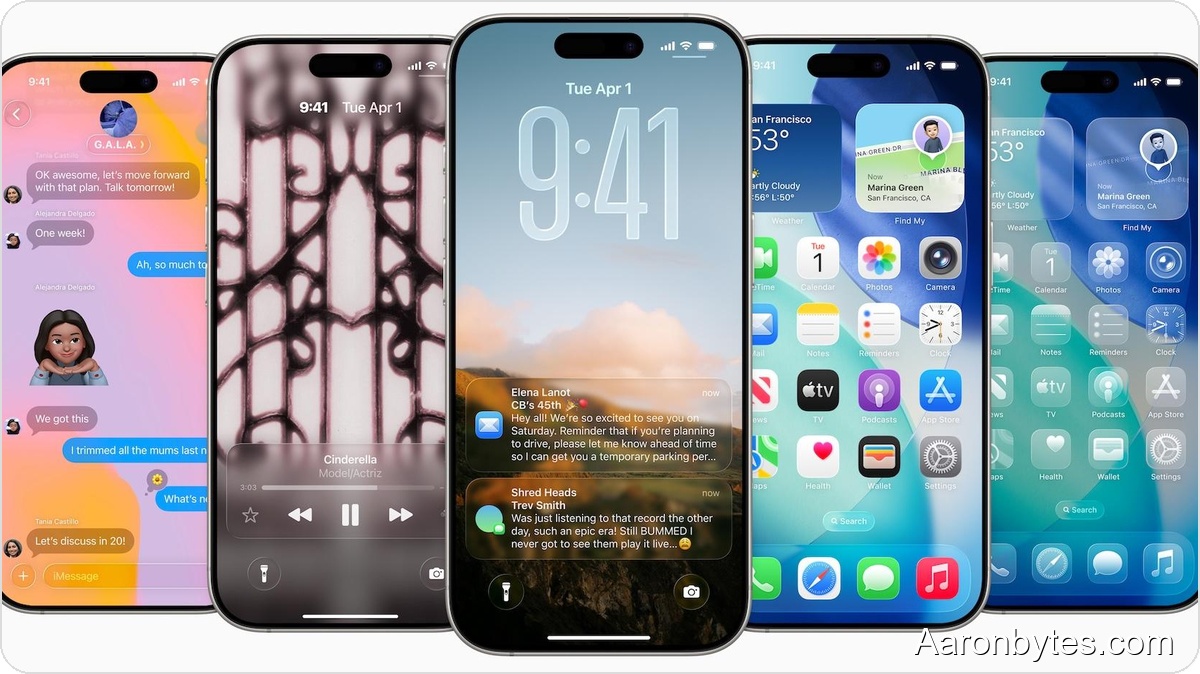
Apple’s latest system update, iOS 26, is struggling to gain traction among iPhone users. Official survey numbers show the new release is installed on just over 16 percent of devices.
The low adoption stands in stark contrast to past rollouts and highlights how major interface changes can slow upgrades.
Official numbers and how they compare to past years
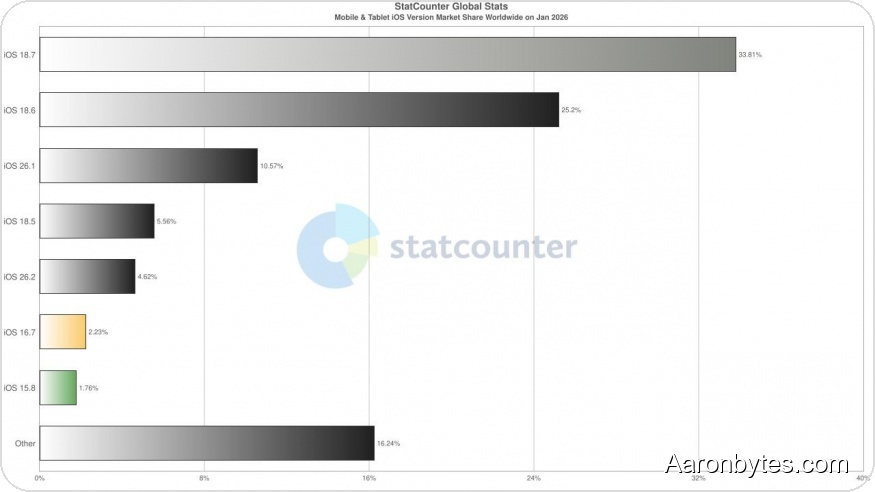
According to official data from industry trackers, iOS 26 is present on only a little more than 16 percent of iPhones.
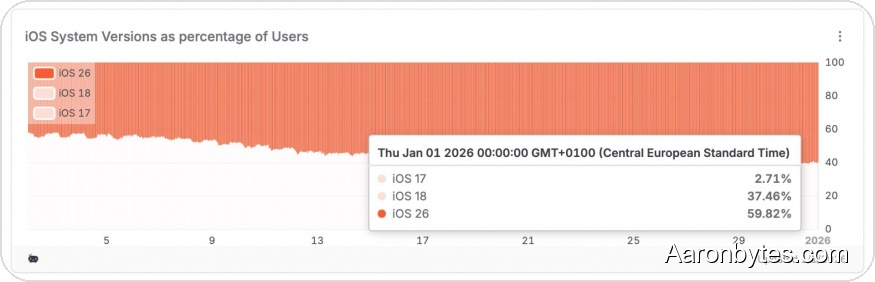
That performance is a steep drop from the same point in the cycle last year, when iOS 18 had more than 60 percent market share in January. In January 2024, iOS 17 was installed on over 50 percent of iPhones.
Why is adoption so slow?
iOS 26 represents a near-revolutionary update that redesigns much of the user interface. For many users, big visual and interaction changes are a reason to delay updating.
That reluctance is likely a major factor in the muted uptake, with some users choosing to wait rather than switch immediately to the new design.
Different trackers tell different stories
Not all analytics firms report the same figures. Statcounter’s methodology appears to produce different results than other agencies, leading to smaller reported shares for iOS 26.
TelemetryDeck’s telemetry aligns more closely with historical patterns, where the newest iOS version typically captures the largest share of devices within months of release.
iOS vs Android: a widening divide
Compared with Android, the gap is striking. Android has historically been slower to reach high adoption for its latest releases, and that trend continues into January 2026 based on available data.
The contrasting numbers underline ongoing differences in how quickly users on the two platforms move to new system versions.