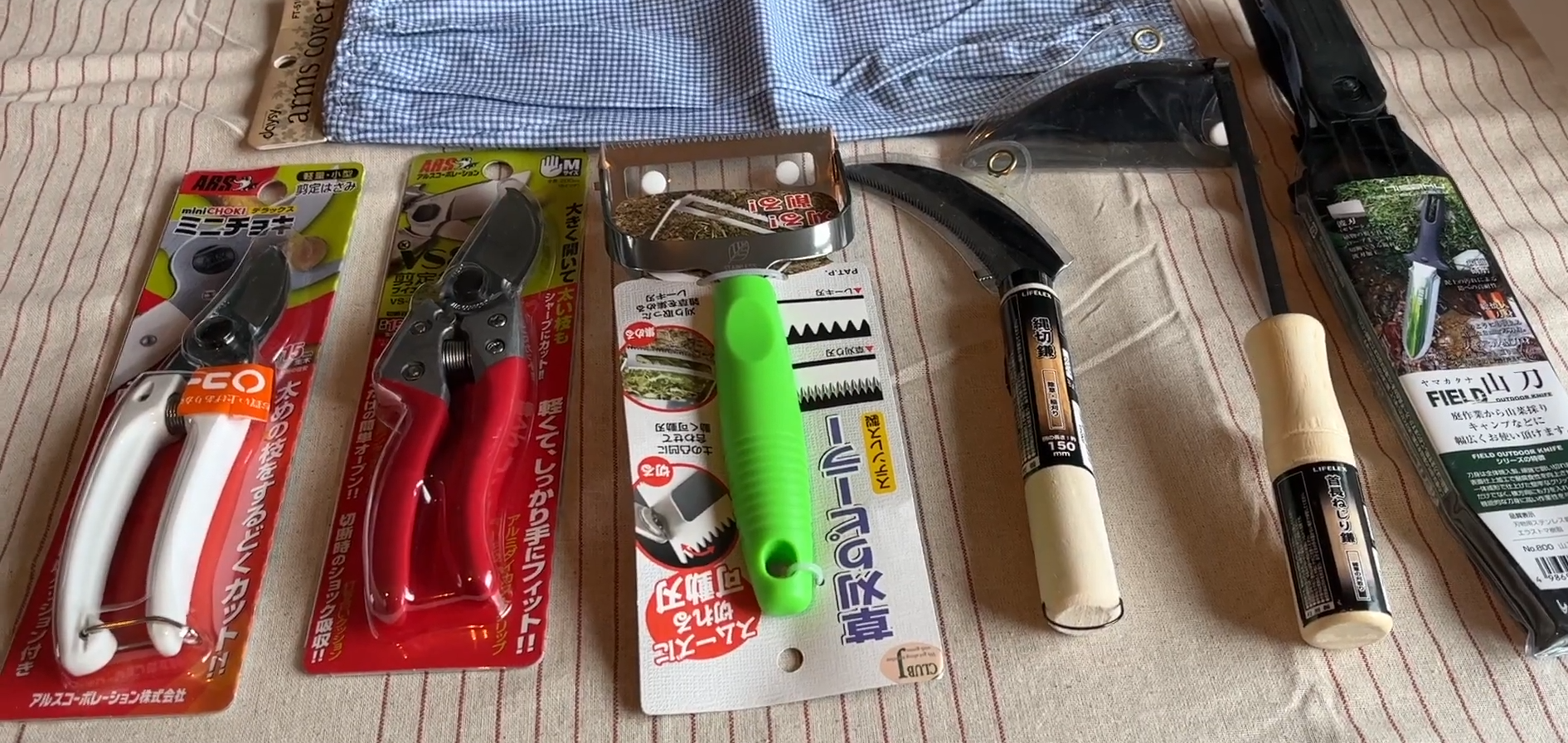
I’ve spent far too many hours in the ground to settle for tools that bend the moment they contact a tenacious root. You’ve seen the showy, mass-produced shears in big-box retailers, right? They’re OK for a weekend, but when you handle a Japanese blade, it’s like going from a dull kitchen knife to a surgical scalpel. Wow.
The big question everyone has is: Are Japanese Garden Tools Better Than Standard Tools? Is this just another example of beautiful branding causing us to spend more money? After years of testing both, I have strong beliefs about where the true value lies.
Why is Everyone Obsessed with Japanese Garden Tools?
When you step into a professional landscaper’s shed, you almost always notice a Hori Hori or a set of long-handled shears. This is more than just a fad. Japanese tools are based on centuries-old blacksmithing traditions.
Consider this: garden hoes and pruners are made using the same processes as samurai swords. Standard tools are typically stamped out of a single sheet of metal in a factory. In contrast, Japanese tools frequently use laminated steel, which combines a strong edge with a flexible core.
This results in a tool that remains sharp for a long time. While typical hardware store pruners are becoming dull and breaking stems, the Japanese version continues to slice through wood like butter. It is all about precision and respect for the plants.
The Hori Hori: Is it Really the King of the Garden?
If you purchase one item, make it a Hori Hori. I’m not exaggerating when I say that this “soil knife” can replace around five other tools in your bucket. It combines a serrated blade, a smooth knife, a trowel, and a measuring stick into one.
What Makes it Better Than a Standard Trowel?
A standard trowel is basically a glorified spoon. It’s great for scooping loose potting soil, but try digging up a dandelion with it, and the neck will probably snap. The Hori Hori is a full-tang beast.
- The Blade: One side is sharp for cutting sod; the other is serrated for sawing through thick roots.
- The Depth: Most have inch marks etched into the metal, which is a total lifesaver when planting bulbs at specific depths.
- The Strength: You can pry, dig, and even hammer with these things without worrying about them failing you.
When you ask if Japanese Garden Tools: Are They Better Than Standard Tools?, the Hori Hori is the strongest piece of evidence for “Yes.” It turns a frustrating chore into a quick task.
Japanese Steel vs. Western Stainless Steel: The Real Difference
Stainless steel is used in the majority of “standard” tools because it is resistant to rust. That sounds wonderful on paper, but steel is soft.
Japanese tools frequently use high-carbon steel, notably “Blue Paper” or “White Paper” steel. This metal is substantially tougher than what you’d find in a standard Western pruner. Because it is tougher, it can be honed to a much smaller angle.
Why Carbon Steel Wins (And Loses)?
The edge on a Japanese blade is terrifyingly sharp. You can make clean cuts that heal faster, which keeps your roses and fruit trees healthy. Standard tools often “crush” the branch as they cut, which opens the door for disease.
High-carbon steel isn’t “set it and forget it.” If you leave a pair of Okatsune shears in the wet grass overnight, they will rust. It’s a trade-off: you get unmatched performance, but you actually have to take care of your gear.
Pull Saws vs. Push Saws: Why the Japanese Method Wins?
If you’ve ever used a standard wood saw, you know it works on the “push” stroke. You put all your muscle into shoving the saw forward. It’s exhausting, and the blade tends to buckle if you’re not careful.
Japanese saws, or Nokogiri, work on the “pull” stroke. This is a game-changer for a few reasons:
- Thinner Blades: Because the blade is under tension when you pull, it doesn’t need to be thick and heavy.
- Less Effort: The saw does the work for you. You get a cleaner, narrower cut with half the sweat.
- Accuracy: It’s much easier to follow a line when you aren’t fighting the friction of a thick Western blade.
I’ve seen people switch to a Japanese folding saw and literally refuse to go back to their old hardware store brand. It’s just more efficient.
Are Japanese Garden Tools Better for Professional Landscapers?
For the pros, time is literally money. If you’re spending ten minutes struggling with a dull hedge trimmer, you’re losing profit. This is why professionals lean so heavily toward Japanese gear.
Ergonomics and Weight
Standard tools frequently rely on large plastic grips and weighty frames to feel “durable.” Japanese design relies on equilibrium. A well-made set of shears feels like an extension of your arm, not a cumbersome weight you’re carrying around.
When you prune for six hours a day, the weight difference is the difference between feeling fine and having a completely damaged wrist. The design’s simplicity—often simply two pieces of forged steel and a basic spring—means there are fewer components to break.
The Price Factor: Are They a Rip-off or a Long-term Win?
Let’s address the elephant in the garden: these tools aren’t cheap. You might pay $30 for a standard pair of pruners, while a mid-range Japanese pair could set you back $70 or more.
But here is the math I use. I used to buy a new $20 trowel every two years because the handle would wiggle or the tip would bend. I’ve had my current Japanese hand hoe for eight years, and it’s still perfect.
- Standard tools: Low entry cost, high replacement frequency.
- Japanese tools: High entry cost, potential lifetime use.
If you’re a “buy it once, buy it right” kind of person, then Japanese Garden Tools: Are They Better Than Standard Tools? is a no-brainer. They are a long-term investment in your sanity and your garden’s health.
Top 5 Japanese Tools Every Gardener Needs
If you’re looking to upgrade your shed, don’t just buy everything at once. Start with these essentials that offer the biggest leap in quality over standard versions:
- Hori Hori (Soil Knife): The ultimate multi-tool for weeding and planting.
- Nejiri Gama (Hand Hoe): A tiny, super-sharp hoe that’s perfect for scraping weeds away from delicate plants.
- Sentei Basami (Pruning Shears): For clean, surgical cuts on your shrubs.
- Silky Saws: These are the gold standard for folding saws in the arboriculture world.
- Ikezana (Flower Shears): Perfect for deadheading and bringing in fresh blooms.
Each of these offers a specific advantage that a standard tool can’t match. They make the work feel less like “work” and more like a craft.
How to Maintain Your Japanese Tools?
You can’t treat these like your old rusty shovel. If you want them to last a lifetime, you need a routine. It’s not hard, but it’s necessary.
- Clean After Use: Wipe off the dirt and sap. Sap is acidic and will eat through the finish.
- Oil the Blade: Use a bit of camellia oil or even 3-in-1 oil to prevent rust.
- Sharpen Properly: Use a whetstone, not a cheap pull-through sharpener. Japanese steel is hard, and it deserves a proper edge.
It might sound like a chore, but there is something really satisfying about cleaning your gear at the end of a long day in the sun. It builds a connection between you and your tools.
Summary
So, what’s the final word? Japanese Garden Tools: Are They Better Than Standard Tools? If you are digging one hole a year to plant a single petunia, a standard tool is fine. Don’t overspend if you don’t have to.
But if you spend your weekends in the dirt, if you care about the health of your perennials, and if you appreciate tools that actually work properly, the Japanese versions are vastly superior.
The precision of the “pull” saw, the multi-functionality of the Hori Hori, and the incredible edge retention of high-carbon steel put standard tools to shame. It’s not just about the name; it’s about the results you see in your garden.