Building a 6-month food supply sounds expensive and overwhelming. It doesn’t have to be. With smart planning and the right approach, you can stockpile enough food to feed your family for half a year without emptying your savings account.
Why You Need Long-Term Food Storage?
Life throws curveballs. Job loss, natural disasters, economic downturns, or personal emergencies can strike without warning. A well-stocked pantry gives you breathing room when things go sideways. You’ll sleep better knowing your family won’t go hungry if income suddenly stops or grocery stores become inaccessible.
Beyond emergencies, long-term storage saves money. Buying in bulk during sales slashes your grocery bill. You’ll stop making expensive last-minute store runs. That’s real financial security.
The Foundation: Calculating Your Needs
Start with basic math. One adult needs roughly 2,000 calories daily. Multiply by the number of people in your household, then by 180 days—a family of four needs about 1.4 million calories for six months.
Don’t panic at that number. Breaking it down by food type makes it manageable. Focus on calorie-dense staples that store well and cost little per serving.
Budget-Friendly Staples That Last Years
Grains and Carbohydrates
White rice is your best friend. It stores for 30 years when kept cool and dry, costs pennies per serving, and works in countless meals. Buy 25-pound bags when they’re on sale. A family of four needs about 150 pounds for six months.
Pasta ranks second. Dried pasta lasts 2-3 years minimum and often much longer. Stock various shapes for meal variety. Budget 100 pounds for a family of four.
Oats provide breakfast and baking options. Old-fashioned rolled oats last 2-5 years. Steel-cut oats extend that to 10-30 years. Store 50 pounds per family.
Protein Sources
Dried beans beat canned for long-term storage. Pinto, black, kidney, and navy beans last 10-30 years. They’re incredibly cheap, usually under $1.50 per pound—Stock 75 pounds minimum.
Canned meat offers ready-to-eat protein. Tuna, chicken, and salmon frequently go on sale. Watch for $0.50-$1.00 cans and stock up. Aim for 150 cans for four people.
Peanut butter provides protein, fat, and calories. Commercial jars last 6-9 months unopened, longer if refrigerated after opening. Powdered peanut butter extends shelf life for years. Store 20-30 jars.
Fats and Oils
Your body needs fats. Vegetable oil lasts 1-2 years. Coconut oil extends that to 2-3 years. Ghee can last for years when stored properly. Keep 5-10 gallons on hand.
Canned Goods
Canned vegetables provide nutrients and variety. Green beans, corn, tomatoes, and mixed vegetables last 2-5 years. Buy store brands during sales. Stock 200-300 cans.
Canned fruits offer vitamins and lift spirits during tough times. Peaches, pears, and pineapple cost less than fresh year-round. Keep 100 cans minimum.
Dairy Alternatives
Powdered milk lasts 2-10 years, depending on processing. Non-fat versions last longest. Store 25 pounds for drinking, cooking, and baking.
Canned evaporated milk works for recipes. Stock 50 cans.
Seasonings and Basics
Salt never expires. Buy several 4-pound boxes. Sugar lasts indefinitely in airtight containers. Store 25 pounds.
Honey is liquid gold. It never spoils and provides natural sweetness. Keep 5-10 pounds.
Spices and seasonings make stored food edible. Garlic powder, onion powder, black pepper, chili powder, cumin, and Italian seasoning are essentials. Buy larger containers to save money.
The Shopping Strategy
Never buy everything at once. That’s budget suicide. Use the incremental approach.
Set aside $50-$100 monthly for storing food. On each shopping trip, buy extra of the items you regularly use. If rice is on sale, grab three bags instead of one. Found canned tomatoes for $0.60? Buy a case.
Track unit prices religiously. Wholesale clubs like Costco and Sam’s Club offer genuine savings on bulk staples. Compare per-ounce or per-pound costs against regular grocery stores.
Shop discount grocery stores. Aldi, Grocery Outlet, and regional chains sell the same foods for less. Dented cans and close-to-expiration dates don’t matter for items you’ll use within months.
Watch for loss leaders. Stores advertise rock-bottom prices on select items to get you in the door. Stock up when staples hit these prices, then wait for the next cycle.
Foods to Avoid for Long-Term Storage
Brown rice goes rancid within 6 months due to its oil content. Stick with white rice.
Whole wheat flour oxidizes quickly. White flour lasts longer, but for true long-term storage, buy wheat berries and a grain mill instead.
Dried fruits contain more moisture than dried beans. They’ll last 6-12 months, not years. Buy smaller quantities.
Proper Storage Methods
Food storage only works if the food stays good. Follow these rules.
- Temperature matters most. Ideal storage is 50-70°F. Every 10-degree increase cuts shelf life in half. Basements work better than garages.
- Control moisture. Humidity causes mold and spoilage. Use airtight containers. Food-grade buckets with gamma seal lids protect bulk grains and beans. Mylar bags with oxygen absorbers extend shelf life further.
- Block light. UV rays degrade nutrients and quality—store food in dark spaces or opaque containers.
- Protect from pests. Mice, rats, and insects destroy food. Elevate containers off the floors. Inspect regularly for signs of invasion.
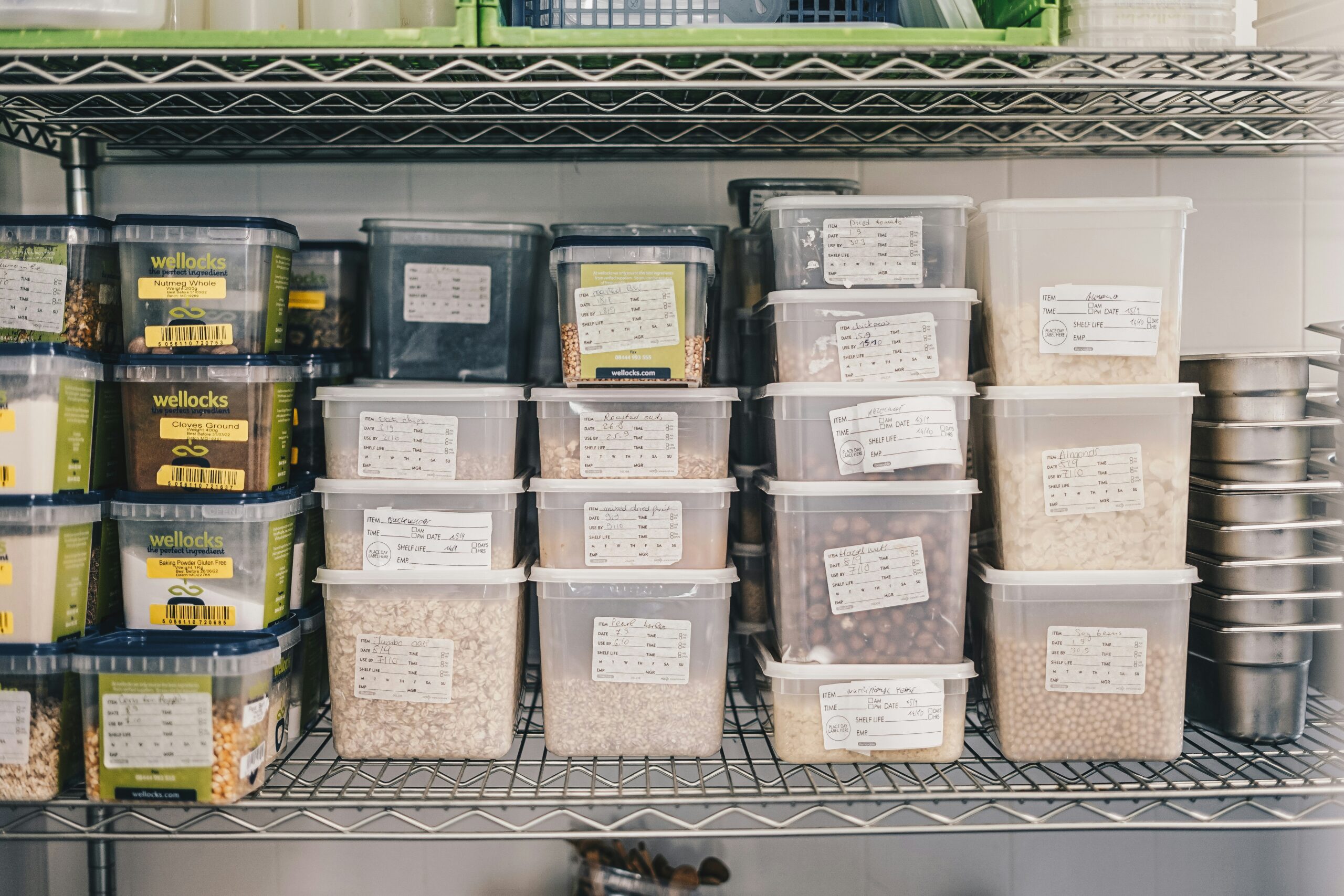
- Label everything. Include contents and storage date. Rotate stock using the oldest items first.
Free and Cheap Storage Containers
Don’t waste money on fancy systems. Two-liter soda bottles work perfectly for rice, beans, and sugar. Clean them thoroughly and dry completely.
Five-gallon food-grade buckets cost $3-5 from bakeries and delis. They receive frosting, pickles, and other foods in these buckets and usually give them away.
Gamma seal lids run $8-10 but make buckets resealable. One-time investment pays off.
Glass jars from pasta sauce, pickles, and mayonnaise work for smaller quantities. They’re free after you eat the contents.
The 6-Month Shopping List
Here’s what a family of four needs as a starting baseline:
- Grains: 150 lbs white rice, 100 lbs pasta, 50 lbs oats, 25 lbs flour.
- Proteins: 75 lbs dried beans, 150 cans meat/fish, 25 jars peanut butter.
- Canned Vegetables: 200-300 cans (various types).
- Canned Fruits: 100 cans.
- Fats: 5 gallons of oil.
- Dairy: 25 lbs powdered milk, 50 cans evaporated milk.
- Basics: 10 lbs salt, 25 lbs sugar, 5 lbs honey.
- Seasonings: 1-2 large containers each of essential spices.
This list focuses on survival calories and nutrition. Adjust based on your family’s preferences and dietary needs.
Expanding Beyond Basics
Once core staples are covered, add comfort foods gradually. Instant coffee, tea bags, hot chocolate mix, and bouillon cubes cost little and boost morale.
Baking supplies like baking powder, baking soda, yeast, and vanilla extract enable homemade bread and treats.
Condiments and sauces stretch meals. Ketchup, mustard, soy sauce, and vinegar last months after opening.
Canned soups provide quick meals during stressful times. Stock up during $1 sales.
Rotation System That Actually Works
Storing food isn’t meant to sit forever. Eat what you store and store what you eat.
Place new purchases behind older items. Use items from the front first. This “first in, first out” method prevents waste.
Plan one meal weekly using only stored food. This practice tests recipes, reveals gaps, and keeps inventory fresh.
Water Storage Is Non-Negotiable
Food means nothing without water. Store one gallon per person daily—a family of four needs 720 gallons for six months.
That’s not realistic for most homes. Aim for a two-week supply minimum (56 gallons), then plan water purification methods for longer emergencies.
Food-grade water barrels hold 55 gallons. New ones cost $80-150. Used ones go for $20-40. Add water preservative concentrate to extend storage life.
Case-bottled water from stores works but costs more. Buy it when on sale for $2-3 per case.
Common Mistakes to Avoid
Don’t buy foods your family won’t eat. If nobody likes kidney beans now, they won’t eat them in an emergency either.
Avoid overspending on freeze-dried meals. They’re convenient but expensive. A $300 bucket provides the same calories as $50 worth of rice and beans.
Don’t forget vitamins and medications. Multivitamins fill nutritional gaps. Stock prescription medications if possible.
Never ignore special dietary needs. If someone has allergies or restrictions, plan accordingly from day one.
The Reality Check
Building six months of food storage takes time. Most families need 6-12 months to complete their stockpile on a budget.
That’s okay. Having one month of food is infinitely better than none. Two months beat one. Progress matters more than perfection.
Start today with one extra bag of rice. Next week, add beans. The month after, grab canned vegetables on sale. Small, consistent steps build substantial reserves.
Your Action Plan
This week, calculate your household’s caloric needs—next, inventory what you already have. You likely have more than you think.
Create a simple spreadsheet tracking what you buy and when. Note prices to identify true bargains.
Dedicate one closet, corner, or section of your basement to food storage. Organization prevents forgotten food and wasted money.
Most importantly, start now. Economic uncertainty isn’t going anywhere. The best time to build food security was yesterday. The second-best time is today.