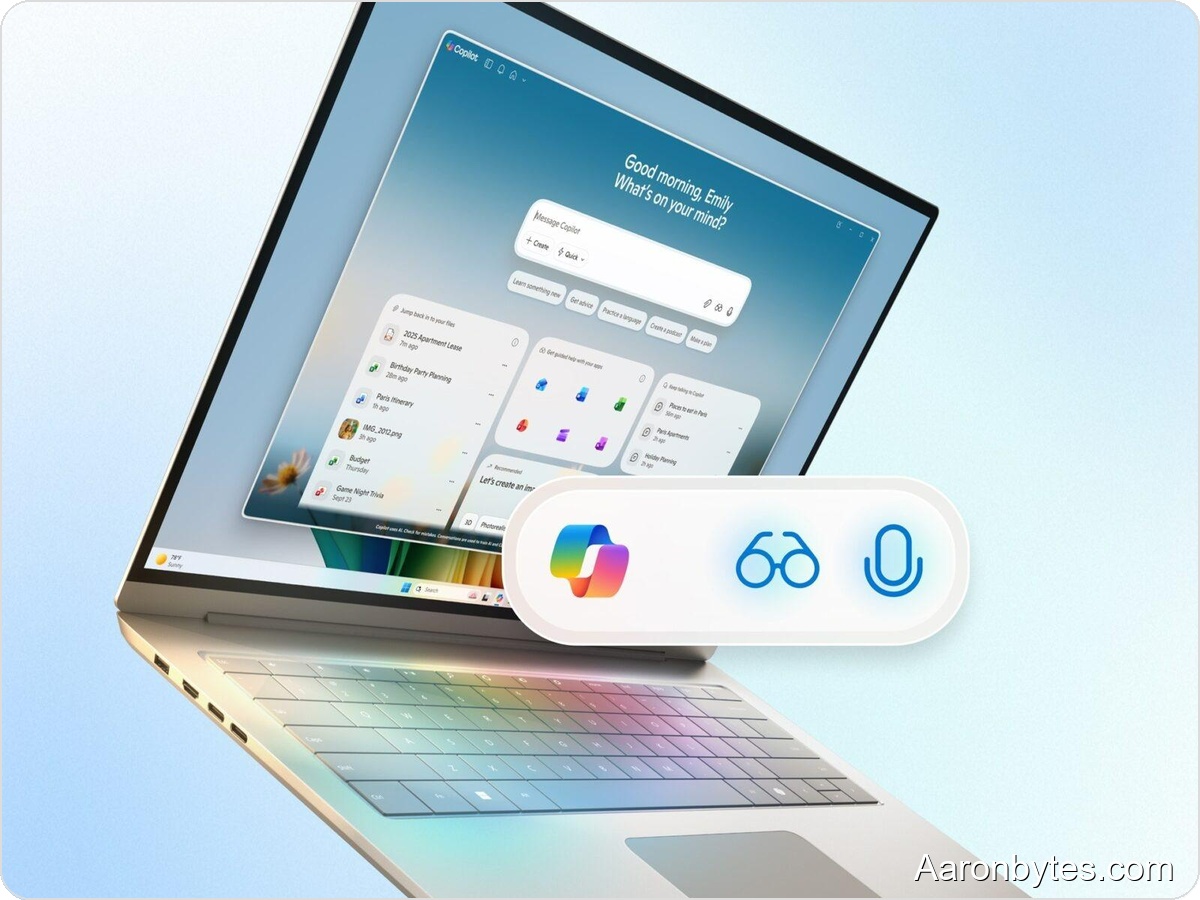
Microsoft is pushing a simple message: every computer running Windows 11 can become an “AI PC.” The company is framing the next wave of AI features as broadly available to existing devices, not just new flagship hardware.
The announcement centers on software and cloud-assisted capabilities that extend across the Windows 11 install base. Microsoft emphasizes that many AI experiences will work on current machines by leveraging cloud processing, efficient on-device models, or a mix of both.
How will Microsoft deliver AI to current machines?
Microsoft plans to roll out new AI features through Windows updates and app integrations rather than requiring users to buy new PCs. Some functionality will run locally on devices that have the necessary performance, while other features will offload heavy computations to the cloud.
That hybrid approach means lower-end and older systems can still access advanced AI features, albeit with cloud assistance when local resources are limited.
Developer and partner ecosystem
Microsoft is also courting developers and hardware partners to ensure the ecosystem supports AI experiences across a range of devices. The company is providing tools and APIs to help developers optimize apps for either on-device models or cloud-backed processing.
Hardware makers are encouraged to offer added AI acceleration where possible, but those enhancements are presented as optional rather than required to access AI features.
What users should expect?
For Windows 11 users, the promise is straightforward: new AI features will arrive through familiar update channels and should be usable on many existing PCs. Performance and latency may vary depending on whether features run locally or rely on the cloud.
Microsoft’s positioning reduces the pressure to upgrade purely for AI, while still leaving room for premium hardware to offer faster local AI processing.