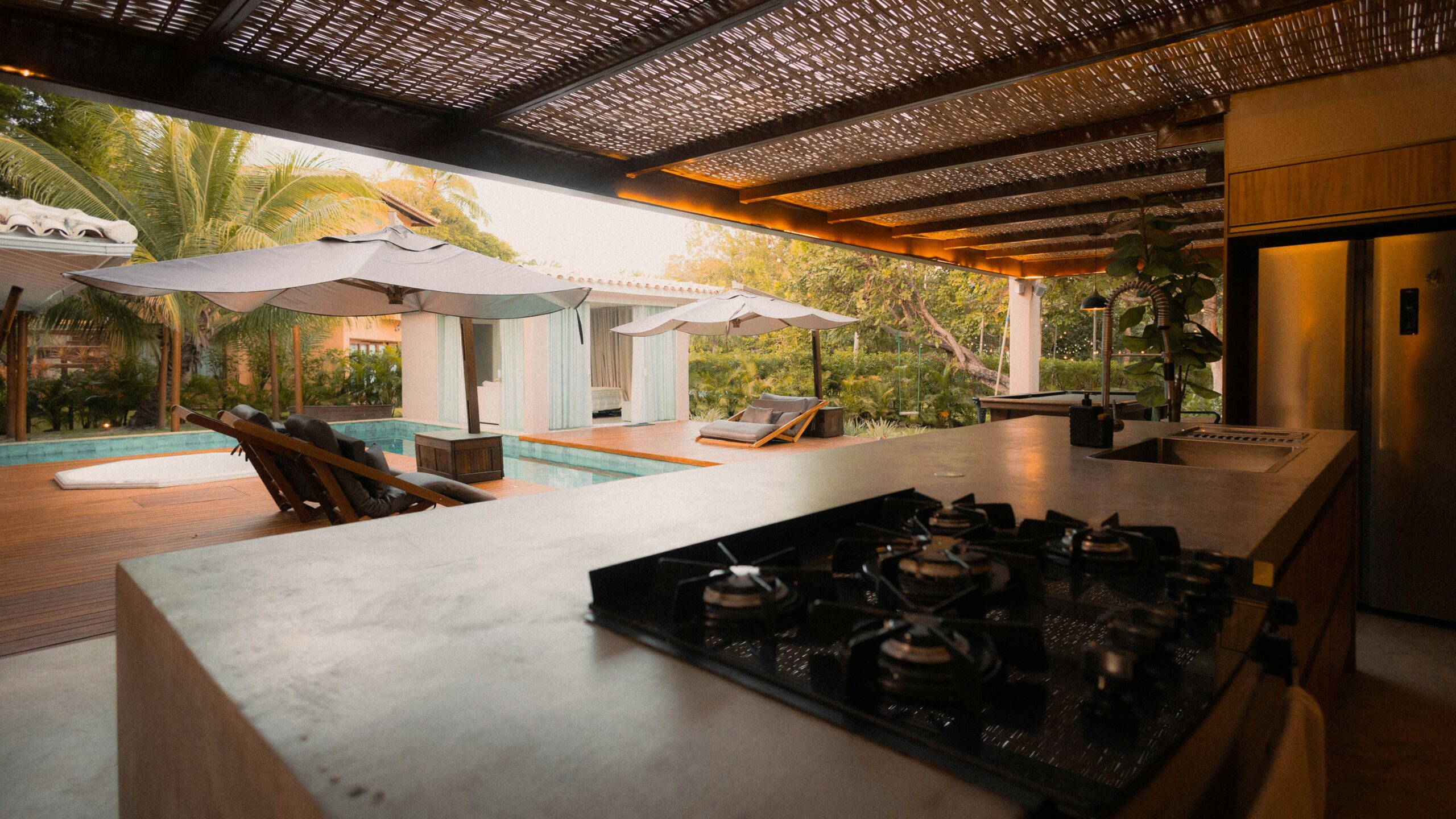
Building an outdoor kitchen is a significant investment, and you want it to last. Unlike indoor kitchens, outdoor spaces face harsh weather conditions year-round—scorching sun, heavy rain, freezing temperatures, and humidity that can destroy poorly planned setups in just a few seasons.
I’ve seen too many outdoor kitchens fall apart after three years because homeowners chose the wrong materials or skipped weatherproofing steps.
Choose Materials That Actually Withstand Weather
Your material choices make or break longevity. Forget about standard wood cabinets or basic steel—these won’t survive outdoors.
- Stainless steel works, but only marine-grade 316 stainless steel. Regular 304-grade stainless steel rusts in coastal areas or humid climates. Marine-grade costs more upfront but saves you from replacing everything in five years.
- Stone and masonry offer unmatched durability. Granite, bluestone, and concrete pavers handle freeze-thaw cycles without cracking. Avoid porous stones like limestone that absorb water and stain easily.
- Polymer cabinets designed for outdoor use resist moisture and insects better than wood alternatives. Brands like Trex and WeatherStrong manufacture cabinets engineered explicitly for outdoor environments.
Porcelain tile works beautifully for countertops and survives temperature extremes. It doesn’t scratch like natural stone and needs zero sealing.
Build a Proper Foundation
Skip this step and watch your entire setup sink, crack, or shift within two years.
Pour a concrete slab at least 4 inches thick with a proper drainage slope. The surface should angle away from your house at 1/4 inch per foot to prevent water pooling.
Add a gravel base underneath the concrete—at least 4 inches of compacted crushed stone. This prevents ground shifting and improves drainage.
In cold climates, dig below the frost line before pouring concrete. Frost heave will crack and buckle any foundation that’s too shallow.
Consider adding radiant heating tubes in the concrete if you live where winters get brutal. This prevents ice buildup and extends your outdoor cooking season.
Protect Against Water Damage
Water destroys outdoor kitchens faster than any other element. Your design must manage water aggressively.
Install a solid roof structure—not just a flimsy pergola. A waterproof roof protects your appliances and extends their lifespan dramatically. Use metal roofing, composite shingles, or weatherproof panels.
Create proper drainage for your sink area. Connect to your home’s plumbing system or install a dry well at least 10 feet from your foundation. Never let wastewater pool under your outdoor kitchen.
Seal every joint and seam with marine-grade silicone caulk. Regular caulk breaks down in UV light within months.
Add waterproof backing behind any stone or tile surfaces. Use cement board treated for exterior use, not standard drywall or untreated wood.
Select Weather-Resistant Appliances
Standard kitchen appliances will fail quickly outdoors. You need equipment built for the elements.
Look for appliances rated for outdoor use with weather-resistant housing. Built-in grills, refrigerators, and ice makers should have stainless steel exteriors and weatherproof electrical connections.
Check the warranty. Outdoor-rated appliances typically carry warranties covering outdoor use specifically—regular appliances void warranties when installed outside.
Position appliances under your roof structure whenever possible. Even weather-rated equipment lasts longer with overhead protection.
Install GFCI outlets for all electrical connections. These prevent electrical shocks in wet conditions and meet building codes in most areas.
Plan for Proper Ventilation
Grease, smoke, and cooking odors need somewhere to go. Poor ventilation creates buildup that damages surfaces and creates fire hazards.
Install a proper range hood with external venting if you have a roof structure. Vent it at least 10 feet from windows and doors.
For open-air setups, position your grill where prevailing winds carry smoke away from seating areas. Leave at least 3 feet of clearance on all sides of cooking surfaces.
Create cross-ventilation in covered outdoor kitchens. Add openings on opposite walls to prevent heat and smoke accumulation.
Weatherproof Your Storage Solutions
Cabinets and storage areas face constant moisture exposure, even in covered spaces.
Use only marine-grade hinges and hardware. Standard cabinet hardware rusts quickly outdoors. Invest in stainless steel or powder-coated aluminum fixtures.
Install weatherstripping around cabinet doors. This keeps rain and moisture out while preventing insects from nesting inside.
Add ventilation holes to enclosed cabinets. Small vents allow air circulation and prevent mold growth in humid climates.
Elevate base cabinets slightly off the ground with adjustable feet. This prevents water contact and allows air circulation underneath.
Design for Your Climate Zone
Cookie-cutter designs don’t work. Your outdoor kitchen must match your local weather patterns.
- Hot, dry climates: Focus on sun protection and heat-resistant materials. Add shade structures, use light-colored surfaces that reflect heat, and include plenty of storage for protecting items from UV damage.
- Cold climates: Insulate water lines and install shut-off valves you can access easily. Use materials rated for freeze-thaw cycles. Consider removable faucet heads that you can store indoors during winter.
- Humid regions: Prioritize ventilation and mold-resistant materials. Add extra drainage, use antimicrobial sealants, and select appliances with corrosion-resistant coatings.
- Coastal areas: Saltwater spray corrodes everything. Use marine-grade materials exclusively, rinse surfaces regularly with fresh water, and apply protective coatings to metal components annually.
Install Adequate Lighting
Good lighting extends your cooking hours and improves safety, but outdoor lighting faces unique challenges.
Use LED fixtures rated for wet locations—not just damp. Wet-rated fixtures withstand direct water exposure.
Install lighting on dimmers. This lets you adjust brightness and reduces energy costs while extending bulb life.
Add task lighting directly over prep areas and cooking surfaces. Under-cabinet LED strips work well for this purpose.
Include ambient lighting around seating areas using weatherproof string lights or recessed fixtures in your overhead structure.
Seal Everything Properly
Sealing protects your investment from water infiltration and weather damage.
Apply penetrating sealers to natural stone countertops and backsplashes annually. These protect against staining and moisture absorption.
Use flexible sealants at expansion joints. Outdoor structures expand and contract with temperature changes—rigid sealants crack.
Seal wood elements with marine-grade varnish or epoxy resin. Reapply every 2-3 years, depending on sun exposure.
Caulk around all appliance cutouts and plumbing penetrations with 100% silicone caulk rated for outdoor use.
Add Wind Protection
Wind drives rain into spaces you thought were protected and accelerates wear on exposed surfaces.
Install privacy screens or walls on the windward side of your outdoor kitchen—these block prevailing winds while adding visual interest.
Use tempered glass panels for wind protection without blocking views. These withstand impacts and extreme temperatures.
Secure all loose items. Wind can turn lightweight objects into projectiles during storms. Install hooks, clips, or storage solutions that keep items contained.
Plant strategic windbreaks using shrubs or trees. Natural barriers reduce wind speed and create a more comfortable cooking environment.
Maintain Regularly for Maximum Lifespan
Even the best-built outdoor kitchen needs maintenance to reach that 10-year mark and beyond.
Clean grease buildup weekly during heavy-use seasons. Grease attracts pests and creates fire hazards when it accumulates.
Inspect caulk and sealant joints twice yearly. Replace any cracked or missing sections immediately before water damage occurs.
Cover your outdoor kitchen during extended non-use periods. Quality covers protect appliances and surfaces from unnecessary weather exposure.
Flush water lines before winter in cold climates. Drain all pipes and disconnect hoses to prevent freeze damage.
Deep clean once annually. Power wash stone surfaces, degrease all cooking areas, and inspect for any damage requiring repairs.
Budget Smart for Longevity
Cutting costs on critical components costs more in the long term.
Spend more on structural elements—foundation, framing, and roofing. These are expensive to replace later.
Buy the best appliances you can afford. Quality outdoor-rated appliances cost 30-50% more than regular models but last three times longer.
Don’t skimp on installation. Proper installation by experienced professionals prevents most outdoor kitchen failures.
Plan for future upgrades. Include extra electrical circuits and plumbing rough-ins so you can add features later without major construction.
Final Thoughts
A well-designed outdoor kitchen that lasts 10+ years requires careful planning, quality materials, and proper installation. Focus on weatherproofing from the ground up, choose climate-appropriate materials, and maintain your space regularly.
The extra money you spend upfront on marine-grade materials, proper drainage, and weather-rated appliances saves thousands in repairs and replacements down the road. Build it right once, and you’ll enjoy countless meals under the open sky for years to come.