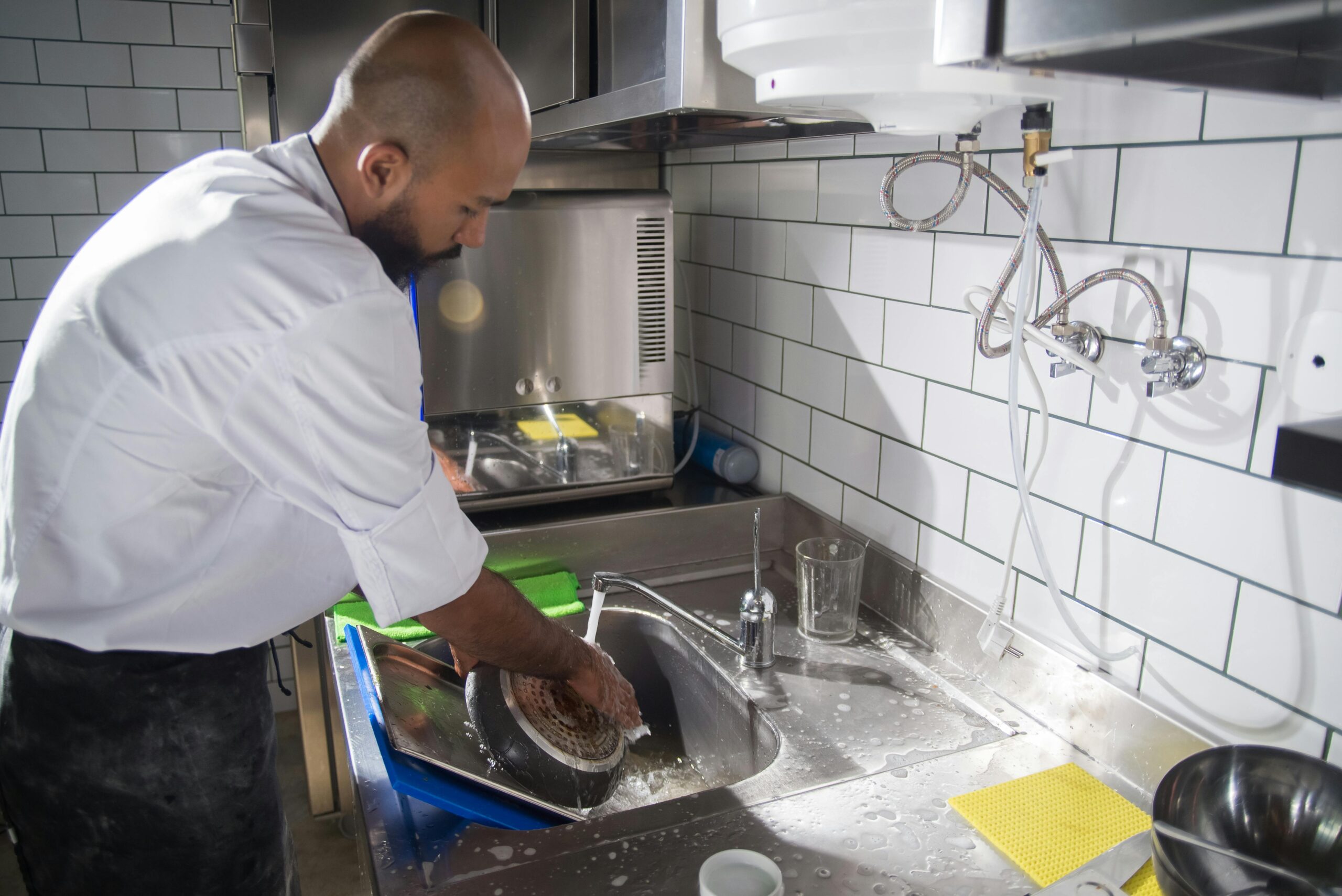
Your stainless steel sink sees more action than almost any other surface in your kitchen. Between morning coffee rituals, dinner prep, and late-night dish washing, it’s constantly bombarded with water, food residue, and cleaning products.
The result? Stubborn water spots, mysterious stains, and a dull finish that makes your once-gleaming sink look tired.
Why Stainless Steel Sinks Develop Spots and Stains?
Understanding the problem helps you prevent it. Water spots form when mineral-rich water evaporates, leaving behind calcium and magnesium deposits. These white, cloudy marks are ubiquitous in areas with hard water.
Stains are different. They come from various sources: rust from cast-iron pans, discoloration from acidic foods, or dark marks from leaving wet sponges and metal utensils in the basin overnight.
Even certain cleaning products can cause staining if they contain harsh chemicals that react with the steel’s protective chromium oxide layer.
The grain pattern you see in stainless steel isn’t just decorative. It indicates the direction the metal was polished during manufacturing. Cleaning with the grain, not against it, prevents scratching and maintains that factory finish.
Daily Cleaning That Actually Prevents Buildup
The easiest stain to remove is the one that never forms. After each use, rinse your sink thoroughly with warm water. This simple step removes food particles and prevents them from drying and bonding to the surface.
Dry your sink with a microfiber cloth after rinsing. This single habit eliminates most water spots before they develop. Keep a dedicated cloth near your sink and make it part of your routine.
For daily cleaning, skip the harsh chemicals. Mix a few drops of dish soap with warm water, wipe down the entire sink, rinse thoroughly, and dry. This removes grease and grime without damaging the finish.
Removing Water Spots Without Chemicals
White vinegar cuts through mineral deposits like nothing else. Pour undiluted white vinegar directly onto water spots, let it sit for five minutes, then wipe with a soft cloth following the grain. The acetic acid dissolves calcium and magnesium without harming stainless steel.
For stubborn spots, create a paste with baking soda and water. Apply it to affected areas, gently rub in circular motions, then follow the grain for final buffing. Rinse thoroughly and dry completely.
Club soda works surprisingly well for light water spots. The carbonation helps lift mineral deposits. Pour it over spotted areas, let it fizz for a minute, then wipe clean and dry.
Tackling Rust Stains
Rust stains often appear orange or brown and typically come from external sources, not the sink itself. Cast iron cookware, rusty tools, or metal cans left in the sink are common culprits.
Create a paste using cream of tartar and lemon juice. The combination creates a mild acid that dissolves rust without scratching. Apply the paste to rust stains, let it sit for 10 minutes, scrub gently with the grain using a soft cloth, then rinse and dry.
Bar Keeper’s Friend is worth mentioning here. This powder cleaner contains oxalic acid, which targets rust explicitly. Sprinkle it on damp stains, make a paste, gently scrub following the grain, and rinse thoroughly within one minute to prevent potential etching.
For severe rust stains, make a paste with baking soda and hydrogen peroxide. The peroxide helps lift the stain while the baking soda provides gentle abrasion. Apply, wait 15 minutes, scrub lightly, and rinse thoroughly.
Eliminating Discoloration and Dark Marks
Heat discoloration creates rainbow-like marks on stainless steel. These happen when extremely hot pans contact the sink or when you pour boiling water directly onto the surface.
Remove these marks with olive oil. Apply a small amount to a soft cloth and rub the discolored area following the grain. The oil helps blend the discoloration back into the surrounding finish. Wipe away excess oil with a clean, dry cloth.
Dark water stains from minerals require a different approach. Mix equal parts water and white vinegar in a spray bottle. Spray the entire sink, let it sit for 10 minutes, scrub gently with a non-abrasive sponge, rinse thoroughly, and dry completely.
Coffee and tea stains respond well to baking soda paste. These contain tannins that bond to metal surfaces. Make a thick paste, apply it to stains, let it work for 20 minutes, scrub following the grain, rinse, and dry.
Deep Cleaning for Heavily Stained Sinks
When regular cleaning doesn’t cut it, you need a deeper approach. Fill your sink with hot water and add one cup of white vinegar. Let it soak for 30 minutes. This loosens built-up grime and mineral deposits throughout the entire basin.
Drain the sink and sprinkle baking soda liberally over all surfaces while still damp. Use a soft sponge to scrub the entire sink, paying extra attention to corners, the area around the drain, and along the rim. The slightly abrasive texture of baking soda removes stuck-on residue without scratching.
For the drain area, which often harbors the worst buildup, create a paste with baking soda and hydrogen peroxide. Apply it thickly around the drain and strainer, let it sit for 20 minutes, scrub with an old toothbrush, then rinse everything thoroughly.
Rinse the entire sink multiple times with hot water to remove all cleaning residue. Any remaining baking soda or vinegar can leave its own spots. Dry immediately with a clean microfiber cloth.
Restoring Shine and Luster
After removing stains, restore your sink’s protective shine. Mineral oil or food-grade mineral oil works perfectly. Apply a few drops to a soft cloth and rub it over the entire sink surface, following the grain. This creates a thin protective barrier that repels water and resists fingerprints.
Olive oil works similarly but can go rancid over time. If you use it, apply sparingly and wipe away all excess. The goal is an invisible protective layer, not a greasy coating.
Flour makes an excellent final polish. After applying oil, sprinkle a small amount of flour over the sink, buff with a dry cloth, and watch it shine. The flour absorbs excess oil while polishing the surface.
Some people swear by car wax for stainless steel sinks. Apply a thin coat, let it dry to a haze, then buff it off. This creates a long-lasting protective coating that makes future cleaning easier.
What Never to Use on Stainless Steel?
Steel wool and abrasive scrubbers scratch stainless steel permanently. These scratches trap dirt and make staining worse. Stick to soft cloths, microfiber towels, and non-abrasive sponges.
Bleach and chlorine-based cleaners corrode stainless steel’s protective layer. They cause pitting and permanent damage. If you accidentally use one, rinse immediately and thoroughly with water.
Oven cleaner, drain opener, and other caustic chemicals don’t belong anywhere near your sink. They can cause irreversible discoloration and damage.
Stiff brushes, even those marketed as “safe for all surfaces,” often scratch stainless steel. When you need scrubbing power, use baking soda paste with a soft cloth instead.
Preventing Future Stains and Spots
Install a sink grid or protective mat. These accessories create a barrier between your sink and pots, pans, and dishes, preventing scratches and reducing direct contact with staining substances.
Don’t leave wet items in the sink overnight. Metal utensils, sponges, and steel wool can leave rust marks. Acidic foods left to sit can etch the surface.
Rinse immediately after exposure to acidic or salty substances. Lemon juice, tomato sauce, pickle juice, and salt can all cause discoloration if left on the surface.
Use a water softener if you have hard water. This reduces mineral content and dramatically decreases water spot formation.
Apply protective oil weekly. This simple maintenance step keeps your sink looking new and makes daily cleaning easier.
The Right Tools Make All the Difference
Keep these supplies under your sink for quick stain removal:
- White vinegar in a spray bottle.
- Baking soda in a shaker container.
- Microfiber cloths dedicated to sink cleaning.
- Soft sponges without abrasive backs.
- Mineral oil or olive oil.
- Bar Keeper’s Friend for tough jobs.
Having everything ready means you’ll actually use it. Stains are easier to remove when fresh than after they’ve sat for days or weeks.
When to Call a Professional?
Most stains and spots respond to the methods described here. However, deep pitting, severe corrosion, or damage to the sink’s finish may require professional refinishing or replacement.
If scratches have penetrated through the chromium oxide layer, home remedies won’t help. Professional buffing can restore the finish, but severe damage may be permanent.
Your Sink Deserves Better
A clean, spot-free stainless steel sink makes your entire kitchen look better. It’s not about perfection or spending hours scrubbing. It’s about understanding what causes problems and addressing them quickly with the proper methods.
Start with the daily rinse-and-dry habit. Handle fresh stains immediately with appropriate cleaners—deep clean monthly to prevent buildup. Your sink will maintain that showroom shine without constant effort.