You’ve got your coffee, it’s a sunny Saturday morning, and you’re prepared to do the yard work in twenty minutes. However, it feels like you’re attempting to push a real tank through wet cement the moment you hit the grass.
Your back hurts after one pass, and you start to question whether you left the parking brake on by mistake. Parking brakes are not found on the majority of lawn mowers.
In actuality, moving a mower that is a nightmare is more than simply an unexpected workout. Usually, the machine is calling out for assistance. There are particular reasons why things go wrong, regardless of whether you’re using a fancy self-propelled model or a traditional push mower.
Why is my lawnmower so hard to push?
For a short answer, a clogged cutting deck, overgrown grass, seized wheel bearings, or a worn-out drive belt are the most frequent causes of a lawnmower being challenging to manoeuvre. Usually, the issue can be resolved right away with a thorough cleaning and some simple lubrication.
1. The “Hidden Anchor.”
You probably have five pounds of dried, fermented grass on your lawn if you haven’t checked underneath your mower since the previous solar eclipse.
The Issue of Buildup
The grass clippings adhere to the deck’s underside when you mow long or wet grass. This eventually results in a thick, crusty layer of “grass concrete.” This accumulation disrupts the airflow that propels the blades to spin and lift the grass.
How to Make It Better?
- Prioritise safety by always pulling the spark plug wire before placing your hands close to the blades. While working, you don’t want that engine to start.
- The Tip-Over Rule states that the mower should always be tilted with the carburettor and air filter pointing up. A much more serious issue will arise if you tilt it in the opposite direction, allowing oil to seep into your intake.
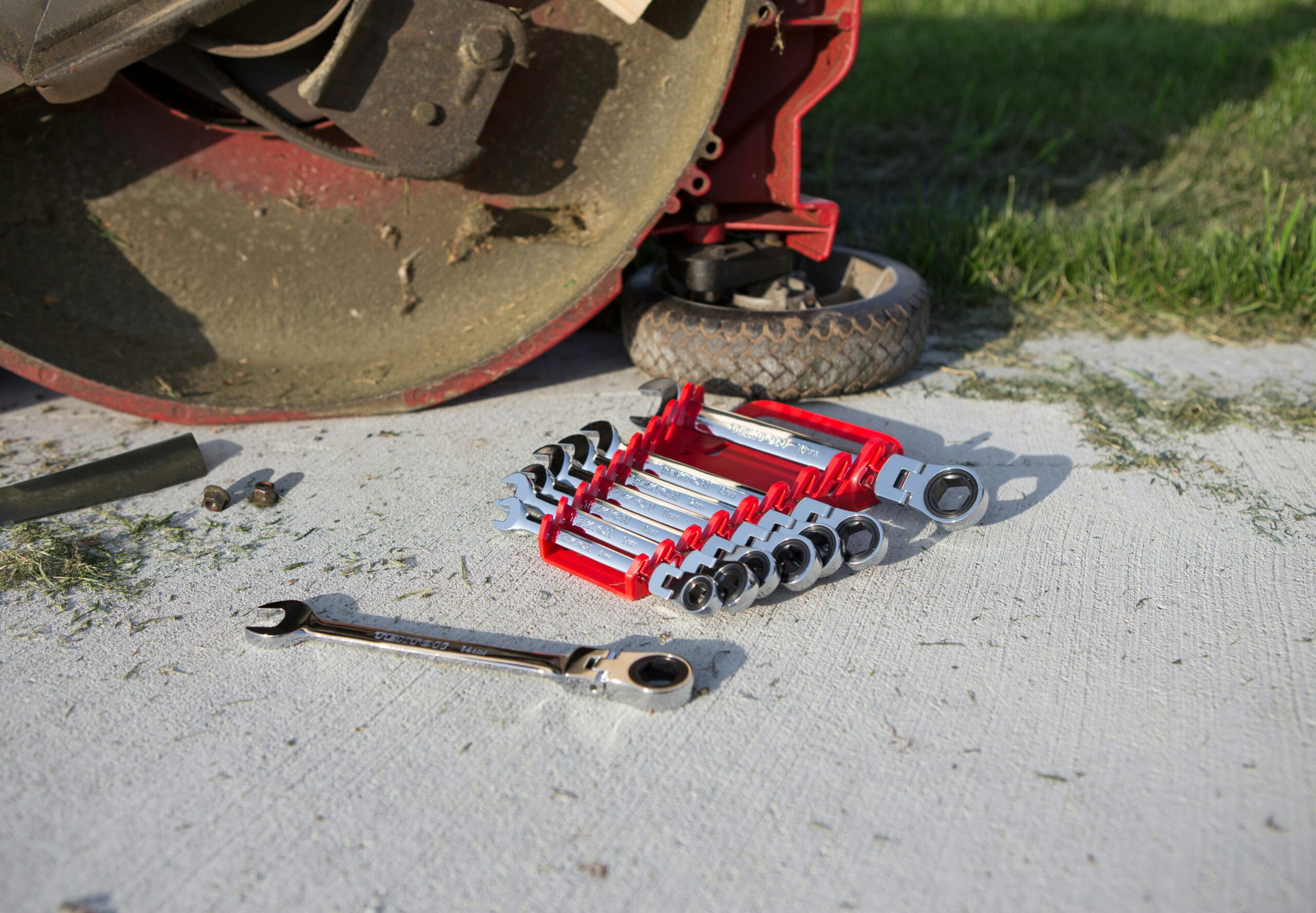
- Scrape It Clean: To get rid of all that debris, use a hard brush or a putty knife.
Pro Tip: After cleaning, lightly mist the deck’s underside with silicone lubrication. During your subsequent session, the grass will have a difficult time sticking.
2. Tall or Wet Grass
Sometimes the task is the problem rather than the machine. The mower must work 10 times harder to handle all that debris if you’ve let the yard become a jungle.
The Friction Physics
The mower deck actually rests on the grass rather than skimming over it when the grass is too tall. You’re bulldozing, not simply cutting. This puts a great deal of friction on the mower’s front end.
How to Make It Better?
- Never trim more than one-third of the grass blade height at once, according to the One-Third Rule. For the initial pass, set your mower height to the highest setting if the lawn is overgrown.
- Hold off on cutting damp grass until the dew has dried. It sticks, clumps, and makes pushing the mower extremely difficult.
- Reduce speed to allow the blades to release the clippings. Rushing causes the weight to increase and the deck to remain full.
3. Dull Blades
Although you might assume that dull blades have an impact on the appearance of the grass, they also have a significant impact on the mower’s feel.
Why Does It Matter?
Like a hot knife cutting through butter, sharp blades cut through grass. Blades that are dull “whack” the grass. The machine seems heavy and sluggish as a result of this resistance.
How to Get Sharper?
- Look for Nicks: It’s time for a replacement if your blade resembles a saw blade.
- Do-it-yourself Sharpening: To restore the edge, use a bench grinder or metal file.
- Balance is essential since the mower will shake wildly if one side is heavier than the other after being sharpened. Check for evenness with a blade balancer.
4. Wheel Issues
In essence, you are dragging a dead weight if your wheels are unsteady, rigid, or stuck.
Captured Bearings
The majority of low-cost lawn mowers have plastic wheels with basic plastic bushings. Grains and dirt accumulate inside the axle over time. The wheels will battle you every step of the way because of the friction this causes.
The Solution
- Clean the Axles: Take the wheels off (typically only one bolt), then give the axle a quick wash down.
- Lubricate: WD-40 is a solvent, not a long-term lubricant, so don’t use it alone. Apply a dry Teflon spray or a heavy-duty grease.
- Verify Alignment: A wheel will never roll straight if an axle is bent by colliding with a tree root or a stray rock. A new axle or some “persuasion” with a rubber mallet may be required.
5. Self-Propelled Drive System Failure
If your self-propelled mower seems heavy, it may be the result of a malfunctioning drive system.
The Drag Aspect
The transmission doesn’t engage completely when the drive belt is worn out or the cable is slack. Even worse, each time you push forward, you’re battling the mower’s internal gears if the transmission is partially jammed.
Fixing the Drive
- Adjust the Cable: The handle of the majority of lawn mowers has a threaded adjuster. The mower will not assist you in pushing if there is excessive slack. Until the drive engages smoothly, tighten it.
- Examine the drive belt by turning the mower over (carburettor up!). It’s toast if it’s fractured, frayed, or falling off the pulley.
- Debris in the Transmission: The pulleys next to the transmission might occasionally become clogged with grass. Use a brush or compressed air to clean it out.
6. The Handle Height
Your posture may be the cause of your lawnmower’s difficulty pushing, and adjusting a knob could be the solution.
Leverage is crucial
You are pushing up or down rather than forward if the handle is too high or too low for your height. Your lower back and the wheels are subjected to needless strain as a result.
The Solution
- Pin Adjustment: Where the handle meets the deck, the majority of contemporary mowers feature two or three height settings.
- The Sweet Spot: Keep your back straight and your arms slightly bent. Raise the handle if you’re stooping.
7. Bagging vs. Mulching
Is a rear bagger being used? It quickly becomes hefty.
The Weighty Tail
Twenty to thirty pounds can be found in a full bag of grass. The rear wheels are just above all of that weight. This improves traction if you have a rear-wheel-drive mower, but pulling by hand is like attempting to push a shopping cart full of bricks.
The Solution
- Empty frequently: Avoid waiting until the bag is full. When it is around three-quarters full, empty it.
- Change to Mulching: Use a mulching plug if the grass isn’t too long. It keeps the mower light and agile while replenishing the soil with nutrients.
8. Tire Pressure (For Riding Mowers)
Check your tyres if operating a zero-turn or riding a riding mower makes you feel like you’re manoeuvring a boat.
Issues with Low Pressure
A mower may pull to one side or feel extremely slow if there is even a 5 PSI discrepancy between the tyres. Because of the increased “rolling resistance,” the engine must use more effort to move the machine.
The Solution
- Examine the Sidewall: Check the tyre itself for the suggested PSI.
- Balance Them Out: Make sure the pressure in both front and rear tyres is equal. This maintains the push effort constant and the deck level.
Expert Maintenance Checklist
Use this seasonal practice to keep your mower feeling light as a feather. It’s what separates a 15-minute task from a two-hour agony.
| Component | Action | Frequency |
| Mower Deck | Scrape off grass buildup | After every 2-3 mows |
| Blade | Sharpen and balance | Once per season |
| Wheels | Grease the axles | Twice per season |
| Drive Belt | Inspect for cracks | Every spring |
| Air Filter | Clean or replace | Every 25 hours of use |
Common Questions About Hard-to-Push Mowers
Why does pushing my lawnmower feel more difficult in the heat?
This is typically an indication of a heat-induced belt expansion or a transmission problem. The belt may stretch and slip as it heats up. The plastic bushings in the wheels of a manual push mower may be expanding and binding on the axles.
Can I apply WD-40 to the wheels of my lawnmower?
It’s not a suitable long-term solution, but it can be used to remove rust. WD-40 immediately disappears. For long-lasting effects, use silicone-based spray or lithium grease.
Is pushing actually more difficult with a dull blade?
Consider it as the difference between using sharp and dull scissors to cut hair. You have to “force” the cut more when they are dull. Your arms will have to work harder to exert that force.
Conclusion
Nobody likes to wrestle with a piece of machinery over the weekend. The easiest method to make sure your yard looks fantastic without having to visit a chiropractor is to understand why your lawnmower is difficult to push and how to fix it.
In most cases, the fix is free. All you need to do is make sure your blades are sharp enough to do their function, lubricate the wheels, and remove any old grass. Don’t let a badly maintained machine ruin your weekend.