
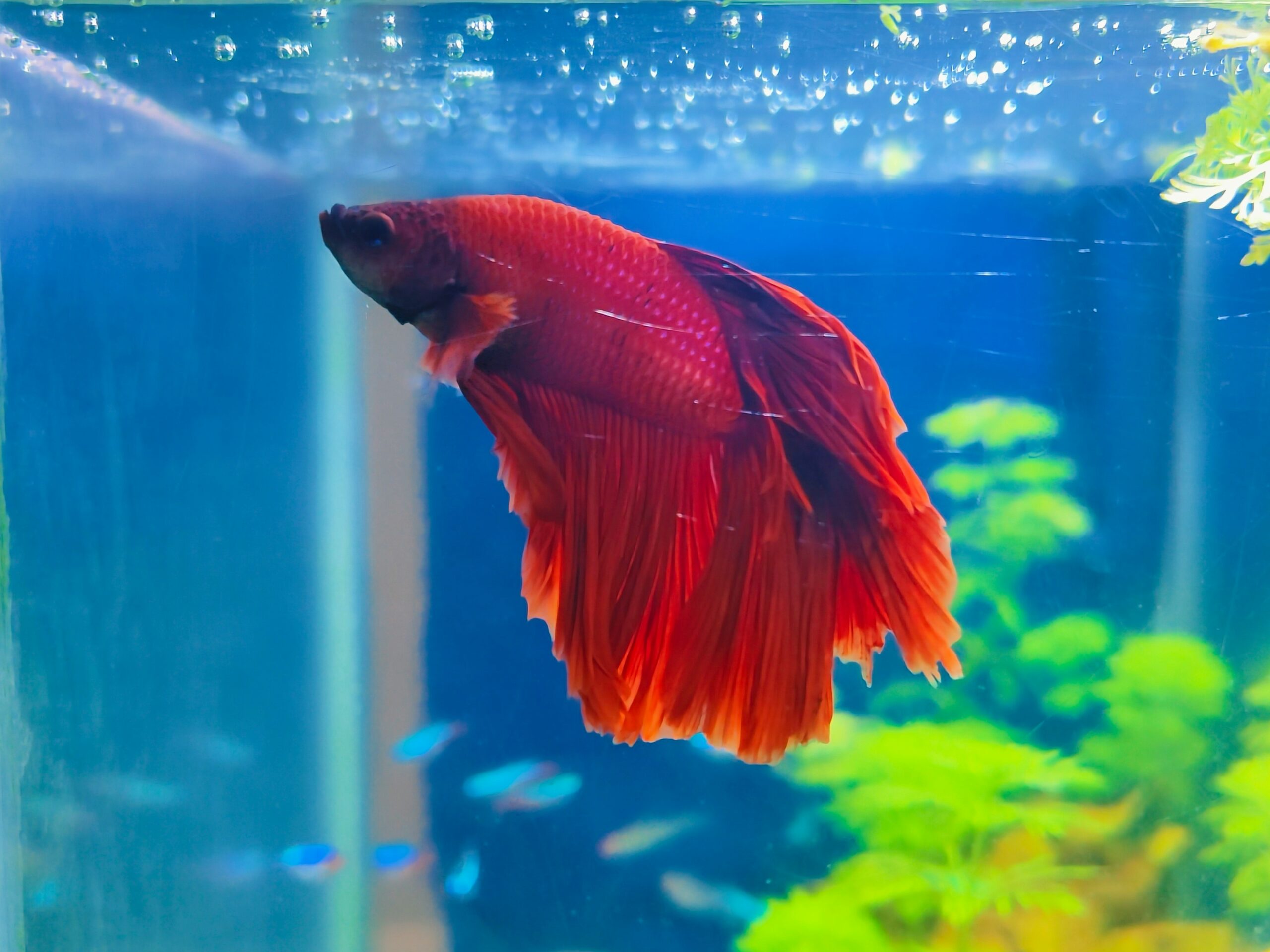
Yes, betta fish can live with other fish, provided you choose compatible species and provide a large enough environment. Success depends on your betta’s temperament and the specific traits of their roommates. Generally, peaceful bottom-dwellers and fast-moving schooling fish make the best companions.
A common misconception is that Siamese Fighting Fish must always live in isolation. While they are territorial, many hobbyists successfully maintain “community tanks” with bettas as the centerpiece. You need to follow strict rules on tank size, hiding spots, and water chemistry to ensure every inhabitant remains healthy.
Compatibility Overview
If you are looking for a quick “yes” or “no,” the answer is a cautious yes. However, you cannot simply drop a betta into any random aquarium.
You must avoid fish that look like bettas—meaning those with long, flowy fins—and those that are known as “fin nippers.” For a community setup to work, a tank of at least 15-20 gallons is usually required. This space allows for visual breaks and the establishment of territories.
Understanding Betta Temperament
Before picking roommates, you must understand why bettas act the way they do. Their aggression is primarily rooted in territorial defense and mating competition.
Territorial Instincts
Male bettas view any colorful, long-finned fish as a potential rival. In the wild, they defend small puddles or rice paddies from other males. If a tank mate looks too similar, the betta may attack to protect its space.
Individual Personality
Every fish is different. Some bettas are “chilled out” and ignore everything else in the water. Others are “flares,” meaning they will puff out their gills at a simple snail. It is wise to observe your fish’s reaction to a mirror or a nearby jar before adding live companions.
Stress and Health
Stress is the biggest killer in community tanks. If your betta is constantly chasing others, or if others are nipping at him, his immune system will weaken. This often leads to fin rot or fungal infections.
Essential Requirements for a Community Tank
You cannot keep a betta with other fish in a small 5-gallon bowl. To keep the peace, your equipment and environment must meet specific standards.
Minimum Tank Size
A 10-gallon tank is the absolute minimum for a betta and a few snails or shrimp. If you want to add other fish, you should start with a 20-gallon “long” aquarium. The extra horizontal swimming space is more valuable than vertical depth.
Heavy Planting and Hiding Spots
Visual breaks are mandatory. Use live plants like Java Fern, Anubias, or Amazon Swords to create “rooms” in the water. If the fish cannot see each other constantly, they are less likely to fight.
Filtration and Water Flow
Bettas prefer slow-moving water because their long fins make it hard to swim in strong currents. However, a community tank has a higher “bioload” (waste production). Use an adjustable filter or a pre-filter sponge to keep the water clean without blowing the fish around.
Best Tank Mates for Betta Fish
When choosing neighbors, look for fish that occupy different levels of the aquarium. Since bettas spend most of their time at the top and middle, bottom-dwellers are often the safest bet.
1. Corydoras Catfish
Corydoras are the perfect roommates. They are peaceful, stay at the bottom, and have a hard, armored exterior. They also lack bright colors that might trigger a betta’s aggression.
- Ideal Group: 6 or more.
- Benefit: They help clean up leftover food from the substrate.
2. Neon or Ember Tetras
These are small, fast, and stay in tight groups. Because they are so quick, a betta usually gives up on chasing them very quickly. Ember Tetras are especially good because their orange hue doesn’t resemble a rival betta’s color palette.
- Note: Avoid Serpae Tetras, as they are known to nip fins.
3. Kuhli Loaches
These eel-like fish stay hidden during the day and scavenge at night. They occupy a completely different niche than the betta. Their unique shape ensures the betta doesn’t view them as a threat.
4. Harlequin Rasboras
In the wild, Rasboras and Bettas often share the same waters in Southeast Asia. They are calm, hardy, and large enough not to be eaten, but small enough not to be threatening.
5. Mystery Snails
If you have a smaller tank, snails are the best choice. They provide a “clean-up crew” service and have a protective shell. Most bettas will flare at them once and then lose interest.
Invertebrates: Shrimp and Snails
Adding shrimp can be a gamble depending on your fish’s appetite. Some bettas view shrimp as a snack, while others coexist perfectly.
Ghost Shrimp
These are almost transparent, making them hard for the betta to see. They are also very inexpensive. If the betta does decide to hunt, it is not a major financial loss for the owner.
Cherry Shrimp
While beautiful, their bright red color makes them easy targets. If you want to keep Cherry Shrimp with a betta, you must provide dense moss for the shrimp to hide in. Aquarium Co-Op suggests using plenty of Java Moss for shrimp safety.
Nerite Snails
These are excellent algae eaters. Unlike Mystery Snails, Nerites have very low-profile bodies. This leaves fewer “squishy parts” for a curious betta to peck at.
Fish You Must Avoid
Some species are a recipe for disaster. Putting these in a tank with a betta will almost certainly result in injury or death.
- Male Guppies: Their long, colorful fins make them look like rival bettas. The betta will likely attack them.
- Tiger Barbs: These are notorious “fin nippers.” They will shred a betta’s delicate fins in a matter of hours.
- Goldfish: They require cold water, whereas bettas need tropical heat (78°F). They also produce too much waste.
- African Clawed Frogs: They are aggressive predators and may try to eat the betta as they grow.
- Cichlids: Most cichlids are far too aggressive and territorial to share space with a betta.
Creating a Female Betta Sorority
While males are solitary, female bettas can sometimes live together in what hobbyists call a “sorority.” This is an advanced setup and not recommended for beginners.
The Rule of Five
You generally need at least five female bettas to spread out any aggression. In smaller groups, one dominant female may bully the others to death.
Tank Requirements
A sorority requires a 20-gallon or 30-gallon tank with “excessive” planting. You should not be able to see from one side of the tank to the other. This allows stressed females to disappear into the greenery to recover.
Steps to Introduce a Betta to a Community Tank
The way you introduce the fish determines the colony’s success. Follow these steps to minimize conflict.
1. Add the Other Fish First
If the betta is already in the tank, he views the entire space as his kingdom. If you add him last, he is the “new guy” and is less likely to be defensive.
2. The “Jar Test.”
Place the betta in a clear container or breeder box inside the community tank. Observe his behavior for 30 minutes. If he is constantly flaring and lunging at the glass, he might be too aggressive for roommates.
3. Rearrange the Decor
Before releasing the betta, move a few rocks or plants around. This “resets” the territories, making the environment feel new to everyone.
4. Feeding Time Distraction
Feed the existing fish on one side of the tank while releasing the betta on the other. This prevents the other fish from swarming the newcomer out of curiosity.
Signs of Trouble to Watch For
Even with a perfect setup, things can go wrong. You must monitor the tank daily for the first two weeks.
Fin Nipping
Check your betta’s fins every morning. If you see “U” shaped chunks missing or frayed edges, someone is nipping him. You will need to identify the culprit and remove it.
Hiding Constantly
If your betta stays tucked in a corner or behind a heater and refuses to eat, he is stressed. This often happens when the other fish are too active or “zippy,” leaving the betta feeling overwhelmed.
Excessive Chasing
A little bit of chasing is normal during the first 48 hours. However, if the betta is relentlessly hunting a specific fish, you must intervene. According to Seriously Fish, prolonged stress can lead to secondary infections like Ich.
Ideal Water Parameters for Success
To keep all fish happy, you must find a “middle ground” for water chemistry. Most tropical fish that are compatible with bettas thrive in these conditions:
| Parameter | Ideal Range |
|---|---|
| Temperature | 76°F – 80°F (24°C – 27°C) |
| pH Level | 6.5 – 7.5 |
| Ammonia | 0 ppm |
| Nitrite | 0 ppm |
| Nitrate | Under 20 ppm |
Use a high-quality liquid test kit to monitor these levels weekly. Sudden spikes in ammonia levels can make fish more irritable and aggressive.
Is a Community Tank Right for You?
Can betta fish live with other fish? The answer is a clear yes, but it requires planning and a watchful eye. By choosing peaceful companions like Corydoras or Rasboras and providing a large, planted home, you can enjoy a diverse and vibrant aquarium.
Always have a backup plan. If the community doesn’t work out, you should have a spare 5-gallon tank ready for your betta. Safety and the well-being of the animals should always be your priority. With patience and the right species, your betta can thrive in a social setting.
