
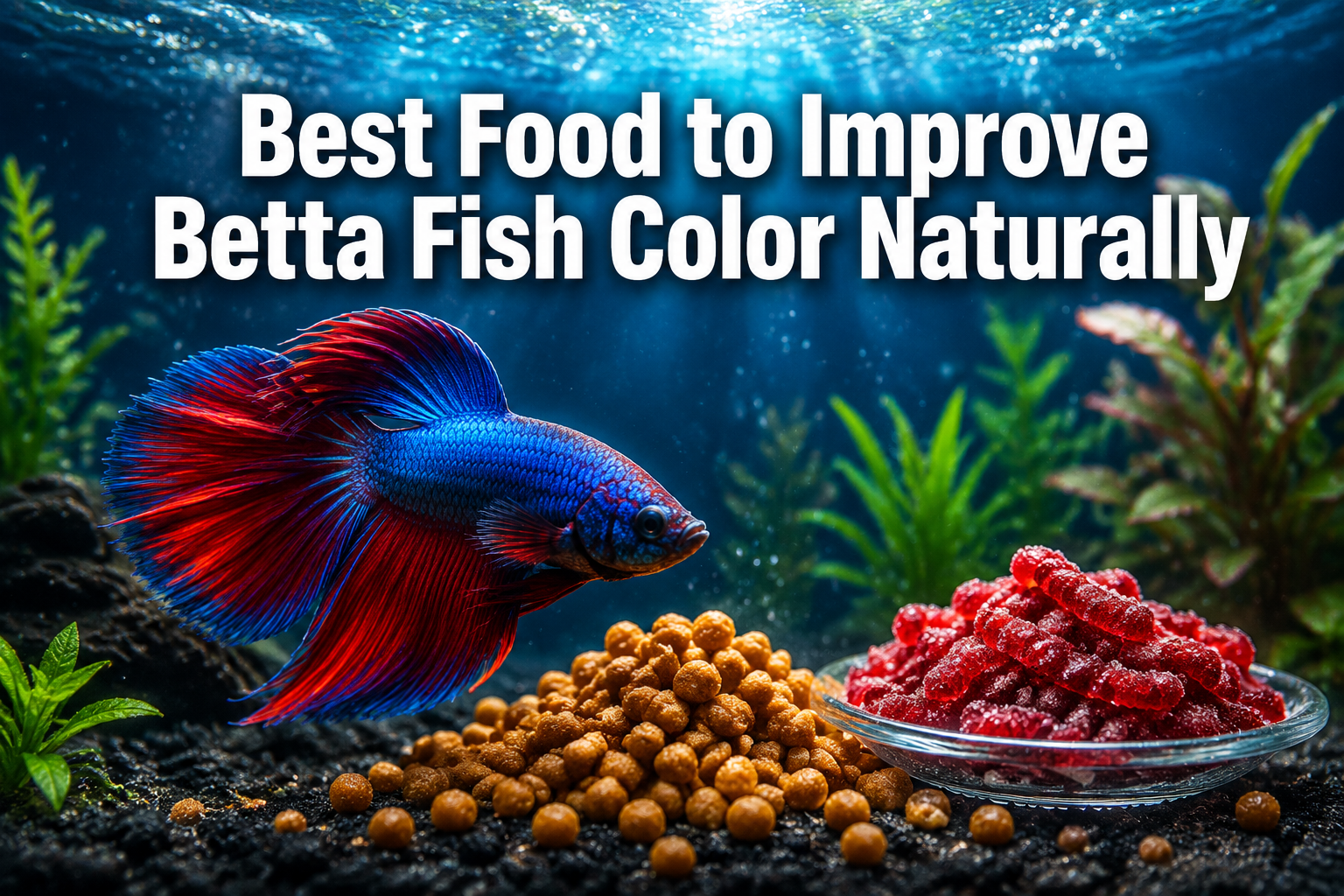
The most effective food to improve betta fish color naturally includes high-quality pellets with carotenoids, frozen or live bloodworms, brine shrimp, and daphnia. These protein-rich foods contain natural pigment enhancers that bring out vibrant reds, blues, and other colors in betta fish within 2-4 weeks of consistent feeding.
Key Takeaways
- Carotenoid-rich foods like bloodworms and brine shrimp naturally enhance red and orange pigments
- High-protein pellets (35% or higher) provide essential nutrients for color development
- Frozen foods often retain more nutrients than dried alternatives for better color results
- Consistent feeding for 2-4 weeks is required to see noticeable color improvements
- Variety in diet produces better overall coloration than single food sources
- Live foods offer maximum nutritional value but require careful sourcing
- Avoid artificial color enhancers that can harm fish’s health long-term
- Feed small portions 2-3 times daily for optimal nutrient absorption
What Foods Naturally Enhance Betta Fish Colors?
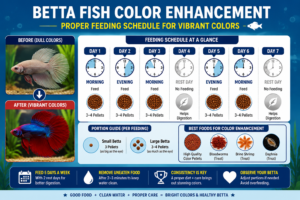
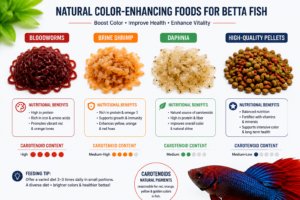
Bloodworms, brine shrimp, and carotenoid-rich pellets are the top natural foods for enhancing betta fish colors. These foods contain high levels of natural pigments and proteins that support healthy color development without artificial additives.
The most effective natural color-enhancing foods include:
Live and Frozen Options:
- Bloodworms – Rich in protein and natural red pigments
- Brine shrimp – High in carotenoids for red and orange enhancement
- Daphnia – Contains natural color compounds and aids digestion
- Mosquito larvae – Excellent protein source with natural pigments
High-Quality Pellets:
- Look for pellets with 35% or higher protein content
- Choose brands containing spirulina, krill meal, or astaxanthin
- Avoid pellets with artificial color dyes listed in the ingredients
Choose live foods if you want maximum color enhancement, but frozen alternatives work nearly as well and are safer from parasites. Dried foods should be your last option as they lose many beneficial nutrients during processing.
How Do Carotenoids Improve Betta Fish Color?
Carotenoids are natural pigments found in many foods that directly enhance red, orange, and yellow colors in betta fish. These compounds are absorbed through the digestive system and deposited in the fish’s scales and fins.
Natural Carotenoid Sources:
- Astaxanthin – Found in krill and shrimp, enhances red coloration
- Beta-carotene – Present in spirulina, boosts orange tones
- Lutein – Available in leafy greens, supports overall color vibrancy
How Carotenoids Work:
- Fish consume carotenoid-rich foods
- Pigments are absorbed in the intestines
- Compounds travel through the bloodstream to the skin cells
- Colors become more vibrant over 2-4 weeks
Betta fish cannot produce carotenoids naturally, so they must obtain them through diet. Feed carotenoid-rich foods at least 3-4 times per week for best results, but avoid overfeeding as excess nutrients can cause water quality issues.
What Are the Best Commercial Foods for Betta Color Enhancement?
Premium pellets with natural ingredients like krill meal, spirulina, and fish meal provide the best commercial option for color enhancement. Look for products specifically formulated for color without artificial dyes.
Top Ingredient Priorities:
- First ingredient should be whole fish or fish meal (not fillers)
- Krill meal or shrimp meal for natural astaxanthin
- Spirulina algae for beta-carotene content
- Minimum 35% crude protein for healthy development
Feeding Guidelines:
- Feed 2-3 pellets per meal, twice daily
- Soak pellets for 30 seconds before feeding to aid digestion
- Rotate between different high-quality brands for variety
Common mistake: Choosing pellets with artificial color enhancers like Red #40 or Yellow #6. These synthetic dyes don’t improve natural coloration and may stress your fish’s digestive system over time.
How Often Should You Feed Color-Enhancing Foods?
Feed color-enhancing foods 2-3 times daily in small portions, with variety rotating every few days for optimal results. Consistent feeding schedules produce better color development than sporadic high-nutrition meals.
Daily Feeding Schedule:
- Morning: 2-3 high-quality pellets
- Afternoon: Small portion of frozen/live food (bloodworms, brine shrimp)
- Evening: 2-3 pellets or alternative protein source
Weekly Rotation:
- Monday/Thursday: Bloodworms
- Tuesday/Friday: Brine shrimp
- Wednesday/Saturday: Daphnia or mosquito larvae
- Sunday: Fasting day (helps digestion)
Portion Control Tips:
- Feed only what your betta can consume in 2-3 minutes
- Remove uneaten food to prevent water quality issues
- Adjust portions based on your fish’s appetite and activity level
Choose frozen foods over dried when possible – they retain more nutrients and natural pigments. If using live foods, source them from reputable suppliers to avoid introducing parasites or diseases.
What Foods Should You Avoid for Betta Color Health?
Avoid foods with artificial color enhancers, excessive fillers like corn or wheat, and low-protein options that don’t support natural color development. These foods may temporarily brighten colors but can harm long-term health.
Foods to Avoid:
- Flake foods with artificial dyes (Red #3, Blue #1, Yellow #6)
- Pellets with corn or wheat as primary ingredients
- Freeze-dried foods as a sole diet (lack essential moisture)
- Human food scraps (bread, crackers, processed items)
Why These Foods Are Problematic:
- Artificial dyes stress the liver and kidneys
- High-carbohydrate fillers cause digestive issues
- Low-protein diets lead to color fading and poor health
- Inappropriate foods can cause swim bladder problems
Red flags on ingredient labels: If the first three ingredients include corn meal, wheat flour, or artificial colors, choose a different product. Quality foods list whole fish, fish meal, or shrimp meal as the primary ingredient.
How Long Does It Take to See Color Improvements?
Most betta fish show noticeable color improvements within 2-4 weeks of consistent high-quality feeding. Younger fish typically respond faster than older bettas, and some colors develop more quickly than others.
Timeline Expectations:
- Week 1-2: Slight increase in color intensity
- Week 3-4: Noticeable color enhancement and vibrancy
- Week 6-8: Maximum color potential achieved
- Ongoing: Maintain diet to preserve color quality
Factors Affecting Results:
- Age: Fish under 1 year respond faster to dietary changes
- Genetics: Some bettas have greater color potential than others
- Water quality: Clean, properly heated water enhances color development
- Stress levels: Stressed fish show duller colors regardless of diet
Common mistake: Expecting overnight results and switching foods too frequently. Stick with a consistent feeding routine for at least 4 weeks before evaluating effectiveness or making changes to the diet plan.
FAQ
Can I use vegetable-based foods to enhance betta colors?
While vegetables like peas can aid digestion, bettas are carnivores and need animal-based proteins for optimal color development. Spirulina algae is the main plant-based exception that enhances colors.
Are expensive color-enhancing pellets worth the cost?
High-quality pellets with natural ingredients typically produce better results than budget options with fillers and artificial dyes. The investment often pays off in improved fish health and coloration.
How do I know if my betta’s colors are improving?
Take photos weekly in consistent lighting to track progress. Look for increased vibrancy, deeper color saturation, and expansion of colored areas on fins and body.
Can overfeeding color-enhancing foods harm my betta?
Yes, overfeeding can cause digestive issues, water quality problems, and swim bladder disease. Stick to small portions 2-3 times daily and include fasting days.
Do live foods work better than frozen for color enhancement?
Live foods offer maximum nutrition but carry parasite risks. High-quality frozen foods provide nearly the same benefits with greater safety and convenience.
Will my betta’s colors fade if I stop feeding enhancement foods?
Colors may gradually become less vibrant without consistent high-quality nutrition, but they won’t disappear entirely. Maintain a varied, protein-rich diet for the best long-term results.
Can water temperature affect how well color-enhancing foods work?
Yes, bettas need water temperatures between 76-82°F for optimal metabolism and nutrient absorption. Cooler water slows digestion and reduces the effectiveness of color-enhancing diets.
Are there any natural foods I can culture at home for my betta?
You can culture brine shrimp, daphnia, and microworms at home. These provide excellent nutrition for color enhancement, but require proper setup and maintenance to avoid contamination.
How do I transition my betta to a new color-enhancing diet?
Gradually mix new foods with the current diet over 7-10 days, increasing the ratio of new food daily. This prevents digestive upset and helps your betta accept the dietary change.
Do different betta colors respond better to specific foods?
A: Red and orange bettas benefit most from carotenoid-rich foods like bloodworms and krill. Blue and green bettas respond well to high-protein diets that enhance overall color intensity rather than specific pigments.
Summary
Enhancing your betta fish’s natural colors requires consistent feeding of high-quality, protein-rich foods containing natural carotenoids. Focus on bloodworms, brine shrimp, and premium pellets without artificial dyes for the best results. Remember that patience is key – allow 2-4 weeks of consistent feeding to see meaningful color improvements.
Take action today by evaluating your current betta food and replacing low-quality options with natural alternatives. Start with frozen bloodworms or brine shrimp 2-3 times per week, combined with high-protein pellets as a staple diet. Monitor your betta’s progress with weekly photos and maintain excellent water quality to support the color enhancement process.
Your betta’s vibrant colors are a sign of good health and proper nutrition. By choosing the right food to improve betta fish color naturally, you’ll not only enhance their appearance but also support their overall well-being for years to come.
