
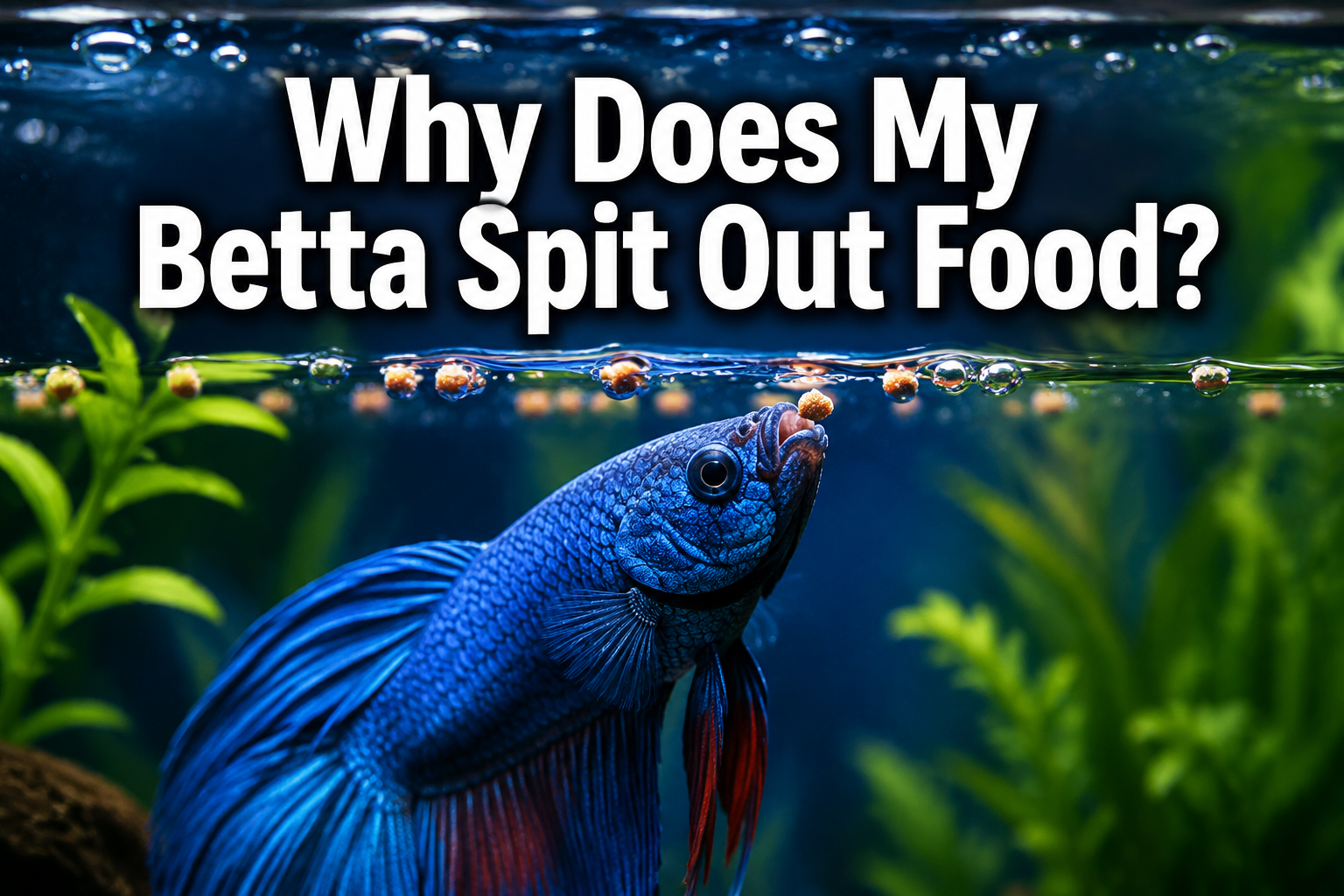
Bettas spit out food primarily because the pellets are too large for their small mouths, the food quality is poor, or they’re already full. Water temperature below 76°F can also cause bettas to lose appetite and reject food. Most feeding issues are resolved by switching to smaller, high-quality pellets and feeding appropriate portions.
What Size Food Should Bettas Eat?
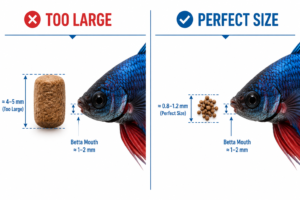
The most common reason why bettas spit out food is pellet size. Betta fish have surprisingly small mouths relative to their body size, and many commercial betta foods are simply too large for them to swallow comfortably.
Proper betta pellet sizing:
- Pellets should be no larger than the betta’s eye.
- Look for “micro pellets” or “small bite” varieties.
- Quality brands like Hikari Bio-Gold, New Life Spectrum, and Fluval Bug Bites offer appropriately sized options.
- Avoid generic pet store pellets, which tend to be oversized.
Choose smaller pellets if your betta:
- Consistently spits out food after taking it into their mouth.
- Struggles to swallow or appears to choke on pellets.
- Shows interest in food but can’t manage the size.
- Is a smaller or younger fish.
Common mistake: Many fish keepers assume bigger pellets provide better nutrition, but bettas need multiple small pellets rather than one large one.
How Much Should You Feed a Betta Fish?
Overfeeding causes bettas to become selective and spit out excess food. Bettas have stomachs roughly the size of their eye, making portion control essential for proper feeding behavior.
Daily feeding guidelines:
- 2-4 high-quality pellets, twice per day.
- Feed morning and evening, 12 hours apart.
- Skip one day per week to prevent digestive issues.
- Remove uneaten food after 5 minutes.
Signs of overfeeding:
- Betta spits out food after eating some.
- Bloated appearance or difficulty swimming.
- Leftover food is sinking to the tank bottom.
- Increased aggression or lethargy.
Feeding schedule for different life stages:
- Juvenile bettas (under 6 months): 3-4 micro pellets, 2-3 times daily.
- Adult bettas: 2-4 pellets, twice daily.
- Senior bettas (over 2 years): 2-3 pellets, twice daily with occasional fasting days.
Why Does My Betta Spit Out Food Due to Water Conditions?
Water temperature and quality directly impact betta appetite and feeding behavior. Bettas are tropical fish that become sluggish and lose interest in food when conditions aren’t optimal.
Temperature requirements:
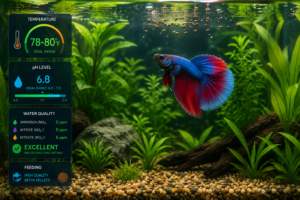
- Ideal range: 76-82°F (24-28°C).
- Below 76°F: Bettas become lethargic and may refuse food.
- Above 84°F: Stress increases, leading to erratic feeding behavior.
- Use a reliable aquarium heater and thermometer.
Water quality factors affecting feeding:
- Ammonia/Nitrite: Should be 0 ppm – any presence causes stress and appetite loss.
- pH: Keep between 6.5-7.5 for optimal health.
- Water changes: 25-30% weekly to maintain quality.
- Chlorine: Always treat tap water with a dechlorinator.
Choose water testing if your betta:
- Suddenly stops eating or spits out previously accepted food.
- Shows signs of stress, like clamped fins or hiding.
- Lives in an unheated tank or one without regular water changes.
Is Your Betta Food High Quality?
Low-quality betta food often gets rejected because it lacks appealing taste, proper nutrition, or has gone stale. Bettas can be surprisingly picky about food quality and will spit out pellets that don’t meet their standards.
Signs of poor-quality food:
- Pellets crumble easily or have a dusty texture.
- Fishy or rancid smell when the container is opened.
- First ingredient is wheat, corn, or other fillers instead of fish/protein.
- Food has been stored improperly or past its expiration date.
High-quality betta food characteristics:
- The first ingredient is whole fish or fish meal
- Protein content 35% or higher.
- Contains natural color enhancers like spirulina.
- Pellets maintain shape when wet.
- Minimal fillers and artificial preservatives.
Recommended brands:
- Hikari Bio-Gold: High protein, easily digestible.
- New Life Spectrum: Natural ingredients, no artificial colors.
- Fluval Bug Bites: Insect-based protein, small pellet size.
- Omega One: Whole salmon first ingredient.
When Should You Worry About Food Rejection?
While occasional food spitting is normal, persistent rejection can signal health issues that require attention. Bettas typically have hearty appetites, so sudden changes in eating behavior warrant investigation.
Normal food rejection scenarios:
- First few days with a new food type (adjustment period).
- After large meals or overfeeding.
- During breeding behavior or territorial disputes.
- When pellets are too large or of poor quality.
Concerning signs requiring action:
- Complete food refusal for 3+ days
- Food spitting combined with lethargy or unusual behavior.
- Visible signs of illness (white spots, torn fins, bloating).
- Dramatic weight loss or hollow belly appearance.
Immediate steps for persistent food rejection:
- Test water parameters and correct any issues.
- Try offering different food types (frozen bloodworms, brine shrimp).
- Reduce feeding frequency and portion sizes.
- Observe for other illness symptoms.
- Consult an aquarium veterinarian if symptoms persist beyond one week.
Emergency feeding alternatives:
- Frozen or live bloodworms (high protein, irresistible to most bettas).
- Daphnia (aids digestion, natural laxative effect).
- Brine shrimp (easy to digest, stimulates appetite).
Conclusion
Understanding why bettas spit out food comes down to three main factors: pellet size, feeding portions, and water quality. Most feeding issues resolve quickly by switching to appropriately sized, high-quality pellets and maintaining proper tank conditions.
Start by evaluating your current food – if pellets are larger than your betta’s eye, switch to micro pellets immediately. Reduce feeding to 2-4 pellets twice daily and ensure water temperature stays between 76-82°F. Quality matters significantly, so invest in reputable brands that list whole fish as the first ingredient.
Test your water parameters, examine your pellet size, and observe your betta’s feeding behavior closely. Most bettas will show improved eating habits within 3-5 days of proper adjustments. If food rejection continues beyond one week despite these changes, consult an aquarium professional to rule out underlying health issues.
FAQ
How long can a betta go without eating?
Healthy adult bettas can survive 7-10 days without food, but shouldn’t go more than 3-4 days without eating under normal circumstances.
Should I soak betta pellets before feeding?
Yes, soaking pellets for 2-3 minutes makes them easier to digest and prevents bloating. This is especially helpful for bettas that consistently spit out dry food.
Why does my betta eat some pellets but spit out others?
This usually indicates inconsistent pellet quality or size within the same container. Bettas learn to identify and reject inferior pellets while accepting better ones.
Can bettas choke on food that’s too large?
While rare, bettas can struggle with oversized pellets. They’ll typically spit out food that’s too large rather than risk choking, but consistently offering appropriate sizes prevents stress.
Is it normal for bettas to taste food before eating?
Yes, bettas often take food into their mouths to “taste test” before deciding to swallow or reject it. This behavior helps them identify suitable food sources.
How do I transition my betta to new food?
Mix 25% new food with 75% old food for the first week, gradually increasing the new food ratio over 2-3 weeks until fully transitioned.
Why does my betta spit out flakes but eat pellets?
Flakes often break apart and create a mess, while quality pellets maintain their shape. Bettas generally prefer the texture and concentrated nutrition of pellets over flakes.
Should I remove the food my betta spits out?
Yes, remove rejected food within 5 minutes to prevent water quality issues. Decomposing food creates harmful ammonia and nitrite spikes.
Can stress cause bettas to spit out food?
Absolutely. Stress from poor water conditions, aggressive tank mates, or environmental changes commonly causes appetite loss and food rejection in bettas.
How do I know if my betta pellets are the right size?
Proper pellets should be no larger than your betta’s eye and small enough that they can swallow without visible effort or spitting.
