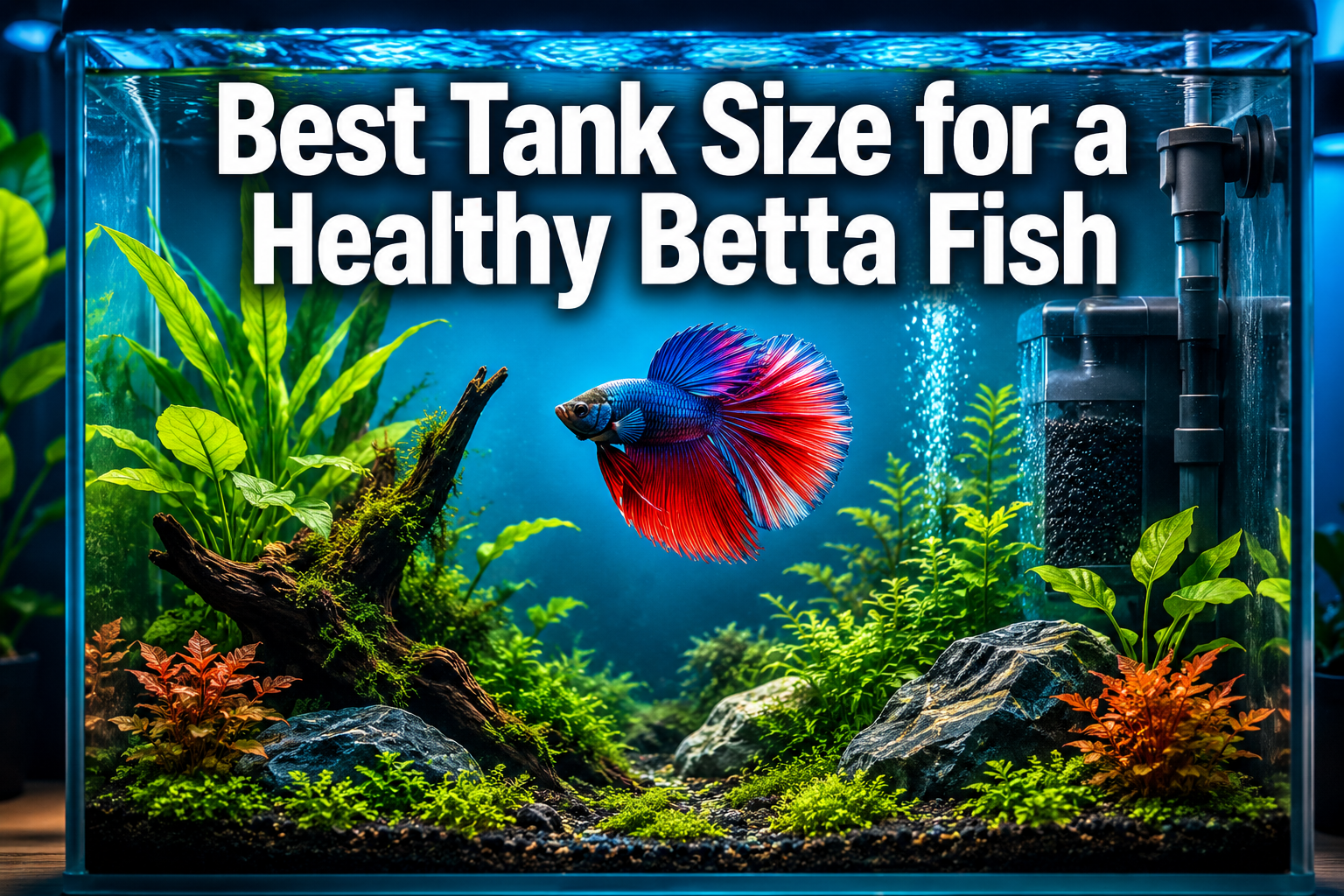
The minimum tank size for a healthy betta fish is 5 gallons, though 10 gallons or larger is ideal for optimal health and behavior. Betta fish need adequate swimming space, stable water parameters, and room for proper filtration and heating equipment that smaller tanks cannot provide.
Why Tank Size Matters for Betta Fish Health?
Betta fish are active swimmers that need space to thrive, not survive in cramped conditions. Despite common misconceptions, these fish naturally inhabit rice paddies and shallow streams in Southeast Asia that can span several feet in each direction.
The tank size for a healthy betta fish directly impacts their physical and mental well-being. In inadequate spaces, bettas experience chronic stress that weakens their immune system, leading to fin rot, ich, and other preventable diseases. Proper tank sizing is the foundation of betta care – without it, even the best food and water treatments cannot compensate for the stress of confinement.
Choose 5 gallons minimum if you’re on a tight budget but want a healthy fish. Choose 10+ gallons if you want to see your betta’s full personality and natural behaviors. Avoid anything smaller than 2.5 gallons, as these containers cannot maintain stable conditions.
Common mistake: Many new owners believe bettas prefer small spaces because they can survive in them temporarily. This survival mode is not the same as thriving.
Minimum Tank Size Requirements for Betta Fish
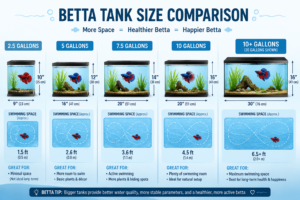
A 5-gallon tank is the absolute minimum for keeping a single betta fish healthy. This size provides enough water volume to dilute waste products and maintain stable temperature and pH levels between water changes.
Here’s why 5 gallons works as a baseline:
- Swimming space: Allows the betta to swim horizontally and establish a small territory
- Equipment accommodation: Fits a small heater and gentle filter without overcrowding
- Water stability: Sufficient volume to prevent rapid changes in water chemistry
- Waste dilution: Adequate water to process fish waste without immediate toxicity
Tank dimensions matter as much as volume. A 5-gallon tank should measure approximately 16″ x 8″ x 10″ to provide horizontal swimming space. Tall, narrow tanks of the same volume don’t work as well because bettas prefer swimming side to side rather than up and down.
Decision rule: If your tank is less than 12 inches long, it’s too small regardless of the total volume. Bettas need length more than height for natural movement patterns.
Ideal Tank Size for Optimal Betta Health
A 10-gallon tank or larger provides the best environment for betta fish to display natural behaviors and maintain excellent health. This size allows for proper aquascaping, stable water conditions, and room for the betta to establish distinct areas for feeding, resting, and patrolling.
Benefits of 10+ gallon tanks include:
- Enhanced water quality: Larger volume means more stable parameters and a forgiving maintenance schedule
- Natural behavior expression: Space for bettas to build bubble nests and patrol territory
- Better equipment options: Room for efficient filtration, heating, and live plants
- Reduced aggression: More space can decrease stress-related aggressive behaviors
- Aquascaping possibilities: Ability to create hiding spots, caves, and plant arrangements
Tank shape recommendations: A 10-gallon long tank (20″ x 10″ x 12″) works better than a standard 10-gallon high tank because it maximizes horizontal swimming space.
Edge case: Experienced aquarists often use 20-gallon long tanks for single bettas, which allows for elaborate planted setups and the most stable water conditions possible.
Common Tank Size Mistakes to Avoid
The biggest mistake is believing that betta fish thrive in tiny containers because they can breathe air. While bettas have a labyrinth organ that allows them to breathe atmospheric oxygen, this adaptation evolved for survival during droughts, not as a preference for small spaces.
Mistakes that harm betta health:
- Using bowls or vases: These lack proper heating, filtration, and swimming space
- Believing “bigger is harder”: Larger tanks are actually easier to maintain due to water stability
- Choosing tall, narrow tanks: Bettas need horizontal space more than vertical depth
- Overcrowding with decorations: Even in adequately sized tanks, too many ornaments reduce usable swimming space
- Ignoring filtration space: Filters and heaters take up tank volume that must be accounted for
Quick example: A 2.5-gallon tank might seem adequate until you add a heater and small filter – suddenly, the actual swimming space drops to less than 2 gallons, which is insufficient for any betta.
Decision rule: If you can’t fit your hand comfortably into the tank for maintenance, it’s too small for a betta fish.
Tank Size and Water Quality Connection
Larger tanks maintain stable water chemistry much more effectively than small containers. The tank size for a healthy betta fish directly correlates with how forgiving the environment is to minor maintenance lapses or feeding mistakes.
Water stability factors:
- Ammonia buildup: More water dilutes waste products, preventing toxic spikes
- Temperature fluctuations: Greater water volume resists rapid temperature changes
- pH stability: Larger systems buffer against sudden pH swings
- Oxygen levels: More surface area and water volume maintain adequate dissolved oxygen
Maintenance frequency by tank size:
- 2.5 gallons: Daily water testing, every other day, partial changes
- 5 gallons: Weekly 25% water changes with bi-weekly testing
- 10+ gallons: Weekly 20% water changes with monthly testing
Common mistake: Assuming small tanks are easier because there’s “less water to change.” In reality, small tanks require more frequent maintenance due to rapid parameter shifts.
Choosing the Right Tank Size for Your Situation
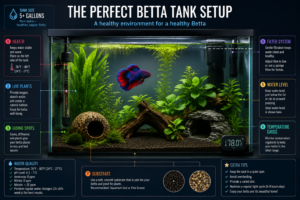
Select your tank size based on your experience level, available space, and commitment to maintenance. New betta owners often succeed better with larger tanks because they’re more forgiving of beginner mistakes.
Tank size decision matrix:
| Your Situation | Recommended Size | Reasoning |
|---|---|---|
| First-time owner | 10 gallons | Most forgiving, easier to maintain |
| Limited space | 5 gallons long | Minimum for health, fits small areas |
| Experienced keeper | 20+ gallons | Allows advanced aquascaping |
| Child’s pet | 10 gallons | Stable enough for learning proper care |
| Office/bedroom | 5-10 gallons | Quiet filtration, manageable maintenance |
Budget considerations: While larger tanks cost more initially, they save money long-term through reduced fish mortality, fewer disease treatments, and less frequent equipment replacement.
Choose 5 gallons if you have space constraints but want a healthy betta. Choose 10+ gallons if you want to enjoy the full betta-keeping experience with plants and natural behaviors.
FAQ
What’s the smallest tank a betta can survive in?
Bettas can survive temporarily in 1-2 gallon containers, but this causes chronic stress and significantly shortens their lifespan. The minimum for actual health is 5 gallons.
Do bettas really need 5+ gallons if they live in puddles in nature?
Wild bettas don’t live in puddles – they inhabit rice paddies and streams that can extend for miles. Puddles are only temporary refuges during dry seasons, not permanent homes.
Can I keep a betta in a 3-gallon tank?
A 3-gallon tank is better than smaller options but still suboptimal. It requires very frequent maintenance and doesn’t provide adequate swimming space for natural behaviors.
Is a 20-gallon tank too big for one betta?
No tank is too big for a single betta. Larger tanks provide better water stability and allow bettas to display more natural behaviors, including territory establishment and exploration.
Do female bettas need the same tank size as males?
Yes, both male and female bettas require the same minimum tank size of 5 gallons, with 10+ gallons being ideal for both sexes.
How does tank shape affect betta health?
Long, rectangular tanks are better than tall or round tanks because bettas prefer swimming horizontally. A 10-gallon long tank is superior to a 10-gallon high tank.
Can I upgrade my betta to a larger tank later?
Yes, bettas adapt well to larger tanks. The transition should be gradual, moving the betta along with some original tank water to maintain familiar water parameters.
Do planted tanks need to be larger?
Planted tanks don’t require extra size for the plants themselves, but live plants help maintain water quality, making any size tank more stable and healthy for bettas.
Will a betta be lonely in a large tank?
Bettas are solitary fish that prefer living alone. A large tank allows them to establish territory and feel secure, reducing stress rather than causing loneliness.
How do I know if my tank is too small?
Signs include: glass surfing (swimming along walls repeatedly), lethargy, frequent illness, aggressive behavior toward decorations, and inability to maintain stable water parameters.
Conclusion
The tank size for a healthy betta fish starts at 5 gallons minimum, with 10+ gallons providing the ideal environment for these active, intelligent fish. Proper tank sizing forms the foundation of successful betta care, affecting everything from water quality to natural behavior expression.
If your betta currently lives in a container smaller than 5 gallons, prioritize upgrading their home. Start with a 10-gallon tank if possible – your betta will show improved activity, brighter colors, and better health within weeks of the upgrade.