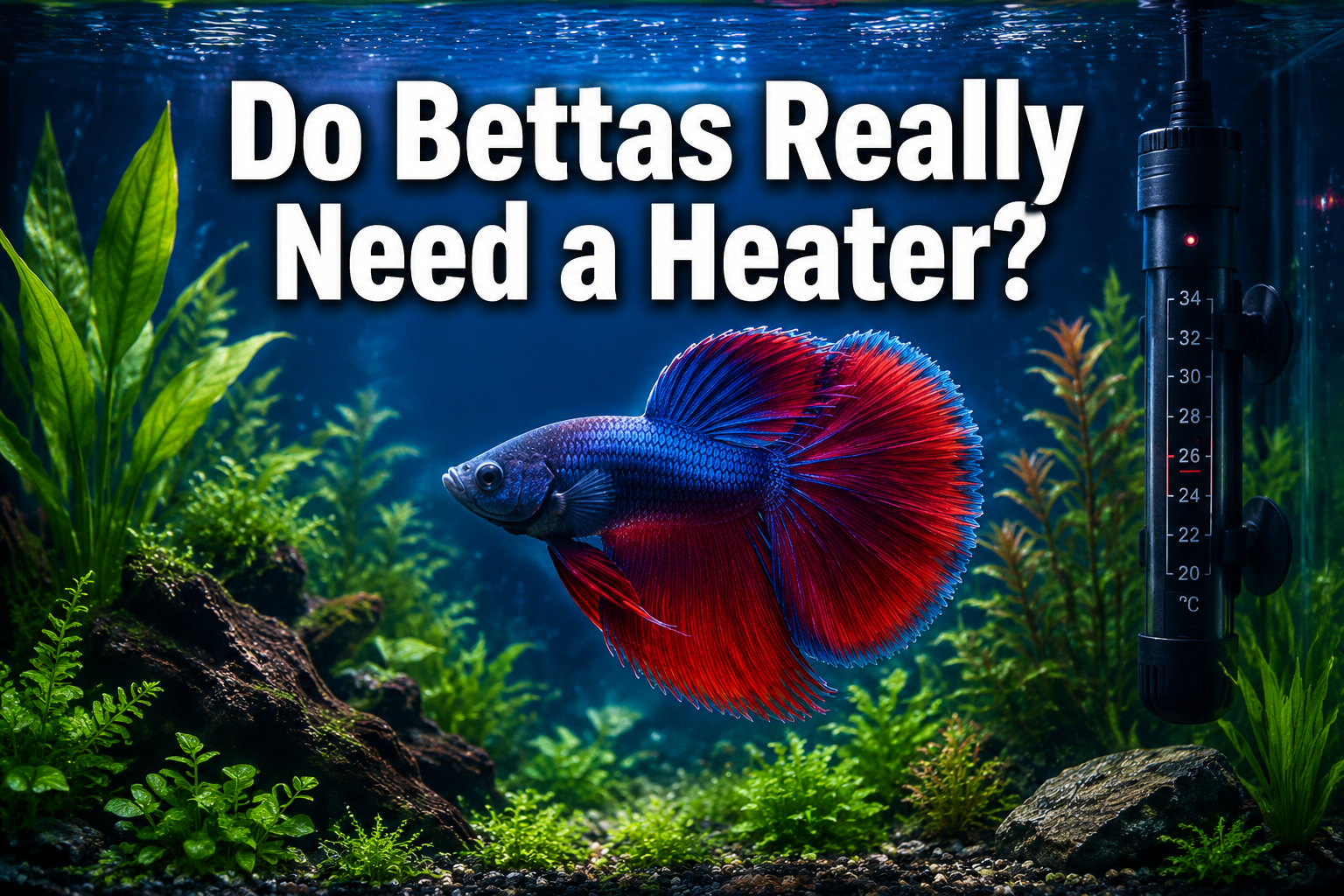
Yes, bettas absolutely need a heater in most situations. These tropical fish require water temperatures between 76-82°F (24-28°C) to maintain their health, vibrant colors, and active behavior. Without proper heating, bettas become sluggish, lose their appetite, and face increased risk of illness and shortened lifespans.
Why Do Bettas Need Heated Water?
Bettas are native to the warm, tropical waters of Southeast Asia, where temperatures rarely drop below 76°F. Their bodies are specifically adapted to function optimally in these warm conditions, making them completely dependent on consistent tropical temperatures for survival.
Cold water directly impacts betta metabolism, causing their digestive system to slow down dramatically. When water temperatures drop below 74°F, bettas cannot properly digest food, leading to bloating, constipation, and eventual malnutrition. Their immune systems also weaken significantly in cold water, making them vulnerable to common diseases like fin rot and ich.
Choose a heater if your room temperature ever drops below 76°F – which applies to most homes during winter months or air-conditioned spaces. Even brief temperature drops can stress bettas and compromise their health over time.
What Temperature Range Do Bettas Actually Need?
The ideal temperature range for bettas is 76-82°F (24-28°C), with 78-80°F being the sweet spot for most bettas. This narrow range mimics their natural habitat and supports optimal health, digestion, and activity levels.
Temperature consistency matters more than hitting the exact degree. Fluctuations greater than 2-3°F within a day can shock bettas and trigger stress responses. Wild temperature swings between day and night are particularly harmful, which is why heaters with thermostats are essential.
Avoid temperatures above 84°F as this can cause oxygen depletion in the water and heat stress. Temperatures below 74°F slow betta metabolism to dangerous levels and suppress their immune function.
Do Bettas Really Need a Heater in Small Tanks?
Yes, bettas in small tanks (2.5-5 gallons) actually need heaters more urgently than those in larger tanks. Small volumes of water lose heat much faster than larger bodies of water, creating more dramatic temperature swings throughout the day.
A 2.5-gallon tank can drop 5-10°F overnight in a typical home, while a 20-gallon tank might only drop 2-3°F. This makes small tank bettas more vulnerable to temperature shock and stress-related illnesses.
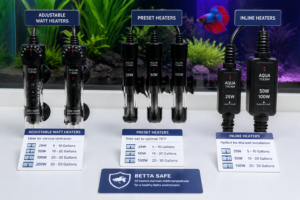
Use a 25-watt heater for tanks up to 5 gallons and always pair it with a separate thermometer to monitor accuracy. Many small preset heaters are designed specifically for betta tanks and maintain steady temperatures without overheating.
Common mistake: Assuming small tanks stay warm enough without heaters because they’re “easier to heat.” The opposite is true – small tanks need more temperature management, not less.
What Type of Heater Works Best for Bettas?
Adjustable submersible heaters with built-in thermostats provide the most reliable temperature control for betta tanks. These heaters automatically turn on and off to maintain your set temperature and work well in tanks 5 gallons and larger.
For smaller tanks (2.5-5 gallons), preset heaters designed for bettas offer a simpler solution. These heaters are pre-calibrated to maintain temperatures around 78°F and don’t require adjustment.
Heater wattage guidelines:
- 2.5-5 gallons: 25-watt heater.
- 5-10 gallons: 50-watt heater.
- 10-20 gallons: 75-100-watt heater.
- 20+ gallons: 5 watts per gallon rule.
Avoid stick-on heater pads as they don’t heat water evenly and can create dangerous hot spots. Submersible heaters distribute heat more effectively throughout the entire tank.
When Can You Skip the Heater?
You can safely skip a heater only if your room maintains 76-82°F consistently, 24/7, year-round. This scenario is rare in most climates and homes, but may apply in tropical regions or heated spaces with excellent climate control.
Test your room’s temperature stability by monitoring it for a full week during the coldest season. If temperatures never drop below 76°F, even at night or during weather changes, a heater may not be necessary.
Still consider a heater even in warm rooms during:
- In the winter months, heating systems cycle on and off.
- Summer, when air conditioning creates temperature swings.
- Power outages that affect home climate control.
- Seasonal weather changes in spring and fall.
Edge case: Some experienced betta keepers in consistently warm climates use heaters only during cooler months, but this requires careful temperature monitoring and backup heating plans.
Signs Your Betta Needs Better Heating
Lethargy and reduced swimming activity are the first signs your betta is too cold. Healthy bettas are naturally curious and active, exploring their tank and responding to movement outside. Cold bettas often stay motionless at the bottom or hide constantly.
Additional cold stress symptoms include:
- Loss of appetite or refusing food entirely.
- Faded colors, especially in normally vibrant males.
- Clamped fins held close to the body.
- Increased susceptibility to diseases like fin rot.
- Slower gill movement and breathing.
Behavioral changes also indicate temperature problems. Cold bettas stop building bubble nests, become less responsive to their owners, and may float vertically or struggle to swim normally.
Quick test: If your betta perks up and becomes more active after you add warm water during tank maintenance, temperature is likely the issue.
Heater Safety and Maintenance Tips
Always use a separate thermometer to verify heater accuracy since built-in heater thermostats can fail or become inaccurate over time. Place the thermometer on the opposite side of the tank from the heater for the most accurate reading.
Install heaters vertically or at a slight angle as recommended by the manufacturer. Horizontal placement can cause uneven heating and potential equipment failure. Ensure the heater is fully submerged before plugging it in.
Replace heaters every 2-3 years, even if they appear to be working correctly. Internal components degrade over time, leading to temperature fluctuations or complete failure that can harm your betta.
Safety checklist:
- Unplug the heater during water changes if the water level drops below the minimum line.
- Check for cracks in glass heaters monthly.
- Monitor temperature daily, especially during season changes.
- Keep a backup heater for emergencies.
- Use heater guards if your betta tends to rest against equipment.
Summary
The question “Do bettas really need a heater?” has a clear answer: yes, in virtually all home aquarium situations. Bettas are tropical fish that require consistent temperatures between 76-82°F to maintain their health, vibrant colors, and natural behaviors. Room temperature water simply isn’t warm enough for these Southeast Asian natives.
FAQ
Can I use a space heater to warm my betta tank instead of an aquarium heater?
No, space heaters don’t provide consistent water temperature and create dangerous fluctuations as room air heats and cools. Aquarium heaters are specifically designed for stable water heating.
How long does it take a heater to warm up a betta tank?
Most heaters take 15-30 minutes to reach target temperature in small tanks (2.5-5 gallons) and up to 2 hours in larger tanks, depending on starting temperature and heater wattage.
Is 75°F close enough to the ideal temperature range?
No, 75°F is too cold for bettas and will cause sluggish behavior and health problems over time. Aim for at least 76°F minimum, with 78-80°F being optimal.
Do betta heaters use a lot of electricity?
Betta heaters are very energy-efficient, typically using 25-50 watts. A 25-watt heater costs approximately $2-4 per month to operate continuously.
Can I turn off the heater at night to save energy?
Never turn off betta heaters at night. Temperature drops during nighttime hours can stress bettas and compromise their immune systems. Heaters should run 24/7.