
A functional betta tank setup costs $40-60 and requires five essentials: a 5-gallon tank, an adjustable heater, a gentle filter, a water conditioner, and basic substrate. Skip expensive decorations initially and focus on water quality, temperature stability, and proper cycling for a healthy betta environment.
What Size Tank Do You Really Need for a Betta Tank Setup?
A 5-gallon tank is the practical minimum for a healthy betta tank setup, providing enough water volume to maintain stable temperature and water chemistry. Smaller tanks require daily maintenance and offer little room for error.
Why 5 gallons works better than smaller options:
- Temperature stability: A larger water volume resists rapid temperature swings.
- Waste dilution: More water means ammonia buildup happens more slowly.
- Swimming space: Bettas are active fish that appreciate horizontal swimming room.
- Equipment compatibility: Standard heaters and filters work properly in 5+ gallon tanks.
Choose a 10-gallon tank if budget allows, as the extra water volume makes maintenance easier and provides room for live plants. Avoid tall, narrow tanks since bettas prefer horizontal swimming space and need easy access to the surface for breathing.
Tank material considerations:
- Glass tanks retain heat better and don’t scratch easily.
- Acrylic tanks are lighter but show wear marks from cleaning.
- Avoid bowls or tanks under 2.5 gallons regardless of price.
Essential Equipment for Your Budget Betta Tank Setup
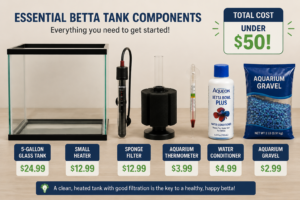
Your betta tank setup needs four critical pieces of equipment that directly impact fish health: heater, filter, thermometer, and water conditioner. Everything else is optional for the initial setup.
Non-negotiable equipment list:
Heater ($12-18): Choose an adjustable heater rated at 5 watts per gallon. Preset heaters often run too hot or too cool for bettas’ preferred 78-80°F range.
Filter ($8-15): Sponge filters or adjustable hang-on-back filters work best. Avoid strong currents that stress bettas and make swimming difficult.
Thermometer ($3-6): Digital thermometers read more accurately than stick-on strips. Temperature fluctuations stress bettas and weaken their immune systems.
Water conditioner ($5-8): Removes chlorine and chloramines from tap water. Buy concentrated formulas that treat more gallons per bottle.
Money-saving equipment tips:
- Buy heater and filter combo packs when available.
- Check local fish stores for used equipment in good condition.
- Generic water conditioners work as well as name brands.
- Skip expensive gravel vacuum initially; a turkey baster removes waste effectively.
How Much Does a Complete Betta Tank Setup Actually Cost?
A functional betta tank setup costs $40-60 when focusing on essentials and shopping strategically. This budget covers everything needed for a healthy environment without unnecessary decorations or premium brands.
Budget breakdown for 5-gallon setup:
- Tank: $15-25 (glass preferred).
- Heater: $12-18 (adjustable, 25-watt).
- Filter: $8-15 (sponge or low-flow HOB).
- Substrate: $5-10 (basic gravel or sand).
- Water conditioner: $5-8 (concentrated formula).
- Thermometer: $3-6 (digital stick-on).
- Basic decorations: $5-10 (one hiding spot).
Total: $53-92
Where to save money without compromising quality:
- Buy during pet store sales (often 20-30% off tank kits).
- Choose basic gravel over specialty substrates initially.
- Use ceramic mugs or PVC pipes as hiding spots.
- Start with one live plant instead of multiple decorations.
Avoid cheap tank kits under $30, as they typically include inadequate heaters or filters that fail quickly and stress fish.
Setting Up Your Betta Tank: Step-by-Step Process
Proper setup takes 2-4 weeks when including the nitrogen cycle, but rushing this process leads to sick fish and higher long-term costs. Start the cycle before buying your betta.
Week 1-2: Initial setup and cycling
- Rinse the substrate until the water runs clear to remove dust.
- Install equipment, but don’t add fish yet.
- Add water conditioner and fill the tank slowly to avoid disturbing the substrate.
- Set the heater to 78°F and allow 24 hours to stabilize.
- Start the filter and add a beneficial bacteria supplement or established filter media.
- Test water daily for ammonia and nitrite levels.
Week 2-4: Monitor cycling progress
- Ammonia should spike then drop to zero.
- Nitrite appears next, then drops to zero.
- Nitrate levels indicate established beneficial bacteria.
- Water changes of 25% if ammonia or nitrite exceed 0.5 ppm.
Adding your betta:
- Float sealed bag in tank for 15 minutes to match temperature.
- Add small amounts of tank water to the bag over 30 minutes.
- Net fish into the tank (don’t pour the bag water into the tank).
Common setup mistakes to avoid:
- Adding fish before cycling completes.
- Overfeeding during the first week (causes ammonia spikes).
- Placing a tank near windows (temperature swings) or air vents.
What Plants and Decorations Work Best in Budget Betta Tank Setups?
Live plants improve water quality and cost less than plastic alternatives when chosen correctly. Start with hardy, low-light plants that don’t require special substrate or CO2 systems.
Best budget-friendly live plants:
- Java fern: $3-5, grows attached to decorations, very hardy.
- Anubias: $4-6, slow-growing, tolerates low light.
- Java moss: $2-4, spreads naturally, provides hiding spots.
- Amazon sword: $3-5, classic aquarium plant, moderate light needs.
Essential decoration criteria:
- No sharp edges that tear betta fins.
- Provides hiding spots to reduce stress.
- Easy to clean during maintenance.
- Doesn’t alter water chemistry.
DIY decoration ideas:
- Ceramic coffee mugs (remove handles if sharp).
- Smooth river rocks from hardware stores.
- PVC pipe fittings sanded smooth.
- Driftwood from aquarium stores (avoid wild-collected wood).
Avoid plastic plants with hard edges, decorative shells that raise pH, or overcrowding that reduces swimming space.
How to Maintain Your Betta Tank Setup on a Budget?
Weekly maintenance prevents expensive problems and keeps your betta healthy using basic supplies and consistent routines. Focus on water quality over cosmetic perfection.
Weekly maintenance checklist:
- Water change: Remove 25% of water using a cup or a small siphon.
- Temperature check: Verify heater maintains 76-82°F range.
- Filter cleaning: Rinse the sponge or replace the cartridge monthly.
- Feeding routine: Small amounts 2-3 times daily, remove uneaten food.
- Visual inspection: Check for signs of illness or stress.
Monthly tasks:
- Test water parameters (ammonia, nitrite, nitrate).
- Clean glass with aquarium-safe scraper.
- Trim dead plant leaves.
- Check equipment for proper operation.
Budget maintenance supplies:
- Water test strips: $8-12 for 50 tests.
- Gravel vacuum: $10-15 or use a turkey baster initially.
- Algae scraper: $3-5 plastic blade type.
- Replacement filter media: $5-8 monthly.
Money-saving maintenance tips:
- Rinse and reuse sponge filters instead of replacing.
- Use aged tap water instead of buying distilled water.
- Clean decorations during water changes to prevent algae buildup.
Troubleshooting Common Betta Tank Setup Problems
Most betta tank issues stem from water quality problems, temperature fluctuations, or inadequate filtration. Address problems quickly to prevent fish stress and expensive treatments.
Cloudy water solutions:
- Bacterial bloom: Normal during cycling, resolves in 3-5 days.
- Overfeeding: Reduce food amounts and increase water changes.
- Inadequate filtration: Upgrade filter or add beneficial bacteria.
Temperature problems:
- Heater too small: Upgrade to proper wattage (5W per gallon).
- Frequent fluctuations: Move the tank away from drafts or direct sunlight.
- Heater failure: Keep a backup heater for emergencies.
Filter issues:
- Too strong current: Add a baffle or switch to a sponge filter.
- Inadequate filtration: Clean filter media or upgrade the size.
- Noise problems: Check for proper installation and water levels.
When to seek help:
- Persistent water quality issues after 2 weeks
- Fish showing signs of illness (lethargy, fin rot, unusual behavior)
- Equipment failures under warranty
Choose established local fish stores over big box stores for reliable advice and quality equipment support.
FAQ
How long does a betta tank setup last?
A properly maintained betta tank setup lasts 3-5 years with periodic equipment replacement. Heaters typically need replacement every 2-3 years, while quality filters can last 5+ years with regular media changes.
Can I use tap water in my betta tank setup?
Yes, but always treat tap water with a dechlorinator before adding it to the tank. Let treated water sit 24 hours to reach room temperature, or use an adjustable heater to warm it gradually.
What’s the cheapest way to cycle a new betta tank?
Add a beneficial bacteria supplement ($5-8) or borrow established filter media from another aquarium. This reduces cycling time from 4-6 weeks to 2-3 weeks and costs less than treating sick fish.
Do I need a lid for my betta tank setup?
Lids prevent jumping (bettas can jump 2-3 inches) and reduce evaporation, but aren’t essential if water level stays 2+ inches below tank rim. DIY mesh covers work as well as glass lids.
How often should I clean my betta tank?
Perform 25% water changes weekly in 5-gallon tanks, or 20% in 10+ gallon tanks. Clean filter media monthly by rinsing in old tank water, never tap water.
What temperature should I keep my betta tank?
Maintain 78-80°F consistently. Bettas become sluggish below 76°F and stressed above 82°F. Use an adjustable heater and monitor with a reliable thermometer.
Can I add other fish to my betta tank setup?
In 5-gallon tanks, keep only the betta. Tanks 10+ gallons can house compatible tankmates like small snails or shrimp, but research compatibility carefully before adding any companions.
How do I know if my betta tank is properly cycled?
Test water weekly during setup. A cycled tank shows 0 ppm ammonia, 0 ppm nitrite, and 5-20 ppm nitrate. This process typically takes 3-4 weeks in new tanks.
Conclusion
Creating a successful betta tank setup doesn’t require expensive equipment or complex systems. Focus your budget on the five essentials: adequate tank size, reliable heater, gentle filtration, water conditioner, and consistent maintenance routine. A well-planned $50-60 setup provides everything needed for a healthy, thriving betta.