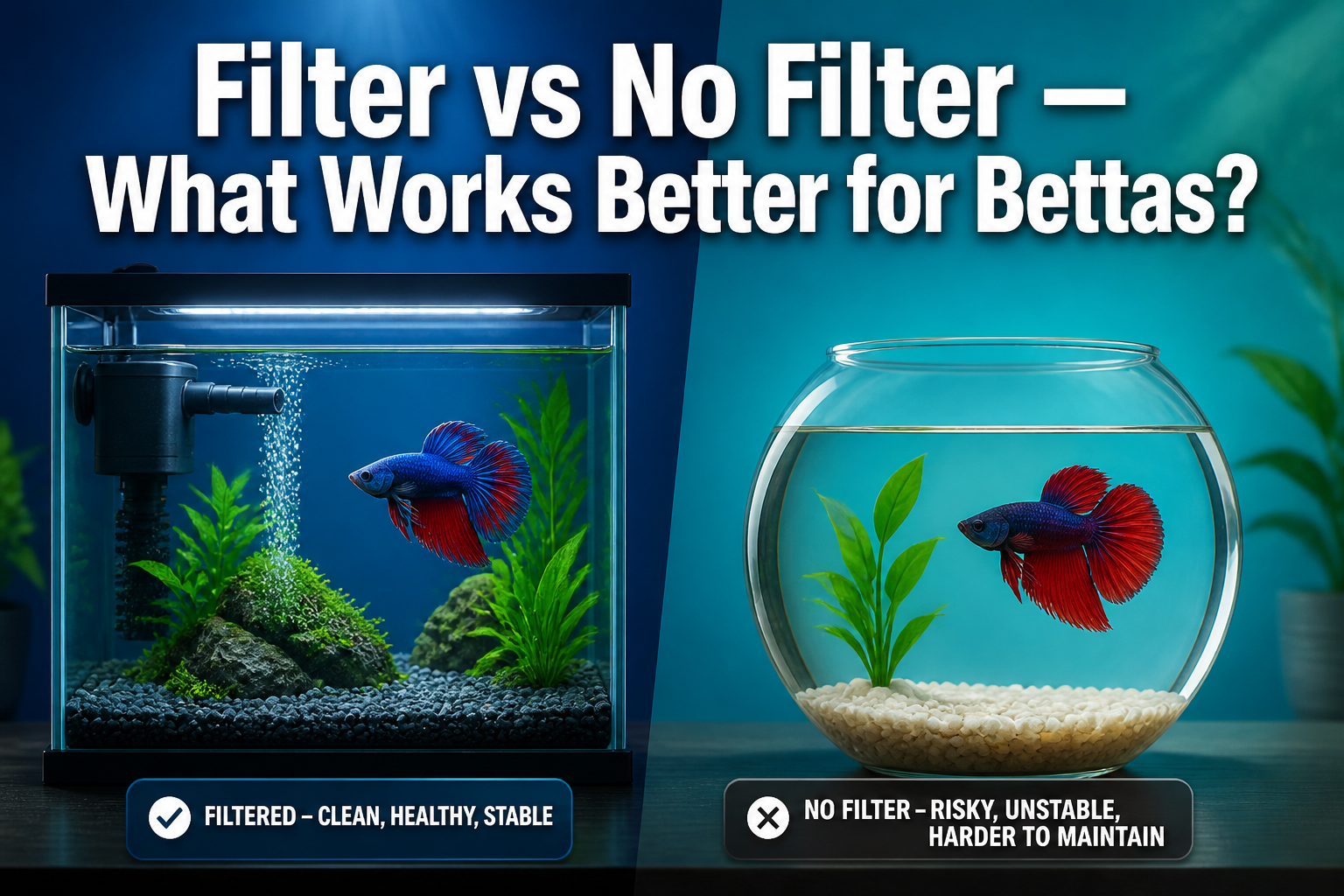
Filtered tanks consistently provide better health outcomes for betta fish compared to unfiltered setups. While bettas can survive in bowls without filtration, they thrive in filtered environments that maintain stable water chemistry, reduce harmful ammonia buildup, and create gentle water circulation that mimics their natural habitat.
Key Takeaways
- Filtered tanks maintain stable water chemistry and reduce dangerous ammonia spikes that stress betta fish.
- Unfiltered setups require daily water changes to prevent toxic buildup, making them more labor-intensive.
- Gentle filtration systems designed for bettas won’t create strong currents that exhaust these fish.
- Tank size matters more than filtration — a 5-gallon filtered tank beats a 1-gallon bowl every time.
- Sponge filters and adjustable flow filters work best for bettas’ low-current preferences.
- Water quality testing becomes critical in unfiltered environments to prevent fish stress and disease.
- Long-term costs favor filtered setups despite higher initial investment in equipment.
What Are the Main Differences Between Filtered and Unfiltered Betta Tanks?
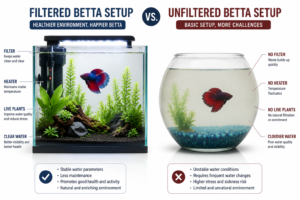
The filter vs no filter debate centers on water quality management and maintenance requirements. Filtered tanks use mechanical and biological filtration to remove waste and convert harmful ammonia into less toxic compounds. Unfiltered setups rely entirely on frequent water changes to maintain safe conditions.
Filtered tank benefits:
- Biological filtration converts ammonia to nitrites, then nitrates.
- Mechanical filtration removes debris and uneaten food.
- Chemical filtration (activated carbon) removes odors and toxins.
- Stable water parameters reduce fish stress.
Unfiltered tank characteristics:
- Requires 25-50% water changes every 2-3 days.
- Ammonia levels spike quickly between water changes.
- More prone to bacterial blooms and algae growth.
- Simpler setup with fewer equipment requirements.
Choose filtered setups if you want lower maintenance and better fish health. Choose unfiltered only if you’re committed to frequent water changes and careful monitoring.
How Does Water Quality Compare in Filter vs No Filter Setups?
Filtered environments maintain significantly more stable water chemistry than unfiltered bowls or tanks. The biological filter media hosts beneficial bacteria that process fish waste through the nitrogen cycle, preventing toxic ammonia accumulation.
Water quality metrics in filtered tanks:
- Ammonia levels: 0 ppm (after cycling period).
- Nitrite levels: 0 ppm.
- Nitrate levels: 5-20 ppm (manageable with weekly water changes).
- pH stability: Minimal fluctuations.
- Temperature consistency: Better with heater integration.
Unfiltered tank water conditions:
- Ammonia spikes: 0.5-2.0 ppm between water changes.
- Rapid pH swings are caused by waste accumulation.
- Higher bacterial load requires frequent intervention.
- Temperature fluctuations without equipment integration.
Common mistake: Assuming bettas prefer stagnant water because they come from rice paddies. Even shallow natural habitats have gentle water movement and beneficial bacteria colonies that process waste.
The key difference lies in buffering capacity; filtered tanks handle waste gradually, while unfiltered setups experience rapid quality deterioration.
What Are the Health Impacts of Each Setup on Betta Fish?
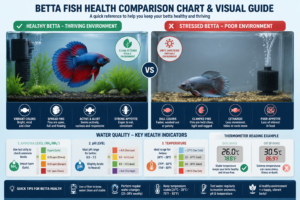
Bettas in filtered tanks show better overall health markers, including brighter coloration, more active behavior, and stronger immune systems. The stable environment reduces chronic stress that weakens fish over time.
Health benefits of filtered environments:
- Reduced fin rot incidents due to cleaner water conditions.
- Enhanced immune function from lower ammonia exposure.
- Better appetite and growth in stable water chemistry.
- Longer lifespan, averaging 3-5 years vs 1-2 years in poor conditions.
- More natural behaviors like bubble nest building and exploration.
Health risks in unfiltered setups:
- Ammonia poisoning symptoms include lethargy and gasping at the surface.
- Increased disease susceptibility from chronic stress.
- Fin damage from poor water quality.
- Stunted growth in small, frequently changing environments.
Edge case consideration: Some experienced aquarists successfully maintain unfiltered tanks, but this requires daily testing, precise feeding amounts, and immediate response to water quality changes. Beginners should avoid this approach.
Choose filtered setups if fish health is the priority. The investment in filtration equipment pays off through reduced veterinary costs and longer fish lifespan.
Which Filter Types Work Best for Bettas?
Sponge filters and adjustable hang-on-back filters provide ideal filtration for bettas without creating excessive water movement. These fish prefer gentle currents that won’t exhaust them while swimming.
Recommended filter options:
| Filter Type | Flow Rate | Best For | Price Range |
|---|---|---|---|
| Sponge Filter | Very Low | 5-10 gallon tanks | $8-15 |
| Adjustable HOB | Low-Medium | 10-20 gallon tanks | $15-35 |
| Internal Filter | Low | 5-15-gallon tanks | $12-25 |
| Canister Filter | Adjustable | 20+ gallon tanks | $50-150 |
Setup requirements for betta-friendly filtration:
- Flow rate under 3x tank volume per hour.
- Intake guards to prevent fin damage.
- Adjustable flow controls or baffles.
- Gentle surface agitation for gas exchange.
Avoid these filter types:
- High-flow powerheads that create strong currents.
- Undergravel filters require frequent substrate disturbance.
- Filters without flow adjustment in tanks under 10 gallons.
The goal is biological and mechanical filtration without turning your tank into a washing machine. Bettas should swim comfortably without fighting strong currents.
How Much Maintenance Does Each Setup Require?
Filtered tanks require significantly less daily maintenance once the biological filter is established, typically taking 4-6 weeks to fully cycle. Unfiltered setups demand constant attention to prevent water quality crashes.
Weekly maintenance for filtered tanks:
- 25% water change once per week.
- Filter media rinse in tank water (monthly).
- Gravel vacuum and algae removal.
- Water parameter testing (weekly initially, monthly once stable).
- Total time: 30-45 minutes per week.
Daily maintenance for unfiltered setups:
- 25-50% water changes every 2-3 days.
- Daily ammonia and pH testing.
- Immediate removal of uneaten food.
- Constant monitoring for stress signs.
- Total time: 15-20 minutes daily.
Cost comparison over one year:
- Filtered setup: $50-80 (filter media, dechlorinator, test kits).
- Unfiltered setup: $80-120 (frequent water treatments, test strips, medications).
Common maintenance mistake: Replacing all filter media at once, which removes beneficial bacteria and crashes the biological filter. Replace media gradually or rinse in tank water instead.
The time investment heavily favors filtered systems for busy aquarists who want healthy fish without daily water chemistry management.
What Tank Size Works Best for Filter vs No Filter Setups?
Tank volume dramatically affects the success of both filtered and unfiltered approaches. Larger water volumes provide more stability and dilute waste products, making filtration more effective and unfiltered maintenance more manageable.
Minimum tank sizes for each approach:
- Filtered tanks: 5 gallons minimum, 10+ gallons ideal.
- Unfiltered setups: 3 gallons minimum for experienced keepers only.
- Bowls under 2 gallons: Not recommended for either approach.
Why size matters in the filter vs no filter decision:
- Larger volumes dilute ammonia more effectively between water changes.
- Filter bacteria colonies establish better in stable, larger environments.
- Temperature and pH remain more consistent in bigger tanks.
- Bettas exhibit more natural behaviors with adequate swimming space.
Tank size recommendations by experience level:
- Beginners: 10-gallon filtered tank with a gentle sponge filter.
- Intermediate: 5-gallon minimum with appropriate filtration.
- Advanced: Any size 3+ gallons with proper maintenance commitment.
The physics of water chemistry work in your favor with larger tanks, regardless of filtration choice. A 10-gallon filtered tank almost always outperforms a 3-gallon unfiltered setup for betta health and owner convenience.
FAQ
Can bettas live without a filter?
Yes, bettas can survive without filtration, but they require frequent water changes (every 2-3 days) and careful monitoring to prevent ammonia poisoning. Filtered tanks provide better long-term health outcomes.
What’s the minimum tank size for an unfiltered betta setup?
Three gallons minimum for experienced aquarists only. Smaller volumes require daily water changes and constant monitoring. Five gallons or larger works better for unfiltered maintenance.
Do betta filters need to run 24/7?
Yes, biological filters must run continuously to maintain beneficial bacteria colonies. Turning off filtration for more than 2-4 hours can crash the biological filter and cause ammonia spikes.
How long does it take to cycle a betta filter?
A new filter typically takes 4-6 weeks to establish full biological filtration. Use beneficial bacteria supplements and monitor ammonia/nitrite levels during this period with frequent water changes.
Can I use a regular aquarium filter for bettas?
Most aquarium filters work for bettas if you can adjust or baffle the flow rate. Bettas prefer gentle currents under 3x tank volume per hour to avoid exhaustion from fighting strong water movement.
What happens if I don’t change water in an unfiltered tank?
Ammonia levels will spike within 3-5 days, causing betta stress, fin rot, and potential death from ammonia poisoning. Unfiltered setups cannot process waste without frequent water changes.
Are sponge filters good for bettas?
Sponge filters are excellent for bettas because they provide gentle biological filtration with minimal water movement. They’re also inexpensive and easy to maintain for beginners.
How often should I test water in unfiltered tanks?
Test ammonia and pH daily in unfiltered setups, especially during the first month. Once you establish a routine, you can reduce testing to every other day, but monitor fish behavior closely.
Conclusion
The filter vs no filter debate for bettas clearly favors filtered setups for most aquarists. While experienced fishkeepers can maintain healthy bettas in unfiltered environments, the daily maintenance requirements and water quality risks make this approach impractical for beginners.
Start with a 5-10-gallon tank and a gentle sponge filter for the best balance of betta health, maintenance convenience, and initial cost. This setup provides stable water chemistry, reduces disease risk, and gives you more flexibility in feeding and care routines.