
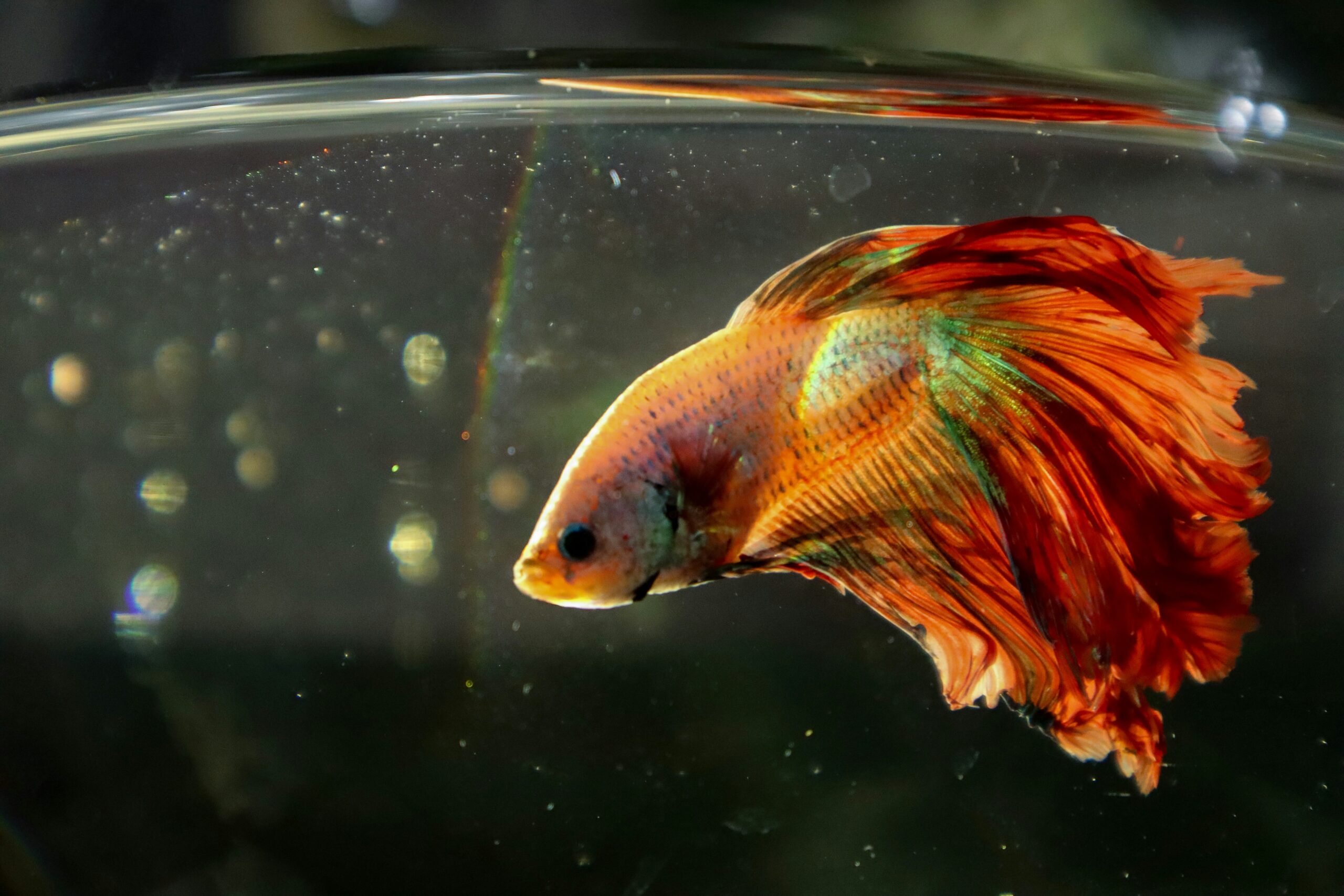
Seeing your vibrant betta fish struggling to swim or sporting a swollen belly is distressing for any owner. This condition is often the result of specific Betta Fish Feeding Mistakes That Cause Bloating, a common yet preventable issue in the hobby. Bettas are insectivores with very short digestive tracts, making them highly susceptible to constipation and swim bladder disorders.
If your Fish looks like it swallowed a marble, you must act quickly. Digestion issues can lead to secondary infections or even “Dropsy,” which is often fatal. Understanding the mechanics of how your Fish eats is the first step toward a long, healthy life for your aquatic companion.
1. Feeding Portions That Are Too Large
The most frequent error is simply giving the Fish too much food at once. A betta’s stomach is roughly the size of its eyeball. Many owners see their fish “begging” at the glass and assume they are hungry, leading to overgenerous portions.
When a betta consumes a massive meal, its stomach expands and presses against the swim bladder. This organ controls buoyancy. Pressure from a full gut causes the Fish to float uncontrollably or sink to the bottom.
How to fix it:
- Feed only 2–3 small pellets per meal.
- Limit feeding to twice per day.
- Observe the Fish’s profile; it should have a slight, natural curve, not a sharp bulge.
2. Using Low-Quality Pellets with Heavy Fillers
Not all fish food is created equal. Many “bargain” brands use high amounts of wheat flour, corn gluten, and soy as binders. Bettas cannot digest these carbohydrates efficiently. These fillers sit in the gut, ferment, and create gas, which is one of the primary Betta Fish Feeding Mistakes That Cause Bloating.
Check the ingredient label on your fish food container. If the first three ingredients are not “whole fish meal,” “shrimp meal,” or “krill,” the food is likely full of indigestible waste.
Recommended Ingredients:
- Whole Salmon or Herring.
- Vitamin-fortified krill.
- Black soldier fly larvae.
For more information on proper fish nutrition, Seriously Fish offers detailed species profiles that highlight natural diets.
3. Forgetting to Pre-Soak Dry Pellets
Dry pellets and freeze-dried foods are incredibly convenient, but they are dehydrated. When a betta swallows a dry pellet, the food begins to absorb water inside the Fish’s stomach. A single pellet can expand to twice its original size within minutes.
This internal expansion causes sudden, intense pressure on the digestive walls. It is a leading cause of “dry bloat,” in which the Fish appears fine immediately after eating but looks swollen 30 minutes later.
The Solution:
- Take a small cup of tank water.
- Drop the pellets in for 3–5 minutes.
- Once the pellets have expanded and softened, offer them to your betta.
4. Relying Entirely on Freeze-Dried Bloodworms
While bettas love bloodworms, they should be treated as “candy” rather than a daily meal. Freeze-dried bloodworms are notorious for causing constipation because they lack moisture and are very high in protein, lacking the fiber needed to move them through the gut.
Feeding these every day is one of the Betta Fish Feeding Mistakes That Cause Bloating that many beginners make. Over-reliance on these treats can lead to intestinal blockage.
Better Alternatives:
- Frozen daphnia (acts as a natural laxative).
- Live brine shrimp.
- High-fiber insect-based pellets.
5. Keeping the Water Temperature Too Low
A betta’s metabolism is directly tied to the temperature of its environment. They are tropical Fish that require water between 78°F and 80°F (25.5°C to 26.5°C). If the water is too cold, their digestive enzymes stop working efficiently.
In cold water, food sits in the stomach and rots rather than being digested. This leads to bacterial growth, gas, and severe bloating. Even if you feed the “correct” amount, your Fish will bloat if it cannot process the energy.
Pro Tip: Always use a reliable aquarium heater and a thermometer. You can find high-quality equipment reviews on The Spruce Pets to ensure your tank stays within a safe range.
6. Lack of a Weekly “Fasting” Day
In the wild, bettas do not find food every single day. Their systems are designed to handle periods of scarcity. Constant, daily feeding keeps the digestive tract under perpetual stress with no time to clear out waste.
Failing to provide a rest period is a major mistake. A “fasting day” allows the Fish to empty its bowels, reducing the risk of long-term inflammation.
Routine Suggestion:
- Feed Monday through Saturday.
- Skip all food on Sunday.
- This simple habit can reduce bloating incidents by over 80%.
7. Feeding Peas to Solve the Problem
For years, many hobbyists recommended feeding a deshelled green pea to fix a bloated betta. However, modern research suggests this is actually one of the Betta Fish Feeding Mistakes That Cause Bloating in itself.
Bettas are carnivores, not herbivores. Their bodies are not designed to process the complex sugars and fibers found in peas. While a pea might act as a purge, it can also further irritate the intestinal lining.
The Modern Fix: Use Frozen Daphnia. Daphnia are small crustaceans that provide a natural source of fiber that bettas can actually digest. It acts as a gentle laxative without the risks associated with plant matter.
How to Identify Bloating vs. Dropsy
It is vital to distinguish between simple bloating and a condition called Dropsy.
| Feature | Simple Bloat | Dropsy (Organ Failure) |
|---|---|---|
| Belly Shape | Rounded, localized bulge | Wide, “pinecone” appearance |
| Scales | Flat against the body | Sticking out like a pinecone |
| Activity | Still active or slightly lethargic | Very lethargic, hiding |
| Appetite | Often still wants to eat | Usually refuses food |
If the scales are sticking out (pineconing), the Fish is experiencing organ failure, which requires immediate medical intervention with Epsom salt baths and antibiotics. For a deep dive into fish diseases, FishLore provides excellent community-backed health guides.
Step-by-Step Recovery Plan for a Bloated Betta
If your Fish is already showing signs of a swollen belly, follow this protocol immediately to reverse the damage.
Step 1: Stop All Feeding
Do not put any food in the tank for 3 full days. Your Fish will not starve; bettas can go up to a week without food without permanent harm. This allows the blockage to pass naturally.
Step 2: Check Your Heater
Ensure the water is at a steady 80°F. The warmth will speed up the Fish’s metabolism and help it process the remaining waste.
Step 3: The Epsom Salt Bath
Epsom salt (magnesium sulfate) acts as a muscle relaxant and helps draw out excess fluids.
- Use 1 tablespoon of pure Epsom salt (no scents or dyes) per 1 gallon of water.
- Dissolve the salt in a separate container of tank water.
- Place the Fish in the “bath” for 10–15 minutes.
- Monitor closely and return the Fish to its main tank afterward.
Step 4: Reintroduce Food with Daphnia
After the 3-day fast, do not go back to pellets immediately. Feed a small amount of frozen daphnia. This will help clear any remaining debris from the digestive tract.
Best Foods to Prevent Future Bloating
To avoid recurring Betta Fish Feeding Mistakes That Cause Bloating, transition your Fish to a high-quality, varied diet.
- Fluval Bug Bites (Betta Formula): These are made primarily from Black Soldier Fly Larvae, mimicking what bettas eat in the wild.
- NorthFin Betta Bits: Known for having zero fillers and high-quality marine proteins.
- Frozen Mysis Shrimp: A great source of protein and moisture that is easy on the gut.
- Live Foods: Offering live mosquito larvae or wingless fruit flies provides the best nutritional profile.
The Role of Water Quality in Digestion
Poor water quality stresses the Fish’s immune system, making its organs function less efficiently. High levels of ammonia or nitrites can cause internal inflammation, which can mimic bloating.
Check your water parameters weekly using a liquid test kit. If your nitrate levels exceed 20ppm, perform a 25% water change. Clean water allows the Fish to focus its energy on digestion rather than fighting off toxins.
Summary of Prevention Tips
To keep your Fish in peak condition, remember these core principles:
- Size Matters: Never feed a portion larger than the Fish’s eye.
- Hydration: Always soak dry foods before feeding.
- Quality: Avoid “fish meal” and “wheat” as primary ingredients.
- Environment: Maintain water temperatures of 78–80°F year-round.
- Rest: Implement a weekly fasting day to clear the system.
By avoiding these Betta Fish Feeding Mistakes That Cause Bloating, you significantly extend the lifespan of your pet. Most digestive issues are the result of human error, meaning they are entirely within your control to fix.
A healthy betta should be curious, active, and have a streamlined body shape. If you stay consistent with high-quality ingredients and moderate portions, your Fish will reward you with vibrant colors and energetic displays for years to come. For further reading on aquatic care, consult the WetWebMedia archives for expert-level advice on aquarium management.
