
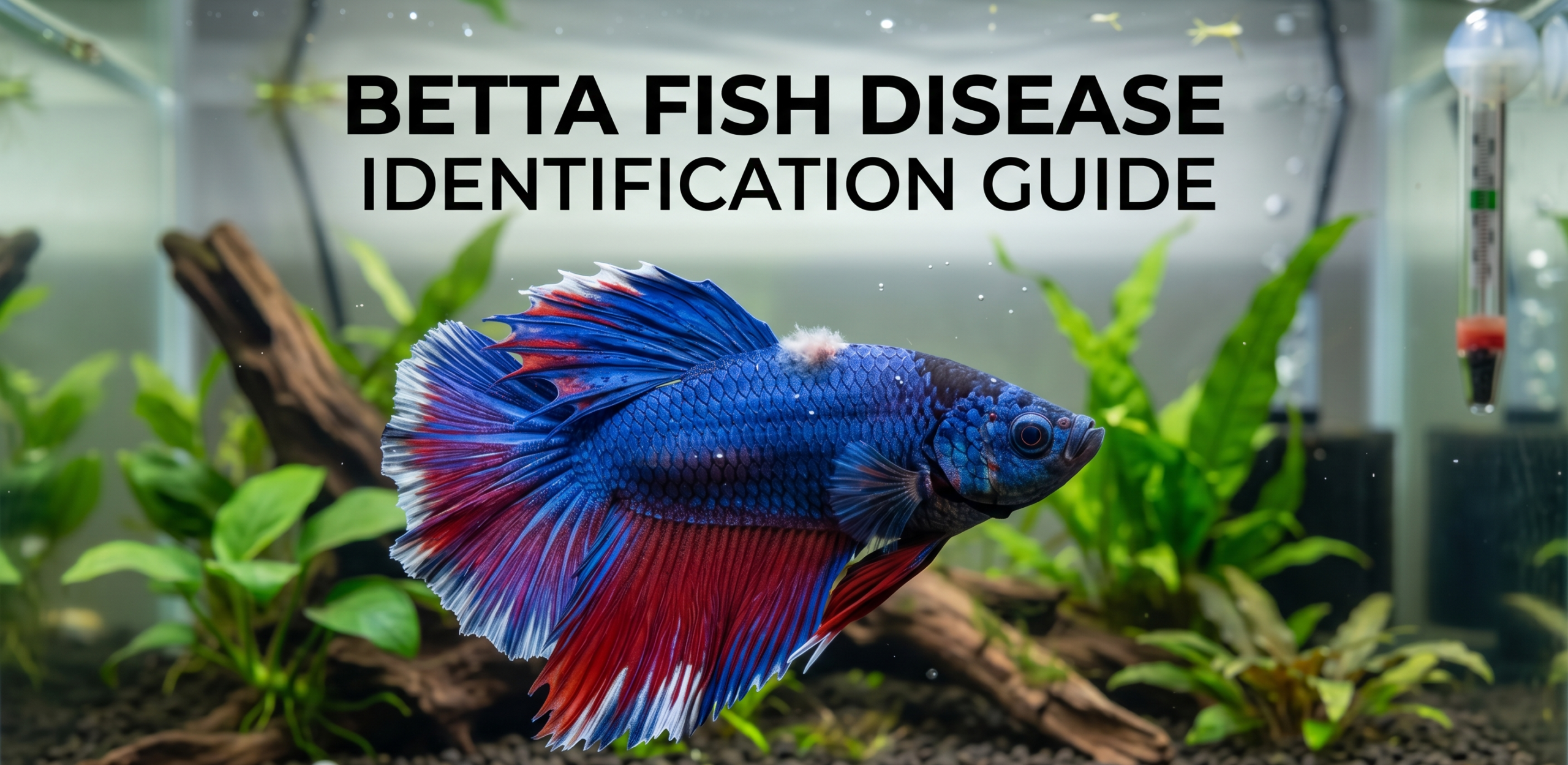
Betta fish get sick fast and hide symptoms until the damage is serious. If your betta is clamping its fins, sitting at the bottom, losing color, or refusing food, something is wrong.
This guide helps you identify exactly what disease your betta has, what causes it, how to treat it, and how to stop it from coming back.
How to Tell If Your Betta Fish Is Sick?
Before matching symptoms to a disease, watch for these early warning signs:
- Fins clamped tight against the body.
- Loss of appetite for more than 2 days.
- Faded or dull coloration.
- Lethargy — sitting at the bottom or floating near the top.
- Abnormal swimming (tilting, spinning, sinking).
- Visible spots, lesions, or growths on the body.
- Swollen belly or raised scales.
- Rubbing against tank decorations.
One symptom alone may not confirm a disease, but two or more together usually point to a specific condition. Always check your water parameters first, ammonia, nitrite, nitrate, and pH, because most betta diseases begin with poor water quality.
Ich (White Spot Disease)
What it looks like: Tiny white dots covering the body and fins, resembling grains of salt. The fish will scratch against surfaces.
Cause: A parasitic infection caused by Ichthyophthirius multifiliis. It spreads fast and can infect an entire tank in days.
Treatment:
- Raise water temperature gradually to 86°F (30°C) over 48 hours. This speeds up the parasite’s life cycle and makes it vulnerable.
- Use an ich-specific medication like API Super Ick Cure or malachite green.
- Treat the entire tank, not just the fish.
- Continue treatment for at least 10 days after no visible spots remain.
Prevention: Quarantine new fish for 2–4 weeks before adding them to your main tank. Ich is almost always introduced through new livestock or plants.
Fin Rot
What it looks like: Ragged, fraying, or dissolving fin edges. In the early stages, fins appear slightly torn. In advanced cases, fins rot back toward the body, and the tissue looks brown or black at the edges.
Cause: Bacterial infection, most commonly from Aeromonas or Pseudomonas species. It’s triggered by poor water conditions, especially high ammonia or nitrite.
Treatment:
- Perform a 30–50% water change immediately.
- Treat with antibiotics — API Fin & Body Cure or Kanaplex works well.
- Remove activated carbon from the filter during treatment (it absorbs medication).
- Clean the tank and replace the water every other day during treatment.
Prevention: Keep ammonia at 0 ppm and nitrite at 0 ppm. Change 25–30% of water weekly. Fin rot doesn’t appear in a clean, well-maintained tank.
Velvet (Gold Dust Disease)
What it looks like: A fine, gold or rust-colored dusting over the body — like the fish has been sprinkled with powder. Easier to spot under a flashlight. The fish clamps its fins and scratches constantly.
Cause: A parasitic infection from Oodinium (also called Piscinoodinium). It’s more dangerous than ich and harder to see with the naked eye.
Treatment:
- Dim the tank lights or cover the tank — the parasite uses light for photosynthesis.
- Raise the temperature to 82–86°F (28–30°C).
- Treat with copper-based medication like Cupramine by Seachem.
- Treat for at least 14 days.
Prevention: Velvet spreads through contaminated water, equipment, and new fish. Strict quarantine protocols stop it before it enters your tank.
Dropsy
What it looks like: Severely bloated belly and scales that stick out like a pinecone. Also called “pinecone disease” because of how the raised scales look from above.
Cause: Dropsy is not a single disease — it’s a symptom of organ failure, usually kidney failure. It’s caused by bacterial infection (Aeromonas hydrophila), internal parasites, or severe stress. By the time visible symptoms appear, internal damage is often advanced.
Treatment:
- Isolate the fish immediately in a hospital tank.
- Add 1 tablespoon of Epsom salt per gallon to reduce swelling.
- Treat with Kanaplex (kanamycin antibiotic) in food or water.
- Success rate is low once the pinecone appearance is visible; early treatment matters.
Prognosis: Honest answer dropsy is often fatal. If caught before full pineconing, some fish recover. Once scales are fully raised, survival odds are low. Focus on preventing stress and infection in the first place.
Swim Bladder Disorder
What it looks like: The fish can’t swim normally. It floats sideways, sinks to the bottom, swims upside down, or struggles to maintain depth.
Cause: Overfeeding, constipation, a bacterial infection, or physical injury to the swim bladder organ. The swim bladder controls buoyancy.
Treatment:
- Fast the fish for 2–3 days (no food at all).
- On day 3, feed one deshelled, cooked pea — the fiber helps clear constipation.
- If bacterial infection is suspected, use Kanaplex.
- Keep water temperature stable at 78–80°F (25–27°C).
Prevention: Feed bettas small portions twice a day. Skip one feeding day per week. Avoid freeze-dried foods that expand in the stomach — soak them in water before feeding.
Popeye (Exophthalmia)
What it looks like: One or both eyes bulge outward, looking like they may pop out. The area around the eye may appear cloudy or have blood.
Cause: Bacterial infection, most often from Aeromonas or Pseudomonas. Unilateral popeye (one eye) often follows an injury. Bilateral popeye (both eyes) usually means a systemic infection.
Treatment:
- Isolate the fish in a hospital tank.
- Treat with Kanaplex or Furan-2 by API.
- Add Epsom salt (1 tbsp per gallon) to draw fluid out of the eye.
- Treatment takes 1–2 weeks.
Note: Even with successful treatment, the eye may remain slightly enlarged. The goal is to save the fish, not restore perfect appearance.
Columnaris (Mouth Fungus / Cotton Mouth)
What it looks like: White or gray patches on the mouth, head, or body. It often looks like a fungal infection, but it is actually bacterial. Lesions can spread and develop a fuzzy, cotton-like texture.
Cause: The bacterium Flavobacterium columnare. It thrives in warm water and spreads rapidly. It can kill a betta in 24–72 hours in severe cases.
Treatment:
- Treat immediately — this disease moves fast.
- Use Kanaplex or API Fin & Body Cure.
- Lower the temperature slightly to 75°F (24°C) if possible — columnaris thrives in warm water.
- Improve oxygenation in the tank.
Distinguishing from fungus: True fungal infections look more three-dimensional and fluffy. Columnaris patches are flatter and often have a yellowish tinge.
True Fungal Infections
What it looks like: White, cotton-like tufts growing from wounds, fins, or the mouth. Usually secondary — they grow on tissue already damaged by injury or bacteria.
Cause: Saprophytic fungi like Saprolegnia infect stressed or wounded fish. Healthy fish with intact immune systems rarely develop fungal infections.
Treatment:
- Use antifungal medication like Pimafix by API or Methylene Blue.
- Salt baths (1 tsp aquarium salt per gallon) help treat minor cases.
- Address the underlying wound or bacterial infection simultaneously.
Anchor Worms and External Parasites
What it looks like: Visible thread-like worms attached to the skin or fins. The attachment site appears red and inflamed. The fish scratches constantly against surfaces.
Cause: Copepod parasites (Lernaea) that burrow into the fish’s skin. Usually introduced through live food or infected fish.
Treatment:
- Remove parasites carefully with tweezers — grasp as close to the skin as possible.
- Treat the tank with Dimilin or potassium permanganate dip.
- Do multiple treatments 7 days apart to kill hatching larvae.
Hole in the Head Disease (HITH)
What it looks like: Small pits or erosions on the head and along the lateral line. More common in large cichlids, but it does affect bettas.
Cause: Linked to Hexamita parasites, nutritional deficiencies (especially vitamin C and D), and poor water quality. Activated carbon overuse has also been connected to HITH.
Treatment:
- Treat with Metronidazole (Flagyl) — available as Seachem Metroplex
- Improve diet with varied, high-quality foods
- Remove activated carbon from the filter
- Large water changes to reduce nitrates
Betta Fish Disease Comparison Table
| Disease | Key Symptom | Cause | Primary Treatment |
|---|---|---|---|
| Ich | White salt-like spots | Parasite | Heat + ich medication |
| Fin Rot | Fraying, dissolving fins | Bacteria | Antibiotics + water change |
| Velvet | Gold/rust dust on the body | Parasite | Copper medication |
| Dropsy | Bloating + pinecone scales | Bacterial/organ failure | Kanaplex + Epsom salt |
| Swim Bladder | Floating/sinking sideways | Constipation/bacteria | Fasting + pea treatment |
| Popeye | Bulging eye(s) | Bacteria | Kanaplex + Epsom salt |
| Columnaris | White mouth/body patches | Bacteria | Kanaplex (urgent) |
| Anchor Worms | Visible worms on the skin | Parasites | Manual removal + Dimilin |
Water Quality: The Root Cause of Most Betta Diseases
Test your water before treating any disease. Most betta illnesses are caused or worsened by poor water conditions.
Ideal betta water parameters:
- Temperature: 76–82°F (24–28°C).
- pH: 6.5–7.5.
- Ammonia: 0 ppm.
- Nitrite: 0 ppm.
- Nitrate: below 20 ppm.
- GH (hardness): 3–4 dGH.
Use a liquid test kit like the API Freshwater Master Test Kit — inaccurate strip tests.
A cycled tank with beneficial bacteria converts toxic ammonia into less harmful nitrate. If your tank isn’t cycled, your betta is living in its own waste. Do 25–30% water changes weekly in a cycled tank, and every 1–2 days in an uncycled tank.
Setting Up a Hospital Tank for Sick Bettas
A hospital tank lets you treat a sick fish without medicating your main tank or stressing healthy fish.
What you need:
- 2.5–5 gallon bare-bottom tank.
- Sponge filter or air stone.
- Heater set to 78–80°F.
- Hiding spot (a small cup or decoration).
- Water from the main tank should be used to avoid shocking the fish.
Do not use activated carbon in a hospital tank — it removes medication from the water.
When to See a Vet?
Most betta diseases can be treated at home. However, consult an aquatic veterinarian if:
- Symptoms don’t improve after 7–10 days of correct treatment.
- Multiple diseases appear simultaneously.
- The fish has internal tumors or growths.
- You suspect internal parasites that don’t respond to standard medication.
The World Aquatic Veterinary Medical Association can help you locate a vet with fish experience.
Summary: Complete Betta Fish Disease Identification Guide
Diagnosing a sick betta comes down to observing symptoms clearly and acting fast. Start with water quality — fix any parameter problems before or alongside treatment. Match symptoms to the disease using the table above. Use the correct medication, follow the full treatment course, and keep a hospital tank ready.
The sooner you identify the disease, the better the outcome. Most betta diseases are curable when caught early. The ones that kill bettas are almost always the result of delayed action.
