
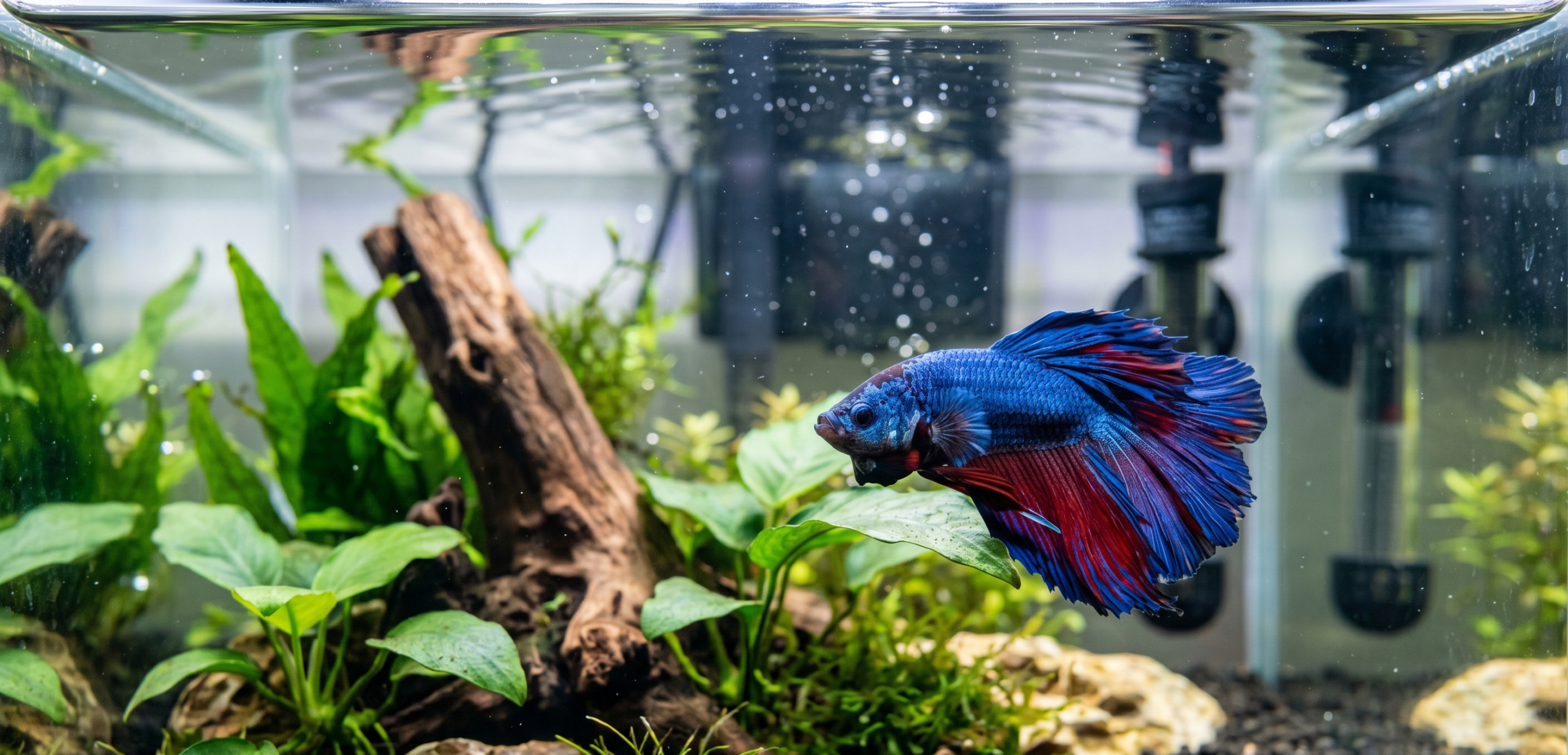
Betta fish breathe fast for a reason. If you notice your betta gasping at the surface, moving its gills rapidly, or looking lethargic with labored breathing, something in its environment or health is wrong.
What Normal Betta Breathing Looks Like?
Before diagnosing a problem, know the baseline. A healthy betta breathes slowly and steadily through its gills. It may occasionally visit the surface to gulp air. This is normal because bettas are labyrinth fish, meaning they have a specialized organ that lets them breathe atmospheric oxygen directly. Learn more about the labyrinth organ from the National Center for Biotechnology Information.
Frequent surface gasping, visibly flared or fast-moving gills, or lying at the bottom while breathing hard — none of that is normal. Those are warning signs.
Top Reasons Your Betta Fish Is Breathing Fast
1. Low Oxygen Levels in the Water
This is the most common cause. When dissolved oxygen in the tank drops, your betta struggles to extract enough through its gills and compensates by breathing faster or gasping at the surface.
What causes low oxygen:
- Overcrowded tank with too many fish.
- Lack of water surface movement.
- No air stone or filter creating surface agitation.
- Warm water (oxygen dissolves less efficiently at higher temperatures).
- Overgrown plants at night consume oxygen via respiration.
What to do:
- Add an air stone or adjust your filter output to increase surface agitation.
- Reduce tank temperature if it’s above 82°F (28°C).
- Do a partial water change (25–30%) immediately.
- Remove excess decor or plants blocking water flow.
2. Poor Water Quality
Ammonia, nitrite, and nitrate buildup are toxic to fish. Even at low concentrations, ammonia and nitrite damage gill tissue, making oxygen exchange inefficient. This directly causes rapid, labored breathing.
Symptoms alongside fast breathing:
- Red or inflamed gills.
- Clamped fins.
- Lethargy or hovering near the surface.
- Loss of color.
What to do:
- Test your water immediately using a reliable liquid test kit like the API Freshwater Master Test Kit.
- Ammonia should be 0 ppm, nitrite 0 ppm, and nitrate under 40 ppm.
- Perform a 30–50% water change if levels are elevated.
- Add a detoxifier like Seachem Prime as a short-term fix while cycling stabilizes.
Bettas need consistent water parameters. The ideal temperature is 76–82°F, pH between 6.5–7.5, and the water should be dechlorinated.
3. Gill Disease (Gill Flukes or Bacterial Infection)
If water quality is fine but your betta is still breathing fast, look closely at the gills. Gill flukes are microscopic parasites that attach to gill tissue and cause severe irritation. Bacterial gill disease causes swelling and mucus buildup that blocks oxygen uptake.
Signs to look for:
- Gills appear swollen, red, or protruding slightly from the operculum.
- Betta scratches against surfaces (flashing).
- One gill moves faster than the other.
- Mucus is visible near the gill area.
Treatment:
- For gill flukes: treat with Praziquantel-based medication (e.g., PraziPro).
- For bacterial infection: use a broad-spectrum antibiotic like Kanaplex or Maracyn.
- Quarantine the fish in a hospital tank during treatment.
- Do not combine medications without researching interactions.
4. Ammonia Poisoning Specifically
Ammonia poisoning deserves its own section because it’s a frequent killer of betta fish, especially in new tanks that haven’t finished cycling. Even trace amounts — 0.25 ppm — can cause gill damage and rapid breathing.
How it happens:
- New tank syndrome (uncycled aquarium).
- Overfeeding leads to uneaten food decomposing.
- Dead fish or plant matter in the tank.
- Overstocking
Immediate steps:
- Test the water right now.
- Do a 50% water change.
- Dose with Seachem Prime — it temporarily neutralizes ammonia for 24–48 hours.
- Stop feeding for 24 hours to prevent more waste.
Do not add more fish or change the filter media during this period.
5. Stress
Stress in bettas is more dangerous than most people realize. Chronic stress suppresses the immune system and causes erratic breathing patterns. A stressed betta may breathe fast even when the water quality is fine.
Common stressors:
- Seeing its own reflection constantly.
- Aggressive tank mates (fin nippers like tiger barbs).
- Bright lights for too many hours.
- Sudden loud noises or vibrations near the tank.
- Being moved or handled frequently.
- A tank that’s too small (minimum 5 gallons for a betta).
What to do:
- Cover three sides of the tank with a background to reduce reflection.
- Remove aggressive tank mates.
- Ensure 8–10 hours of light per day with a consistent schedule.
- Add hiding spots like silk plants or caves.
- Upgrade to at least a 5-gallon filtered, heated tank.
6. Temperature Shock or Extremes
Bettas are tropical fish. Water that’s too cold slows their metabolism abnormally; water that’s too hot depletes oxygen and speeds up metabolism, causing fast breathing either way.
Signs of temperature stress:
- Rapid breathing combined with sluggishness (cold).
- Rapid breathing with hyperactivity or surface gasping (hot).
- Lying at the bottom, looking lethargic.
Ideal range: 76°F–82°F (24°C–28°C) with a reliable submersible heater.
If your tank spiked above 84°F, float a bag of cold water in the tank to drop the temperature slowly. Never add ice directly.
7. Swim Bladder Disorder
Swim bladder issues don’t always cause fast breathing, but they often co-occur with other internal problems that stress the fish and create labored respiration.
Signs it’s swim bladder related:
- Floating sideways or at a tilted angle.
- Struggling to swim upright while breathing fast.
- Bloated abdomen.
What to do:
- Fast the fish for 24–48 hours.
- Feed a cooked, peeled pea (tiny piece) to help with constipation-related swim bladder issues.
- If no improvement in 72 hours, investigate internal infection.
8. Internal Parasites or Infection
Internal bacterial infections and parasites can stress the entire body system, causing rapid breathing as a secondary symptom. Visible physical changes often accompany this.
Signs:
- Pinecone-like raised scales (dropsy).
- White stringy feces.
- Hollow belly despite eating.
- Rapid breathing with no improvement from water changes.
Treatment:
- Dropsy is serious and requires immediate antibiotic treatment; Kanaplex is often recommended.
- Internal parasites: treat with Metronidazole (Seachem Metroplex).
- Quarantine immediately to prevent spreading.
9. Overfeeding and Bloating
Overfeeding creates two problems: it pollutes the water (raising ammonia), and it can physically compress internal organs in small bettas. Bloat puts pressure on the swim bladder and other organs, making breathing physically harder.
How to feed correctly:
- Feed 2–3 small pellets once or twice daily.
- Remove uneaten food after 2 minutes.
- Fast your betta one day per week.
- Vary the diet with frozen bloodworms or daphnia, not just dry pellets.
How to Check Your Betta Fish Step by Step?
When your betta is breathing fast, work through this checklist before panicking or medicating:
- Test the water: ammonia, nitrite, nitrate, pH, temperature.
- Check the temperature: confirm it’s 76–82°F.
- Look at the gills: are they red, swollen, or moving unevenly?
- Check for other symptoms: clamped fins, discoloration, bloating, and white spots.
- Look at tank mates: is anyone harassing the betta?
- Check the filter: is it running properly and creating surface movement?
- Review feeding history: has the betta been overfed recently?
This process alone will identify the cause in most cases.
When to Treat vs. When to Wait
Not every case of fast breathing needs medication. If water quality is the problem, correcting it with water changes often resolves rapid breathing within a few hours.
Treat immediately if:
- Gills are visibly red, swollen, or asymmetric.
- The fish has white spots, raised scales, or fuzzy patches.
- Symptoms have lasted more than 24 hours with no improvement.
- Multiple fish in the tank are affected.
Wait and monitor if:
- A water change was just performed, and parameters are now normal.
- The betta was recently moved or is adjusting to a new tank.
- No other symptoms are present.
Avoid medicating unthinkingly. Unnecessary medication stresses the fish further and can disrupt beneficial bacteria in your filter.
Preventing Fast Breathing in Bettas Long-Term
The best treatment is prevention. Most cases of rapid breathing in bettas come from avoidable tank management mistakes.
Key habits:
- Test water weekly, not just when problems appear.
- Change 20–30% of the water every week.
- Never use tap water without a dechlorinator.
- Keep the tank properly cycled with established beneficial bacteria.
- Don’t add new fish without quarantine.
- Feed appropriate amounts and clean up uneaten food.
A cycled, heated, filtered 5–10 gallon tank with stable parameters is the foundation for a healthy betta. Most breathing problems don’t exist in a properly maintained setup.
For deeper reading on betta fish care standards, the Aquatic Veterinary Services resource and PetMD’s betta fish guide are reliable references.
Final Thoughts
If your betta fish is breathing fast, the cause is almost always environmental — poor water quality, wrong temperature, low oxygen, or stress. Start by testing your water and doing a partial water change. From there, look for additional symptoms to narrow down whether you’re dealing with a parasite, infection, or physical issue.
Rapid breathing is your body telling you something is wrong. Acting quickly on the signs of fast breathing in betta fish gives your fish the best chance of a full recovery.
