
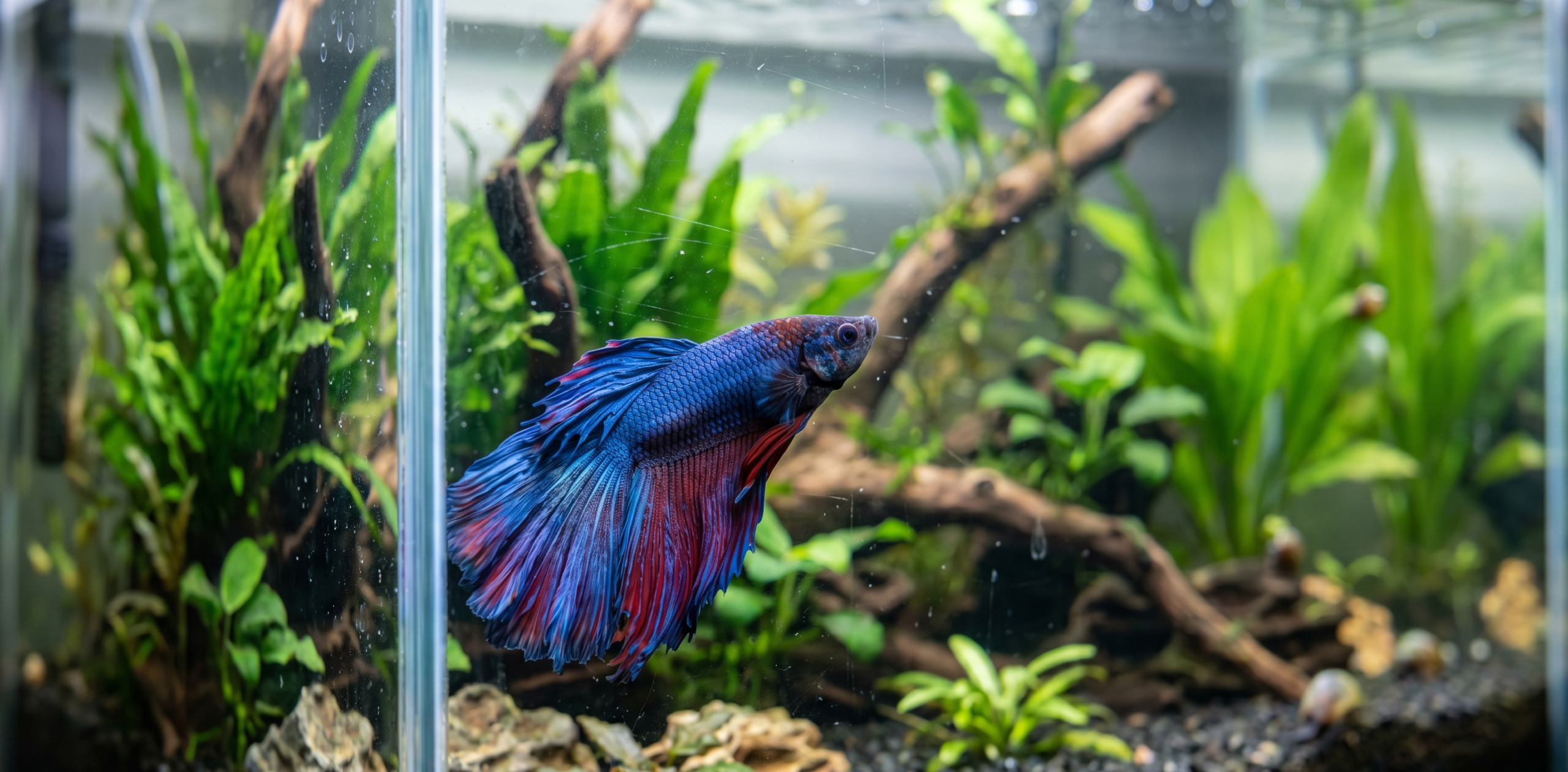
Betta glass surfing, when your fish frantically swims up and down the tank walls, is one of the clearest distress signals a betta can show. It is not random behavior. Something specific is triggering it, and identifying the cause quickly matters for your fish’s health and lifespan.
What Is Glass Surfing in Betta Fish?
Glass surfing, also called pacing, is repetitive vertical or lateral swimming along the tank glass. The betta moves rapidly, often at the surface, pressing close to the walls and seemingly trying to escape. It is a stereotypic behavior, meaning it becomes compulsive under stress conditions, commonly documented in captive fish.
It is different from casual exploration. Glass surfing is fast, repetitive, and persistent.
Why Is My Betta Glass Surfing? 8 Common Causes
1. Poor Water Quality
This is the most frequent cause. Betta fish are highly sensitive to ammonia, nitrite, nitrate, and pH swings. When water parameters fall outside safe ranges, bettas become agitated and restless, which often shows up as glass surfing.
Target water parameters for bettas:
- Ammonia: 0 ppm.
- Nitrite: 0 ppm.
- Nitrate: under 20 ppm.
- pH: 6.5–7.5.
- Temperature: 76–82°F (24–28°C).
Test your water immediately with a reliable liquid test kit like the API Freshwater Master Test Kit. Strips are less accurate. If ammonia or nitrite reads anything above zero, perform a 25–30% water change right away.
2. Tank Size Too Small
Bettas sold in tiny cups suffer in anything under 5 gallons long-term. A tank under 2.5 gallons is genuinely harmful; it creates rapid water quality fluctuations, limits swimming space, and causes chronic stress.
A 5-gallon tank is the minimum for one betta. A 10-gallon tank gives better water stability and room for enrichment. Bettas in undersized tanks have glass surfaces because they are physically confined, and their instinct to patrol territory has nowhere to go.
3. Boredom and Lack of Stimulation
Bettas are intelligent fish. They recognize their owners, learn feeding patterns, and investigate their environment actively. A bare tank with no plants, décor, or variation leaves them mentally under-stimulated.
Add live or silk plants, caves, driftwood, and objects at different tank levels. Betta logs and floating decorations near the surface are particularly well-used. Rearranging the tank occasionally also helps reset their curiosity.
Avoid plastic plants with sharp edges; they shred betta fins.
4. Seeing Their Own Reflection
Bettas are territorial and will flare aggressively at anything resembling another betta, including their own reflection. If tank lighting, room brightness, or tank placement creates a mirror effect, your betta may pace along the glass as a territorial response.
Check the angle of light hitting the tank. Repositioning lighting or adding a dark background panel behind the glass eliminates the reflection. Frosted aquarium backgrounds cost under $5 and solve this immediately.
5. Temperature Problems
Cold water slows betta metabolism and causes lethargy, but sudden temperature drops or fluctuations also trigger panic behavior, including glass surfing. Bettas are tropical fish; they need consistently warm water between 76°F and 82°F.
Unheated tanks in rooms below 72°F are too cold. Check your heater is functioning properly with a separate thermometer rather than relying on the heater’s built-in dial, which is often inaccurate. The Inkbird IBS-TH2 is an inexpensive and reliable digital aquarium thermometer.
6. New Tank Syndrome
If your betta is newly added to a tank — especially an uncycled one — glass surfing is common in the first days or weeks. An uncycled tank has no established beneficial bacteria, meaning ammonia spikes rapidly after feeding.
This is called New Tank Syndrome. It is one of the top killers of new aquarium fish. Cycling a tank before introducing fish prevents this entirely. If you cannot wait, use Seachem Prime as a temporary ammonia detoxifier and perform frequent partial water changes.
7. External Stressors Outside the Tank
Foot traffic, other pets pressing up against the glass, TV flickering, direct sunlight, or the tank sitting near a speaker can all stress a betta. They have a lateral line organ that picks up vibrations — things you cannot hear can still disturb them.
Place the tank in a quiet area away from heavy foot traffic, direct windows, and speakers. Avoid tapping the glass, which is a direct stressor.
8. Illness or Parasites
Internal parasites, velvet disease, and gill infections cause discomfort that can look like restlessness or glass surfing. Watch for additional symptoms: clamped fins, loss of appetite, white specks, scratching against objects, or abnormal coloration.
If you suspect illness, check resources like the Betta Fish Center for disease identification and treatment protocols before medicating randomly.
How to Diagnose Why Your Betta Is Glass Surfing?
Work through these checks in order:
- Test water: ammonia, nitrite, nitrate, pH, temperature
- Check tank size: is it 5 gallons or larger?
- Look for reflections: test at different times of day
- Observe timing: does it happen after feeding, at night, when people walk by?
- Inspect for illness signs: fins, color, appetite, behavior around food
- Review tank location: noise, vibration, direct light
How to Stop Betta Glass Surfing?
Fix Water First
Do a water change before anything else. Even if your test reads acceptable, water changes improve trace compounds that no basic kit measures. Use a water conditioner like Seachem Prime to dechlorinate and detoxify ammonia simultaneously.
Upgrade Tank Size if Needed
If your betta is in anything under 5 gallons, moving them to a properly sized tank often stops glass surfing within days. Better filtration stability and swimming room directly reduces stress behavior.
Add Environmental Enrichment
A betta tank should have:
- Live or silk plants covering at least 40% of the tank.
- At least one cave or hiding spot.
- Floating objects near the surface.
- Varied levels of cover (bottom, mid, surface).
Bettas that have somewhere to hide feel safer and explore rather than pace.
Eliminate Reflections
Add a solid background. Move lighting if needed. Reduce room brightness contrast at night, which makes reflections worse.
Introduce Controlled Stimulation
A small mirror shown for 30–60 seconds a few times per week gives mental engagement without triggering sustained stress. Never leave a mirror permanently where the betta can see it. Indian almond leaves also reduce stress by releasing tannins that mimic their natural blackwater habitat.
Is Glass Surfing Always a Sign of Illness?
Not always. Bettas sometimes glass surf briefly when they are hungry, when they see you approach before feeding, or when they are newly introduced to a tank and still mapping their territory. The concern is persistent, daily glass surfing that does not stop.
Brief, occasional surfing followed by normal behavior — exploring, resting in plants, building bubble nests — is less concerning. Constant surfing, especially paired with clamped fins or appetite loss, requires action.
When to Worry About Betta Glass Surfing?
Act quickly if glass surfing is accompanied by:
- Clamped or frayed fins.
- Loss of appetite for more than 2 days.
- Color fading or turning pale.
- White spots, gold dust appearance, or fuzzy growths.
- Floating sideways or near the surface, gasping.
These signs point to disease or severe water quality issues that need immediate treatment.
Final Thoughts
Betta glass surfing is a communication signal — your fish is telling you something is wrong with their environment. The most common fixes are a water change, a larger tank, and adding enrichment. Eliminate the cause systematically rather than guessing, and most bettas recover quickly once their conditions improve.
A healthy betta in the right environment explores, builds bubble nests, responds to you at feeding time, and rests calmly in plants. That is the baseline you are aiming for.
