
Keeping betta water clean without stress requires consistent partial water changes (25% weekly), proper filtration, and regular monitoring of water parameters. The key is establishing a routine that prevents problems before they start, rather than reacting to water quality issues after your betta shows signs of distress.
Why Regular Water Changes Keep Betta Water Clean?
Regular water changes remove dissolved waste and toxins that filtration alone cannot eliminate. Even the best filter systems cannot remove nitrates, hormones, and other dissolved compounds that accumulate over time in betta tanks.
The 25% weekly water change rule works because it maintains stable water chemistry without shocking your betta’s system. Larger, less frequent changes can stress bettas by altering water parameters too quickly.
Common mistake: Many betta owners wait until the water looks dirty before changing it. By then, invisible toxins have already built up to harmful levels.
Choose weekly changes if: Your tank is 5 gallons or larger with proper filtration. Choose twice-weekly changes if: Your tank is under 5 gallons or lacks adequate filtration.
What Filtration System Works Best for Betta Water Clean Maintenance?
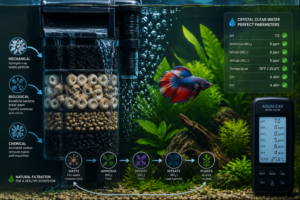
Gentle sponge filters or adjustable hang-on-back filters provide effective cleaning without creating stressful water flow. Bettas come from slow-moving waters and can become exhausted fighting strong currents.
Effective betta filtration options:
- Sponge filters: Provide biological and mechanical filtration with minimal water movement
- Internal filters: Adjustable flow rates, compact design for smaller tanks
- Hang-on-back filters: Use with flow deflectors to reduce current strength
- Canister filters: Best for larger tanks, highly adjustable flow control
Avoid: Powerful filters that create strong currents, as stressed bettas are more susceptible to illness, and water quality problems become harder to manage.
Decision rule: Choose a filter rated for your tank size but with adjustable flow. If your betta struggles to swim normally, reduce the flow immediately.
How to Test and Monitor Betta Water Clean Parameters
Test ammonia, nitrite, nitrate, and pH weekly using liquid test kits for accurate readings. Strip tests are convenient but less reliable for detecting dangerous levels of toxins.
Essential water parameters for bettas:
- Ammonia: 0 ppm (any amount is toxic)
- Nitrite: 0 ppm (any amount is toxic)
- Nitrate: Under 20 ppm (weekly changes prevent buildup)
- pH: 6.5-7.5 (stability matters more than exact numbers)
- Temperature: 76-82°F (use a reliable heater with thermostat)
Testing schedule: Weekly tests catch problems early. Daily testing is only needed during tank cycling or when treating sick fish.
Edge case: New tanks require daily testing for 4-6 weeks until beneficial bacteria establish. Never add a betta to an uncycled tank without daily water changes.
Step-by-Step Betta Water Clean Change Process
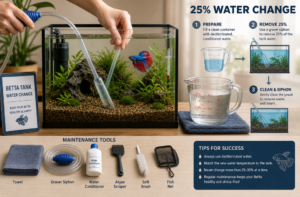
Prepare replacement water 24 hours ahead by treating it with conditioner and matching the tank temperature. This prevents chlorine exposure and thermal shock during water changes.
Weekly water change steps:
- Turn off the heater and filter 15 minutes before starting.
- Test current water parameters and record results.
- Remove 25% of tank water using a gravel vacuum.
- Clean decorations in the removed tank water if needed.
- Add pre-conditioned replacement water slowly.
- Restart equipment and verify temperature match.
- Observe betta behavior for 30 minutes after completion.
Pro tip: Use the gravel vacuum to remove uneaten food and waste from the substrate during each water change. This prevents organic matter from decomposing and fouling the water.
Common mistake: Adding cold, untreated tap water directly to the tank. This can shock or kill your betta instantly.
When to Clean Betta Tank Decorations and Substrate?
Clean decorations monthly and vacuum substrate weekly to prevent organic buildup without disrupting beneficial bacteria colonies. Over-cleaning removes helpful bacteria that process waste naturally.
Monthly decoration cleaning:
- Remove items covered in brown algae or organic film.
- Scrub gently with an old toothbrush in the removed tank water.
- Never use soap or household cleaners.
- Replace items while the water level is lower to minimize disturbance.
Substrate maintenance varies by type:
- Gravel: Vacuum weekly to remove trapped debris.
- Sand: Light surface cleaning only, bacteria live deeper.
- Bare bottom: Easiest to clean but provides no biological filtration.
Decision rule: If decorations look clean and your water parameters are stable, skip the monthly cleaning. Established beneficial bacteria are more valuable than spotless decorations.
What Plants and Additives Help Betta Water Clean Naturally?
Live aquatic plants consume nitrates and produce oxygen, reducing water change frequency while creating a more natural environment. Easy plants like Java fern, anubias, and marimo moss balls require minimal care.
Natural water cleaning options:
- Live plants: Consume waste products, add oxygen.
- Indian almond leaves: Release beneficial tannins, natural antibacterial properties.
- Beneficial bacteria supplements: Speed up biological filtration establishment.
- Activated carbon: Removes medications and odors (replace monthly).
Avoid these additives:
- pH adjusters (unless necessary).
- “Miracle” water clarifiers that can clog gills.
- Salt treatments without a specific medical need.
Choose live plants if: Your tank has adequate lighting and you want lower maintenance long-term. Stick to artificial plants if: You prefer predictable water chemistry and minimal variables.
Troubleshooting Common Betta Water Clean Problems
Cloudy water usually indicates bacterial blooms from overfeeding or inadequate filtration, not poor cleaning habits. The solution is reducing food and maintaining consistent water changes, not increasing cleaning frequency.
Problem-solution guide:
| Problem | Cause | Solution |
|---|---|---|
| Cloudy white water | Bacterial bloom | Reduce feeding, increase water changes temporarily |
| Green water | Algae bloom | Reduce lighting, add live plants |
| Brown film on glass | Diatom algae | Normal in new tanks, scrape weekly |
| Ammonia spikes | Overfeeding or filter issues | Daily water changes until levels drop |
| pH crashes | Lack of buffering capacity | Gradual water changes, test KH levels |
Emergency response: If ammonia or nitrite tests positive, perform an immediate 50% water change and test daily until readings return to zero.
Edge case: Sudden deaths in established tanks often indicate ammonia poisoning from filter failure or massive overfeeding, not gradual water quality decline.
Final Thoughts
Keeping betta water clean without stress comes down to consistency and prevention rather than dramatic interventions. Weekly 25% water changes, gentle filtration, and regular parameter testing create a stable environment where your betta can thrive. The key is establishing a routine that prevents problems before they develop into health crises.
Set up a weekly water change schedule, invest in a quality liquid test kit, and ensure your filtration system provides adequate cleaning without creating stressful currents. Your betta’s long-term health depends on these fundamental water quality practices, and consistent maintenance is always easier than emergency corrections.
FAQ
How often should I clean my betta’s water?
Change 25% of the water weekly for tanks 5+ gallons with filtration. Smaller tanks or those without filters need 25% changes twice weekly.
Can I use tap water for my betta?
Yes, but always treat tap water with aquarium conditioner to remove chlorine and chloramines. Let treated water reach room temperature before adding to the tank.
What happens if I skip water changes?
Toxic ammonia and nitrites build up within days, potentially killing your betta. Nitrates accumulate more slowly but cause long-term health problems and shortened lifespan.
Should I remove my betta during cleaning?
No, removing bettas causes more stress than leaving them in during routine 25% water changes. Only remove them for major tank overhauls or medical treatments.
How do I know if my water is too dirty?
Test for ammonia and nitrites weekly. Any reading above zero means immediate water changes are needed. Cloudy water, strong odors, or lethargic betta behavior also indicate problems.
Can I clean everything at once?
Never clean the filter, decorations, and substrate in the same week. Stagger cleaning to preserve beneficial bacteria colonies that keep water healthy.
What temperature should replacement water be?
Match the tank temperature exactly (76-82°F for bettas). Use an aquarium thermometer to verify before adding new water.
Do I need special equipment for water changes?
A gravel vacuum, bucket, and water conditioner are essential. A thermometer and test kit prevent dangerous mistakes during water changes.
How long does it take for new water to be safe?
Treated tap water is safe immediately if temperature-matched. Untreated water must sit 24-48 hours for chlorine to evaporate, but conditioner is faster and more reliable.