
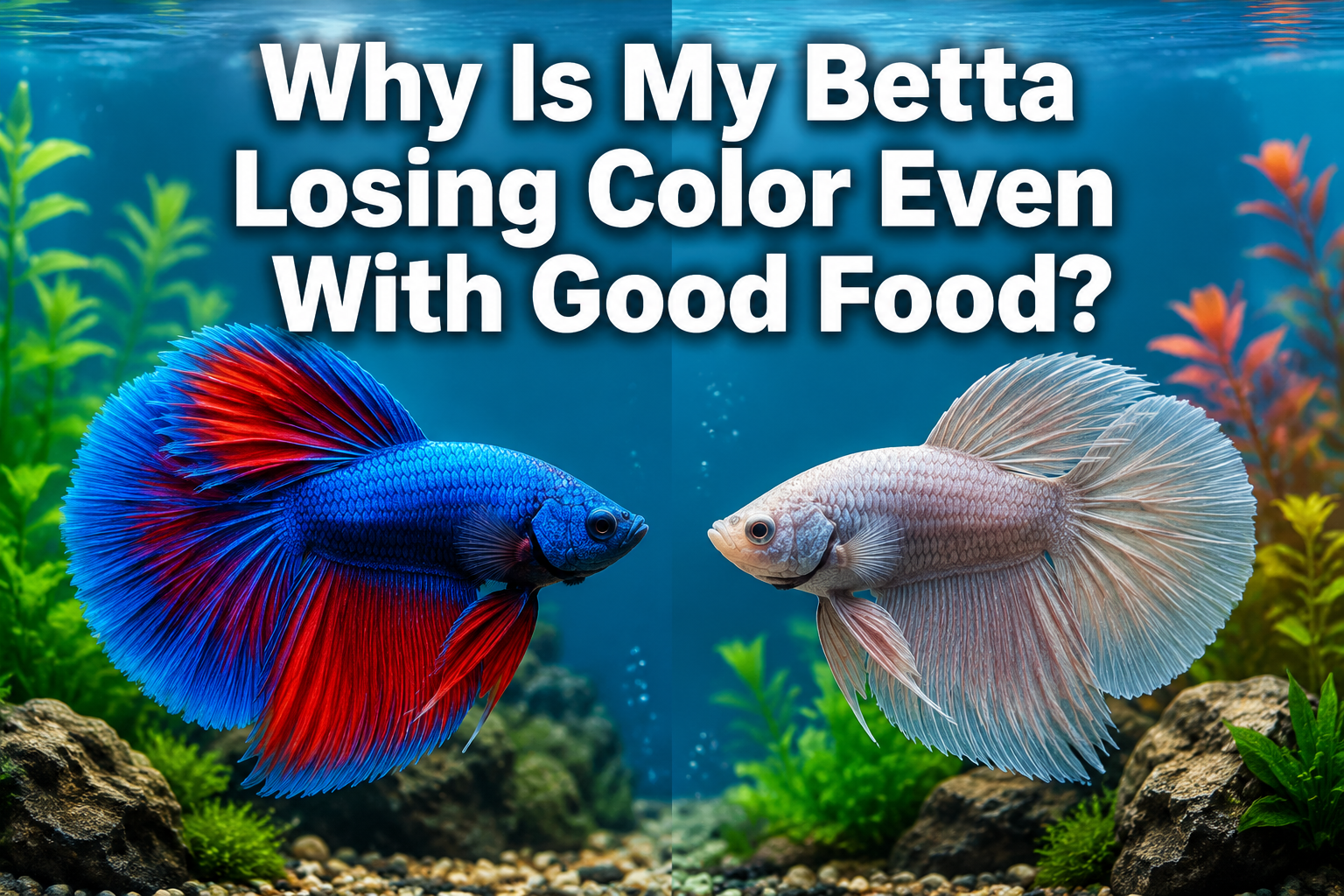
Betta fish can lose color despite good nutrition due to stress, poor water quality, inadequate lighting, temperature fluctuations, aging, or illness. The most common culprits are water parameter imbalances and insufficient full-spectrum lighting, which directly affect a betta’s ability to maintain vibrant pigmentation regardless of diet quality.
What Causes Betta Losing Color Beyond Diet Issues?
Poor water quality remains the primary cause of color loss in bettas, even when fed high-quality food. Ammonia, nitrite buildup, and incorrect pH levels create chronic stress that overrides any nutritional benefits.
Water Parameter Requirements:
- Temperature: 76-82°F (consistent).
- pH: 6.5-7.5.
- Ammonia: 0 ppm.
- Nitrite: 0 ppm.
- Nitrate: Under 20 ppm.
Lighting deficiency ranks as the second most common cause. Bettas require full-spectrum lighting to produce and maintain their pigments. Without adequate light exposure (6-8 hours daily), even well-fed bettas will gradually fade.
Choose immediate water testing if your betta’s color loss appeared suddenly within days. Choose a lighting evaluation if the fading occurred gradually over weeks or months, especially in tanks with basic LED strips or no dedicated aquarium lighting.
Common mistake: Assuming expensive food alone prevents color loss. Environmental factors always take precedence over nutrition in determining betta coloration.
How Does Stress Affect Betta Losing Color Despite Good Nutrition?
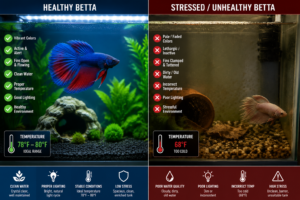
Chronic stress triggers hormonal changes that suppress pigment production, regardless of diet quality. Stressed bettas redirect energy from maintaining vibrant colors to survival functions.
Primary Stress Factors:
- Tank size: Under 5 gallons creates constant stress.
- Aggressive tankmates: Even peaceful fish can intimidate bettas.
- Loud environments: Constant vibrations from pumps or external noise.
- Frequent handling: Moving or netting causes acute stress.
- Overcrowding: Multiple fish in small spaces.
Behavioral indicators accompany stress-related color loss: clamped fins, lethargy, reduced appetite, and hiding behavior. These signs often appear before visible color changes.
Recovery timeline: Stressed bettas typically regain color within 2-3 weeks after removing stressors, provided water conditions remain optimal.
Edge case: Some bettas experience stress from overly pristine conditions. Completely bare tanks with perfect parameters but no enrichment can cause psychological stress and subsequent color loss.
Can Water Temperature Fluctuations Cause Betta to Lose Color?
Temperature instability disrupts betta metabolism and pigment cell function, leading to rapid color deterioration even with excellent nutrition. Bettas are tropical fish requiring consistent warmth to maintain cellular processes.
Temperature-Related Color Loss Patterns:
- Sudden drops – Immediate dulling within 24-48 hours.
- Frequent fluctuations – Gradual fading over 1-2 weeks.
- Chronic cold exposure – Progressive loss of red pigments first.
An ideal heating setup includes a quality adjustable heater rated for your tank size, plus a reliable thermometer. Heaters should maintain 78-80°F consistently, with maximum daily variation under 2 degrees.
Quick fix: If temperature caused recent color loss, stabilize at 78°F and maintain consistency. Most bettas show color improvement within one week of proper temperature management.
Choose a 50-watt heater if your tank is 10 gallons or smaller. Choose a 100-watt heater if your tank exceeds 10 gallons or sits in a cool room below 70°F.
What Role Does Lighting Play in Betta Losing Color?
Inadequate lighting directly reduces pigment cell activity, causing well-fed bettas to appear washed out and pale. Bettas evolved in shallow, sun-dappled waters and require full-spectrum light to stimulate natural coloration.
Lighting Requirements:
- Duration: 6-8 hours daily (consistent schedule).
- Spectrum: Full-spectrum LED or fluorescent.
- Intensity: Moderate (avoid harsh, direct lighting).
- Photoperiod: Use timers for consistency.
Red and blue pigments fade first under poor lighting conditions, while black pigmentation often remains longer. This creates the characteristic “washed out” appearance many betta owners notice.
Lighting upgrade benefits become visible within 10-14 days of installation. Bettas under proper lighting show increased activity levels alongside color improvement.
Common mistake: Using basic household LED bulbs instead of aquarium-specific lighting. Standard LEDs lack the spectrum needed for pigment maintenance.
How Long Does Betta Color Recovery Take?
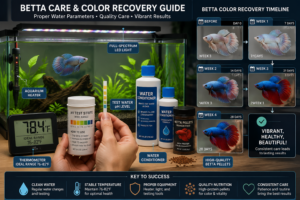
Most bettas regain lost color within 2-4 weeks after addressing underlying causes, provided the fish is under 2 years old and otherwise healthy. Recovery speed depends on the duration and severity of the original problem.
Recovery Timeline:
- Week 1: Behavioral improvements, increased activity.
- Week 2: Faint color return, improved fin posture.
- Week 3: Noticeable color intensification.
- Week 4: Near-complete restoration (if possible).
Age affects recovery potential. Bettas over 2.5 years old may only partially regain lost coloration due to natural aging processes. Young bettas (under 1 year) typically show the most dramatic improvements.
Factors that accelerate recovery:
- Consistent water parameters.
- Stress-free environment.
- Quality nutrition with color-enhancing foods.
- Proper lighting schedule.
- Stable temperature.
Choose patience if your betta is older or has experienced prolonged color loss. Choose a veterinary consultation if no improvement appears after 4 weeks of optimal care.
When Should You Worry About Betta Losing Color?
Seek immediate attention if color loss accompanies lethargy, appetite loss, unusual swimming patterns, or visible illness signs. These combinations often indicate serious health issues requiring prompt intervention.
Warning Signs Requiring Action:
- Rapid color loss (within 24-48 hours).
- White patches or spots are developing on the body.
- Behavioral changes – hiding, gasping, erratic swimming.
- Physical symptoms – torn fins, bloating, visible parasites.
- Complete appetite loss lasting over 3 days.
Normal aging-related fading occurs gradually over months and affects older bettas (2+ years) without other symptoms. This natural process doesn’t require treatment but benefits from optimal care.
Medication considerations: Only medicate if specific illness symptoms appear alongside color loss. Color fading alone rarely requires pharmaceutical intervention.
Emergency protocol: Test water immediately, perform 25% water change, ensure proper temperature, and monitor for 24 hours before considering medications.
Summary
Betta color loss despite good nutrition typically stems from environmental factors rather than dietary deficiencies. Water quality issues, inadequate lighting, temperature fluctuations, and stress consistently override the benefits of premium food in maintaining vibrant coloration.
Take these immediate steps if your betta is losing color: test water parameters and correct any imbalances, ensure consistent temperature between 76-82°F, provide 6-8 hours of full-spectrum lighting daily, and eliminate stress sources in the environment.
Most bettas regain their vibrant colors within 2-4 weeks when provided with optimal conditions.
FAQ
Can overfeeding cause color loss in bettas?
Yes, overfeeding leads to poor water quality through excess waste, which stresses bettas and causes color fading. Feed only what your betta consumes in 2-3 minutes, once or twice daily.
Do betta colors naturally change with age?
Bettas over 18 months old gradually lose color intensity as a natural aging process. This differs from sudden color loss, which indicates environmental or health issues.
Will color-enhancing foods restore lost pigmentation?
Color-enhancing foods help maintain existing colors but won’t restore pigmentation lost due to poor water quality, stress, or inadequate lighting. Address environmental factors first.
How often should I test the water if my betta is losing color?
Test water parameters daily until color loss stops, then maintain weekly testing. Use liquid test kits for accuracy, as strip tests often provide unreliable readings.
Can tank decorations affect betta coloration?
Sharp or rough decorations cause stress through potential injury risk, leading to color loss. Choose smooth, betta-safe decorations and provide hiding spots for security.
Is it normal for bettas to be paler at night?
Bettas naturally appear slightly duller in darkness or low light conditions. This temporary change reverses with proper lighting and differs from permanent color loss.
Can other fish stress my betta enough to cause color loss?
Yes, aggressive tankmates or even overly active peaceful fish can stress bettas sufficiently to cause color fading. Monitor interactions and separate if necessary.
How do I know if my betta’s color loss is permanent?
If optimal conditions for 6-8 weeks don’t restore color in bettas under 2 years old, the loss may be permanent due to genetics, previous illness, or severe stress damage.
Do female bettas lose color differently from males?
Female bettas typically have less intense base coloration but follow similar color loss patterns. They may show more subtle changes that require closer observation to detect.
