
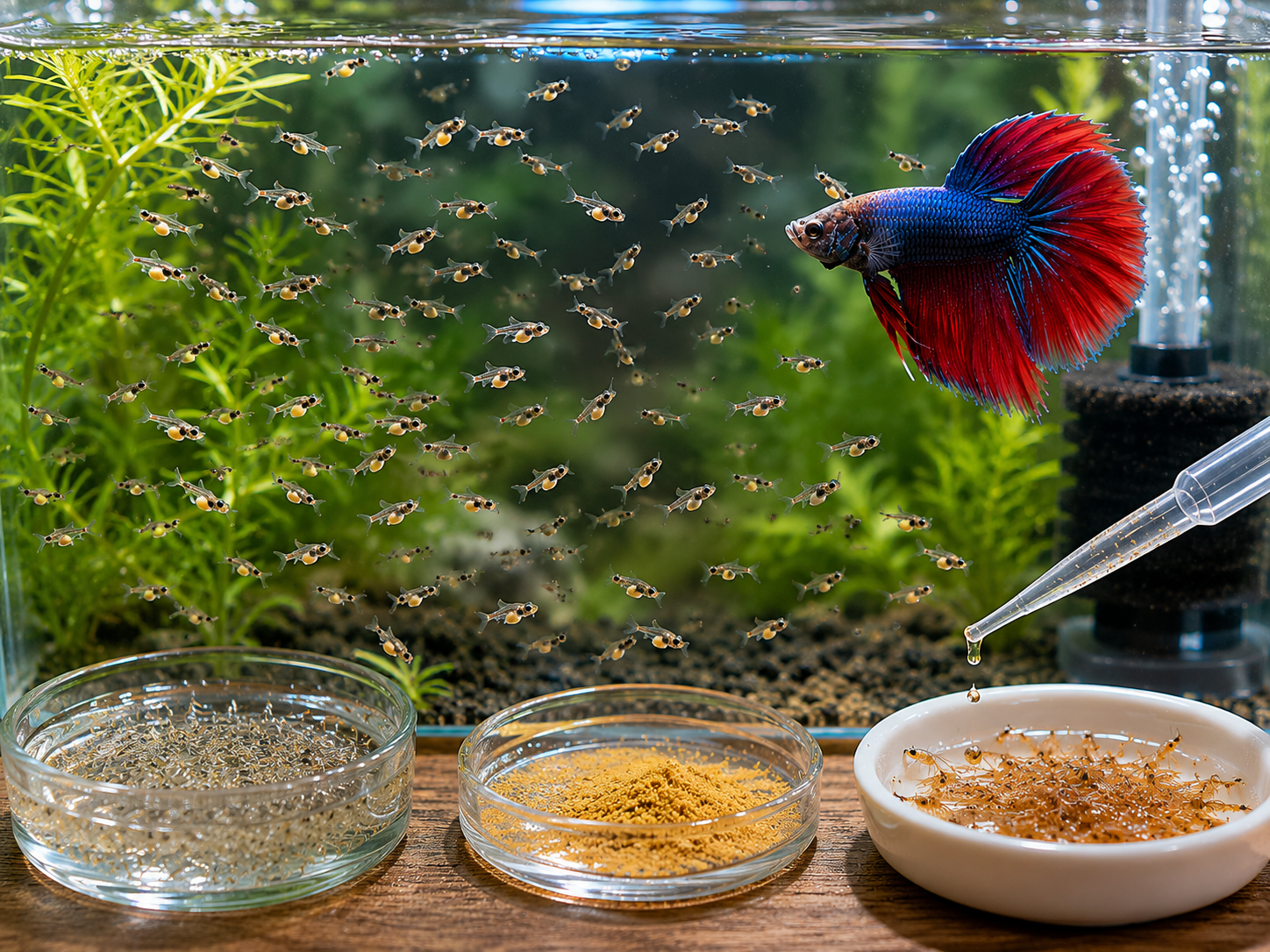
Raising newly hatched fish requires precise nutrition immediately after they absorb their yolk sacs. The best first foods for betta fry are microscopic, live organisms that fit into their tiny mouths and trigger natural predatory instincts.
Supplying the wrong diet during the first week leads to immediate starvation and complete spawn loss. You must prepare cultures of microscopic prey before the eggs even hatch to ensure a continuous food supply.
Choosing the correct starter diet drastically increases the survival rate of the entire spawn.
What Are the Best First Foods for Betta Fry?
Baby bettas require microscopic food that moves continuously in the water column. Movement triggers their innate hunting reflexes and encourages them to eat.
Here are the top live food choices for their initial diet:
- Infusoria.
- Vinegar Eels.
- Banana Worms.
- Walter Worms.
- Microworms.
- Baby Brine Shrimp (BBS).
Top Live Food Cultures for Newly Hatched Fish
Infusoria (The Primary Starter Diet)
Infusoria is a collective term for microscopic aquatic organisms found in natural freshwater environments. They are the absolute ideal first meal for newly free-swimming bettas. These single-celled organisms are small enough for the tiniest fry to consume effortlessly.
You can culture infusoria at home using a large glass jar filled with aged aquarium water. Add a food source for the bacteria, such as a piece of blanched lettuce or a dry crushed bean. Leave the jar in mild sunlight until the water turns highly cloudy.
After a few days, the water will begin to clear up again. This clearing phase indicates that the infusoria have multiplied and consumed the bacterial bloom. Use a plastic eyedropper to transfer small amounts of this clear culture directly into the breeding tank.
Vinegar Eels (The Low-Maintenance Option)
Vinegar eels are tiny, harmless nematodes that thrive in highly acidic liquid environments. They are slightly larger than infusoria but still perfectly sized for week-old fry. They constantly swim upward in the water column, making them highly visible to hunting baby fish.
These nematodes survive in freshwater for several days without dying immediately. This extended lifespan prevents sudden ammonia spikes in your fry tank. You can establish a culture by mixing unchlorinated water with pure apple cider vinegar.
Add chopped apple chunks to the liquid to feed the eels. To harvest them, use a long-necked bottle filled with the culture, then topped off with freshwater. The eels will swim up through a sponge barrier into the freshwater, where you can easily pipette them out.
Banana Worms and Walter Worms
Banana worms and Walter worms are smaller relatives of the standard microworm. They are an excellent transitional food when the fish are outgrowing infusoria but remain too small for larger prey. They are rich in essential fats and proteins required for skeletal development.
You culture these tiny worms in small plastic containers filled with a paste of instant mashed potatoes or oatmeal. Sprinkle a few grains of active dry yeast over the paste to feed the worms. Within a few days, millions of tiny worms will crawl up the sides of the container.
Scrape the sides of the container with a clean cotton swab or small brush. Dip the swab directly into the aquarium water to release the worms. These worms sink slowly, giving the fish ample time to hunt them.
Microworms (For Fast Growth)
Microworms share the same culturing process as Banana and Walter worms, but grow slightly thicker and longer. Introduce these around the second week of the fry’s life. They survive for hours underwater and constantly wiggle on the tank floor.
Their constant motion attracts the attention of bottom-feeding fry. Because they sink, you must ensure you do not overfeed the tank. Uneaten microworms will eventually die and rapidly deteriorate your water chemistry.
Maintain multiple microworm cultures simultaneously. Cultures naturally crash and smell foul after a few weeks of active production. Having backup containers ensures you never run out of primary food sources during critical growth phases.
Baby Brine Shrimp (BBS)
Newly hatched brine shrimp are incredibly rich in lipids and essential amino acids. However, they are too large for most fry during their very first days of free-swimming. Introduce BBS roughly around day seven to ten for maximum digestion efficiency.
Heavy BBS feeding results in rapid size increases and significantly enhances the natural coloration of growing fish. You must hatch them in a dedicated saltwater container with heavy aeration. Harvest the bright orange shrimp exactly 24 to 36 hours after adding the cysts to the water.
Research published by the Southern Regional Aquaculture Center emphasizes that newly hatched Artemia are an essential food source for larval fish due to their high nutritional density. Rinse the saltwater off the shrimp using a fine-mesh sieve before feeding them to your freshwater bettas.
Emergency Commercial Alternatives
Hard-Boiled Egg Yolk
If all your live cultures crash, hard-boiled egg yolk can serve as a temporary emergency food source. The yolk contains dense proteins and fats that mimic the nutritional profile of a natural yolk sac. Take a tiny piece of cooked yolk and dissolve it completely in a small cup of aquarium water.
Pour a few drops of this milky suspension into the fry tank. The particles must be microscopic to fit inside the mouths of the fish. Egg yolk pollutes water faster than any other food source available.
You must perform immediate and thorough water changes after using this method. Rely on egg yolk for no more than two days while you secure a new live food culture.
Commercial Liquid Suspensions
Pet stores sell liquid fry foods designed for egg-laying fish species. These products contain suspended particles of egg, yeast, and synthetic micronutrients. They are convenient to store and require zero preparation time.
The primary drawback is that these suspended particles do not move on their own. Many predatory fry will completely ignore inanimate objects floating past them. You must pair liquid foods with gentle aeration to simulate natural movement in the water.
Decapsulated Brine Shrimp Eggs
Decapsulated eggs are brine shrimp cysts with their hard outer shells chemically removed. You feed these directly to the fish without hatching them first. They offer more nutrition than hatched shrimp because the embryo has not burned any energy breaking out of its shell.
Like liquid diets, these eggs do not swim or wiggle. Transitioning fish to decapsulated eggs requires patience and training. Mix them slowly with live foods until the fish associate the static eggs with feeding time.
The Exact Feeding Timeline for Baby Bettas
Days 1 to 3: The Yolk Sac Stage
Newly hatched fish emerge with large, yellow yolk sacs attached to their bellies. They hang vertically from the bubble nest or the tank glass during this phase. They absorb this sac for their complete nutritional needs.
Do not add any food to the aquarium during these first three days. The fry are physically incapable of hunting or eating external food. Introducing cultures now will only trigger bacterial blooms and fatal ammonia spikes.
Days 4 to 7: The Free-Swimming Stage
Once the fish begin swimming horizontally across the tank, their internal yolk is depleted. This is the most critical feeding window in their entire lifecycle. Begin feeding pure infusoria or vinegar eels immediately.
Offer extremely small meals three to four times a day. Their digestive tracts process micro-foods in a matter of hours. Continuous prey availability prevents early starvation-related die-offs.
Days 8 to 14: Transitioning Sizes
By the second week, the fry double in size and require larger prey to sustain their metabolism. Begin introducing Banana worms, Walter worms, or small batches of microworms. You can also test their reaction to freshly hatched baby brine shrimp.
Offer a mix of infusoria and worms during the transition days. Some fish grow more slowly than others and still require smaller food to survive. Staggering the diet ensures the entire spawn gets enough to eat regardless of individual size.
Weeks 3 to 4: Accelerated Growth
At this stage, the fish closely resemble miniature adults. Transition the tank completely to baby brine shrimp and larger microworms. You can also introduce finely crushed, high-protein dry flakes or micro-pellets.
Feeding live foods exclusively will yield the fastest growth and strongest immune systems. Continue feeding multiple times daily to support their rapid skeletal and fin development.
Proper Feeding Techniques to Maximize Survival
Target Feeding with Pipettes
Dumping food unthinkingly into a large breeding tank forces tiny fish to expend massive energy hunting for it. Use a long plastic pipette to deliver the food directly to them. Gently squeeze the live-food suspension directly where the largest clusters of fry are swimming.
This target feeding technique conserves their energy for physical growth. It also ensures the weakest swimmers get immediate access to the food before it disperses.
Optimal Feeding Frequency
Baby fish have incredibly fast metabolisms and tiny stomach capacities. Feeding one massive meal daily will leave them starving for the remaining twenty hours. You must split their daily intake into three to five separate, smaller sessions.
Spread these feedings out evenly from morning until night. Consistent intake keeps their digestive systems moving and prevents fatal bloating.
Visual Belly Checks
You can easily verify if your feeding strategy is working by looking closely at the fish. A healthy, well-fed fry possesses a visibly rounded belly immediately after eating. The stomach often takes on the color of the food it has just consumed.
If they eat brine shrimp, their bellies will turn bright pink or orange. If their bellies appear flat or pinched inward, they are not getting enough food. You must increase the food culture density or feed more frequently.
Managing Water Parameters During Heavy Feeding
Siphoning Waste
Heavy feeding schedules generate massive amounts of organic waste in a short time. Uneaten worms, dead infusoria, and fish excrement quickly break down into toxic ammonia. Use a length of rigid airline tubing attached to a flexible silicone hose to vacuum the tank floor.
Carefully siphon out the debris every single day without sucking up the microscopic fish. Shine a flashlight across the bottom of the bare glass tank to spot the debris easily.
Safe Water Replenishment
After siphoning waste, you must replace the lost water with fresh, dechlorinated water. Young bettas are extremely sensitive to sudden shifts in temperature or pH. Never pour large buckets of water directly into the breeding tank.
Use a slow drip acclimation system to refill the tank over several hours. This gradual replenishment prevents osmotic shock and protects their fragile swim bladders.
The Role of Live Plants
Adding live aquatic plants heavily buffers the water chemistry against sudden ammonia spikes. Plants like Java Moss, Guppy Grass, and Duckweed absorb excess nitrates produced by heavy feeding. They serve as natural biological filters for your breeding setup.
Furthermore, dense moss harbors naturally occurring colonies of infusoria and microorganisms. The fry will continuously graze on the moss between your scheduled feedings, securing extra calories.
Essential Nutritional Requirements for Larval Development
Amino Acids for Tissue Building
Protein breaks down into amino acids, which act as the primary building blocks for muscle and organ tissue. Larval fish require diets exceeding 50% crude protein to reach their maximum genetic size. Live foods naturally contain the exact amino acid profiles required by predatory fish species.
Fatty Acids for Energy
Swimming against water currents and hunting live prey burns tremendous amounts of energy. Essential fatty acids fuel this continuous daily activity. The yolk sac of a newly hatched brine shrimp is packed with lipids that deliver immediate energy to the consuming fry.
Digestibility of Live Prey
The digestive tracts of week-old fish lack the complex enzymes needed to process synthetic binders found in dry foods. Live prey contains natural enzymes that help the fish break down the meal. This high digestibility results in less physical waste and more mass absorbed by the growing fish.
Frequently Asked Questions About Feeding Young Fish
How long can baby bettas survive without food?
Once their yolk sacs are fully absorbed, free-swimming fry can only survive 24 to 48 hours without external food. Starvation occurs incredibly fast due to their rapid metabolism. You must have food cultures ready and in the process of harvesting before the swimming stage begins.
Can I feed crushed flakes immediately?
Most newly hatched bettas will completely ignore crushed dry flakes. They lack the hunting instinct to strike at inanimate dust floating on the surface. Rely strictly on live, moving organisms for the first three weeks of their life.
Why are my fry dying despite feeding them?
If bellies are full but fish are dying, water quality is the absolute culprit. Microscopic live foods die in freshwater and rot instantly, causing invisible ammonia spikes. You must increase your daily siphoning routines and perform larger water changes to remove the toxins.
Conclusion
Securing the right microorganisms before breeding your fish is the key to raising a healthy spawn. The absolute best first foods for betta fry are infusoria and vinegar eels, transitioning smoothly into microworms and brine shrimp as their mouths widen.
Providing steady, small meals prevents water pollution while fueling their rapid physical development. Mastering these live food cultures guarantees your young fish receive the exact biological nutrition they require from day one. Consistent maintenance and varied diets during these early weeks directly result in massive, brightly colored adult fish.
