
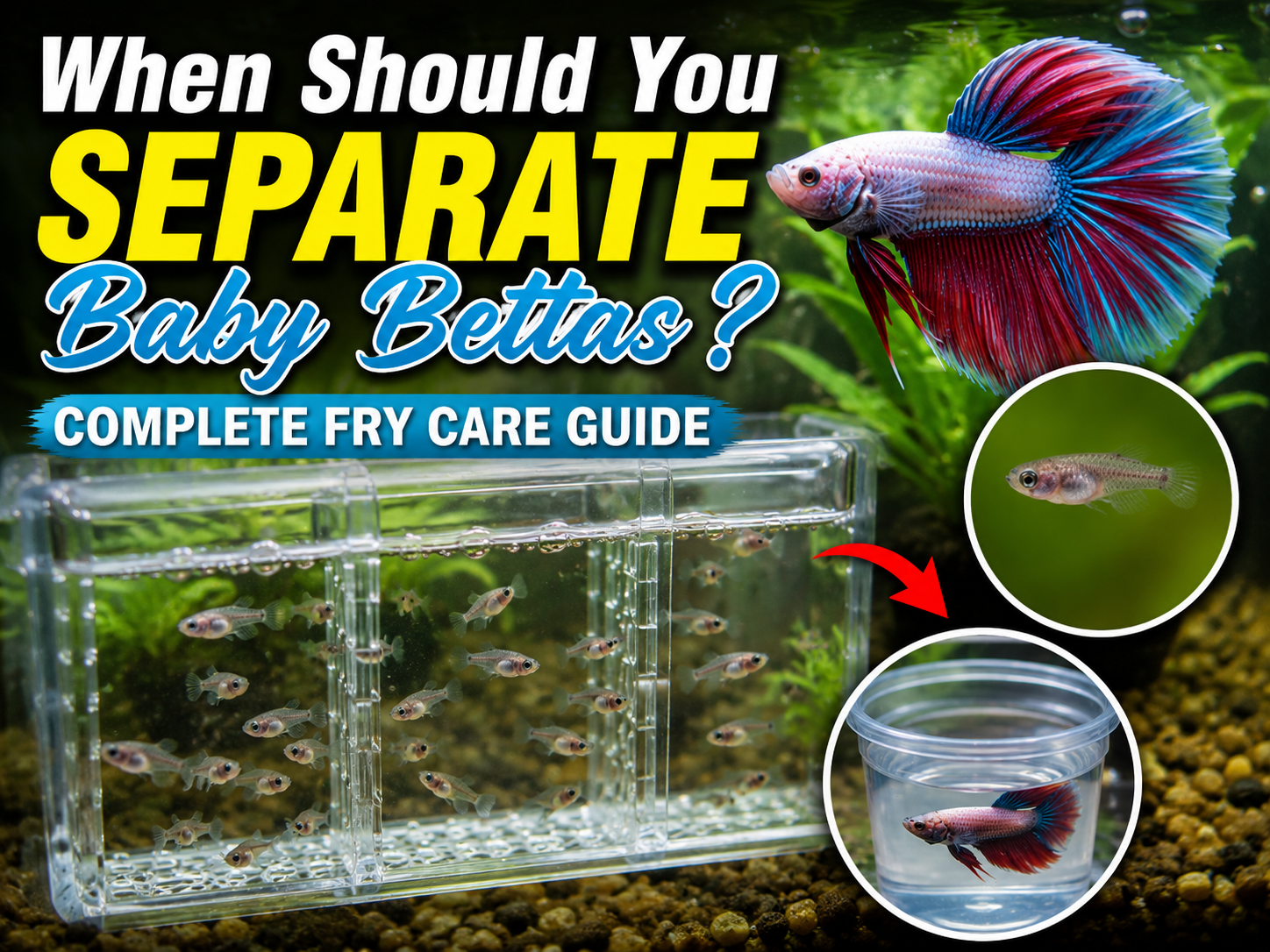
Raising Betta fry is a rewarding yet complex challenge for any aquarium enthusiast. One of the most vital stages in this journey is knowing exactly when to separate baby Bettas to ensure their survival and healthy development. If you leave them together too long, instincts take over, leading to injury or stunted growth.
Typically, you should begin separating baby Bettas between 8 and 10 weeks of age. However, this timeline varies based on their physical size and how they treat one another. Most breeders look for a length of 0.5 to 0.75 inches as the signal to move males into individual containers.
The Critical Timeline: When to Separate Baby Bettas
Timing is everything when managing a spawn. While 8 to 10 weeks is the standard window, you must remain flexible depending on your clutch’s specific needs.
The 8-Week Milestone
By the two-month mark, most Betta splendens fry have fully developed their labyrinth organ. This allows them to breathe atmospheric air from the surface. At this stage, their metabolic needs increase, and their territorial instincts begin to surface.
Size Over Age
Sometimes, age is a lying metric. High-quality food and warm water can cause fry to grow much faster than average. If your fry hits 0.75 inches before the 8-week mark, you need to start the separation process immediately. Larger fry often become predatory toward their smaller siblings.
Sexual Maturity and Coloration
As the fry develop their adult colors, you will notice the males starting to show longer finnage. Once you can clearly distinguish the males from the females, the risk of “flare battles” increases. Separating them at this point prevents permanent fin damage.
Behavioral Red Flags: Signs Your Fry Need Individual Tanks
You shouldn’t just rely on the calendar. Watching how the fish interact is the best way to determine when to separate baby Bettas.
Persistent Flaring
Young Bettas will often “play-flare” at each other early on. This is normal social development. However, when the flaring becomes constant and is followed by aggressive chasing, the “play” has ended.
Nipped Fins or “Missing” Scales
If you notice jagged edges on the tails of your fry, they are nipping at each other. This physical damage can lead to secondary infections, such as Fin Rot, which can quickly wipe out an entire spawn.
The “Bully” Behavior
In every spawn, there are usually a few “alpha” fry. These individuals grow faster and claim the best feeding spots. If you see one or two fish constantly driving others away from food, those bullies need to be moved first.
Why Separation is Non-Negotiable?
It might seem easier to keep them all in one large tank, but biology works against you in a community setting.
The Growth Inhibiting Hormone (GIH)
Bettas release a hormone into the water that can inhibit the growth of their siblings. In a crowded grow-out tank, the largest fry release more of this hormone to ensure they remain the dominant predators.
By separating them into their own water, you remove this chemical “ceiling.” Many hobbyists find that “runt” fry suddenly experience a massive growth spurt once they are moved to their own jars.
Preventing Cannibalism
It is a grim reality of fish breeding. If the size gap between fry becomes too wide, the larger ones will view the smaller ones as food. Constant monitoring ensures you remove the larger fish before they can prey on the smaller ones.
Reducing Stress
Constant territorial disputes keep the fish in a state of high stress. Stress weakens the immune system. Individual housing allows the fish to relax, eat well, and focus their energy on growing fins and muscle.
Preparing for the Move: Essential Equipment
You cannot simply drop a baby Betta into a cup of cold water. You need a system that maintains water quality and temperature.
Jarring Systems
Most breeders use a “jarring” method. This involves placing individual fry into containers that hold at least 0.5 to 1 gallon of water.
- Glass Jars: Easy to clean and see through.
- Plastic Bean Containers: Lightweight and stackable.
- Individual Cubes: Aesthetically pleasing, but can be expensive for large spawns.
Heating Solutions
Temperature consistency is the biggest killer of young Bettas. If you have 50 jars, you can’t put a heater in each one. Instead, many use a “Water Bath” system.
You place the individual jars inside a larger, heated trough or tub of water. The heat from the large tub radiates through the jars, keeping every fish at a steady 78°F to 80°F.
Filtration Challenges
Filtering individual jars is difficult. Some use small sponge filters, but most rely on frequent water changes. You must be prepared to change 50% to 100% of the water in each jar every 2 days to prevent ammonia spikes.
Step-by-Step Guide to Jarring Baby Bettas
Moving the fish is a delicate process. Follow these steps to minimize “transfer shock.”
1. Water Prep
Fill your jars with water at the same temperature and pH as the grow-out tank. Use a high-quality water conditioner to remove chlorine and chloramines. Adding a small piece of Indian Almond Leaf (Catappa leaf) can provide tannins that soothe the fish.
2. The Catch
Use a small, soft mesh net or a plastic cup to scoop the fry. Avoid using large, coarse nets that can scratch their delicate slime coat.
3. Acclimation
If the water parameters are slightly different, float the fry in a small plastic bag inside the jar for 15 minutes. Slowly add a bit of the jar water into the bag before releasing the fish.
4. Visual Barriers
Bettas can see through the glass. If they spend all day flaring at their neighbor in the next jar, they will exhaust themselves. Place a piece of paper or dark plastic between the jars so the fish cannot see each other.
Managing Growth Variations in the Grow-Out Tank
You don’t have to move all 100+ fry at once. A “selective separation” strategy is often more manageable.
The Progressive Harvest
Start by removing only the largest, most aggressive males. This leaves more room and resources for the smaller fry in the main tank. Every few days, pick the next “top tier” of fish to move into jars.
The Female Fraternity
Female Bettas are generally more tolerant of one another. You can often keep females together in a large, heavily planted “sorority” tank for much longer than you can keep males. However, keep a close eye on them, as some females can be just as aggressive as males.
Sorting by Size
If you have multiple grow-out tanks, you can sort fry by size rather than putting them all in jars immediately. Grouping similarly sized fish reduces the risk of bullying while still allowing for communal growth.
Diet and Nutrition Post-Separation
Once in their own space, their nutritional needs change. They no longer have to fight for food, but they need high-quality fuel to develop adult finnage.
Transitioning to Solid Foods
By the time you separate them, they should be eating more than just brine shrimp. Introduce high-protein micro-pellets or crushed flakes. According to research on fish nutrition, protein levels for growing juveniles should remain high.
Live Food Benefits
Even after separation, giving them live foods like Daphnia or Grindal Worms once a day encourages hunting instincts and provides essential fats. This leads to more vibrant colors and better overall health.
Feeding Frequency
Young Bettas have fast metabolisms. Feed them small amounts 2 to 3 times per day. Remove any uneaten food after 10 minutes to prevent the water from becoming fouled.
Maintaining Health in Individual Containers
The biggest risk after you figure out when to separate baby Bettas is water quality. Small volumes of water get dirty very quickly.
Ammonia Management
In a 1-gallon jar, waste builds up fast. Without a cycled filter, ammonia levels can become toxic within 48 hours. Using an Ammonia Alert sticker on the jars can help you monitor levels at a glance.
The Role of Water Changes
There is no substitute for fresh water. Most successful breeders perform a “sip and fill” method. They siphon out the waste from the bottom of the jar and replace it with pre-conditioned, temperature-matched water.
Observation is Key
Check each jar daily. Look for:
- Clamped Fins: A sign of stress or cold water.
- White Spots: Possible Ich outbreak.
- Lack of Appetite: Often the first sign of internal parasites.
Common Mistakes to Avoid
Even experienced keepers can run into trouble during the separation phase. Avoid these pitfalls:
- Separating Too Late: Waiting until a fish is injured is waiting too long. If it’s time, it probably is.
- Using Unheated Containers: Cold water slows the immune system. Never keep jars in a room that drops below 75°F.
- Neglecting Hygiene: Using the same net for all jars without disinfecting can spread disease across your entire spawn.
- Overcrowding the Jars: Don’t put two “peaceful” fry in one jar to save space. It will never end well.
Summary of the Separation Process
| Factor | Separation Signal |
|---|---|
| Age | 8 to 10 weeks |
| Size | 0.5 to 0.75 inches |
| Behavior | Constant flaring, chasing, or fin nipping |
| Physical | Development of clear male finnage and color |
| Water | High levels of Growth Inhibiting Hormones |
Frequently Asked Questions
Can I keep Betta fry together if the tank is very large?
Even in a 55-gallon tank, male Bettas will eventually find each other. While a larger space delays aggression, it does not stop it. Eventually, territorial instincts will win.
How do I tell the males from the females at 8 weeks?
Look for the ovipositor (egg spot) on the underside of the fish. Females will have a small white dot near their ventral fins. Males generally have broader heads and longer pelvic fins.
What happens if I never separate them?
In the wild, fry would swim away from each other. In an aquarium, they are trapped. If never separated, you will likely end up with one dominant male and several injured or dead siblings.
Do I need to cycle every jar?
It is almost impossible to cycle a small jar without a filter. Instead, rely on frequent, heavy water changes to keep the water safe.
Conclusion
Knowing when to separate baby Bettas is the bridge between being a hobbyist and being a successful breeder. By watching for signs of aggression, monitoring size, and maintaining a strict water-change schedule, you give your fish the best chance at a long, vibrant life.
Remember that every spawn is different. Some might stay peaceful until 12 weeks, while others might turn into tiny warriors at week 6. Stay observant, keep your jars ready, and prioritize the health of the fish over convenience. With the right care, your baby Bettas will grow into the stunning adults they were meant to be.
