

Premium betta fish sell for significantly more money due to rare color patterns, unique fin types, championship bloodlines, and exceptional breeding quality. While common pet store bettas cost $5-15, rare varieties with perfect form and vibrant colors can sell for $50-500 or more to serious collectors and breeders.
What Color Patterns Make Betta Fish Sell for Higher Prices?
Rare and complex color patterns drive the biggest price differences in the betta market. Solid colors like red, blue, and black typically sell for standard pet store prices of $5-15, while multi-colored and metallic varieties command premium rates.
High-Value Color Categories:
- Copper and bronze – Metallic sheen varieties often sell for $40-80.
- Marble patterns – Random color mixing creates unique, unrepeatable designs worth $25-60.
- Koi coloration – Orange, white, and black combinations mimic koi fish patterns ($30-75).
- Dragon scale – Thick, metallic scales create an armor-like appearance ($35-90).
- Butterfly patterns – Two-tone fins with clear edges bring $20-50.
- Solid white or yellow – Difficult to breed pure colors worth $25-65.
Common Mistake: Many buyers confuse stressed or sick bettas showing pale colors with rare white varieties. True white bettas maintain vibrant, opaque coloring and active behavior.
The rarity factor plays a huge role – breeders may produce hundreds of common colors before achieving one perfect marble or copper specimen, justifying the higher prices when these betta fish sell to collectors.
How Do Fin Types Affect When Betta Fish Sell for Premium Prices?
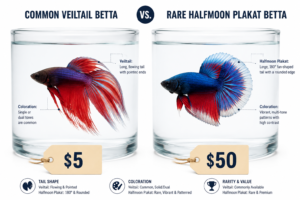
Fin shape and size create dramatic price variations, with some types requiring years of selective breeding to perfect. Standard veiltail bettas represent the baseline price, while specialized fin types can multiply values by 5-10x.
Premium Fin Type Pricing:
- Halfmoon – 180-degree tail spread, sells for $25-75.
- Crown tail – Spiky, crown-like fins worth $20-60.
- Double tail – Split caudal fin creates a unique silhouette ($30-80).
- Elephant ear (Dumbo) – Oversized pectoral fins bring $35-100.
- Rose tail – Extreme halfmoon with overlapping fins ($40-120).
- Feather tail – Branched, delicate fin rays worth $50-150.
Decision Rule: Choose halfmoon or crown tail varieties if seeking bettas with strong resale potential, as these maintain consistent demand among hobbyists.
Fin quality matters as much as type – perfectly symmetrical fins with no tears, consistent branching, and proper proportions separate $30 fish from $100+ specimens. Breeders spend generations developing these traits, which explains why show-quality fin types of betta fish sell at such premium rates.
What Role Does Breeding Quality Play in Betta Fish Sales?
Documented breeding lines and genetic quality create the highest price tiers in betta sales. Fish from champion bloodlines or established breeding programs can sell for 10-20 times more than random-bred specimens.
Quality Indicators That Increase Value:
- Pedigree documentation – Recorded ancestry adds $20-50 to the base price.
- Breeding pair potential – Proven genetics worth $75-200 per fish.
- Show competition history – Award-winning lines command $100-500.
- Health screening – Disease-free certification adds $15-30.
- Age verification – Prime breeding age (6-12 months) brings premium prices.
- Import documentation – Thai or Indonesian champion lines worth $150-400.
Edge Case: Some buyers pay $300-1000 for unproven juveniles from world champion parents, betting on genetic potential rather than current appearance.
Serious breeders maintain detailed records of fin angles, color development, spawning success rates, and health markers across generations. When these documented champion-line betta fish sell, buyers pay for predictable outcomes rather than gambling on unknown genetics.
How Does Market Timing Influence When Betta Fish Sell at Peak Prices?
Seasonal demand and breeding cycles create significant price fluctuations throughout the year. Understanding these patterns helps both buyers and sellers maximize value in betta transactions.
Peak Selling Seasons:
- Spring (March-May) – New hobbyists enter the market, prices rise 15-25%.
- Pre-competition periods – Show preparation drives premium fish demand.
- Holiday seasons – Gift purchases increase casual buyer activity.
- New bloodline releases – First-generation imports command the highest prices.
- Breeding season timing – Mature pairs are most valuable during optimal spawning months.
Market Factors Affecting Pricing:
- Limited availability of specific varieties drives prices up.
- Social media trends can suddenly increase demand for certain colors.
- Competition schedules influence when serious buyers seek show-quality fish.
- Economic conditions affect luxury pet spending patterns.
Quick Example: A halfmoon copper betta might sell for $45 in January but reach $65-75 in April when spring breeding activity peaks and new aquarists enter the hobby.
Experienced sellers time their breeding programs to have premium fish ready during high-demand periods, while smart buyers often find better deals during off-season months when fewer people actively seek betta fish.
Pet Store vs. Breeder vs. Show Quality Pricing
| Source Type | Price Range | Quality Level | Best For |
|---|---|---|---|
| Pet Store | $5-20 | Basic health, common varieties | Beginner hobbyists, casual owners |
| Local Breeder | $25-75 | Better genetics, some documentation | Intermediate keepers, breeding interest |
| Premium Breeder | $75-200 | Champion lines, health guarantees | Serious hobbyists, competition prep |
| Show Quality | $200-500+ | Competition-ready, documented pedigree | Professional breeders, show competitors |
What Should Buyers Look for When Evaluating High-Priced Bettas?
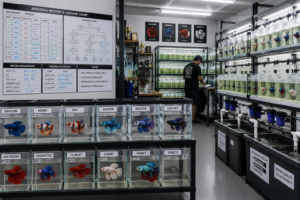
Smart buyers focus on specific quality markers that justify premium pricing and indicate long-term value. Knowing what to examine prevents overpaying for average fish marketed as premium specimens.
Essential Quality Checkpoints:
- Fin symmetry – Both sides should match perfectly in shape and size.
- Color intensity – Vibrant, consistent coloration without fading or blotches.
- Body proportion – Proper head-to-body ratio and overall balance.
- Activity level – Alert, responsive behavior indicates good health.
- Breeding documentation – Verify parentage claims and health records.
- Age appropriateness – Confirm the fish is at the stated developmental stage.
Red Flags to Avoid:
- Torn or damaged fins (unless specifically disclosed).
- Lethargy or unusual swimming patterns.
- Faded colors or stress stripes.
- Missing documentation for claimed pedigree.
- Unusually low prices for claimed rare varieties.
- Sellers unwilling to provide health history.
Decision Logic: Pay premium prices only when multiple quality factors align – rare genetics, perfect form plus documented health history. Single exceptional traits rarely justify extreme pricing when betta fish sell in competitive markets.
FAQ
Why do some betta fish cost $200 when pet stores sell them for $10?
Premium bettas have rare genetics, perfect fin formation, documented bloodlines, and breeding potential that justifies higher prices to serious collectors and breeders.
What’s the most expensive betta fish variety?
Show-quality halfmoon plakats from champion Thai bloodlines can sell for $300-1000, especially those with rare color combinations and competition potential.
Do expensive bettas live longer than cheap ones?
Not necessarily. Lifespan depends more on care quality than purchase price, though premium fish often come with better health documentation and genetic screening.
Can I breed expensive bettas to make money?
Successful betta breeding requires significant expertise, equipment investment, and market knowledge. Most hobbyists don’t profit from breeding without years of experience.
How can I tell if a high-priced betta is actually worth the cost?
Verify breeding documentation, examine fin symmetry and color quality, check seller reputation, and compare prices across multiple sources before purchasing.
What time of year offers the best prices on premium bettas?
Late fall and winter typically offer better deals as demand decreases, while spring and pre-competition periods see peak pricing.
Do imported bettas always cost more than domestic ones?
Not always, but Thai and Indonesian imports often carry premium prices due to established breeding programs and a reputation for quality genetics.
Should beginners buy expensive bettas?
New keepers should start with moderately priced fish ($15-40) to gain experience before investing in premium specimens requiring specialized care.
How do I verify a betta’s claimed pedigree?
Request breeding records, photos of parents, health certificates, and contact information for the original breeder to verify authenticity.
What makes a betta “show quality”?
Perfect fin symmetry, intense coloration, proper body proportions, documented genetics, and conformity to competition standards for their specific variety.
Can betta fish prices fluctuate like stocks?
Yes, prices vary based on availability, seasonal demand, trending varieties, and market conditions, though not as dramatically as financial markets.
Is it worth paying extra for health guarantees?
Health guarantees from reputable sellers provide valuable protection for expensive purchases and indicate confidence in their breeding practices.
Conclusion
The betta fish market spans from $5 pet store impulse buys to $500+ championship specimens, with pricing determined by genetics, rarity, breeding quality, and market timing. Color patterns like copper and marble, specialized fin types such as halfmoon and crown tail, and documented bloodlines from established breeders create the biggest price premiums.
Smart buyers should focus on verifiable quality markers – fin symmetry, color intensity, health documentation, and seller reputation – rather than paying for marketing claims alone. Whether purchasing a first betta or adding to a breeding program, understanding what drives value helps ensure money spent matches the fish received.
For those interested in premium bettas, start by researching reputable breeders, learning quality standards for specific varieties, and timing purchases during off-peak seasons for better deals. The investment in a quality betta fish can provide years of enjoyment and potential breeding opportunities for serious hobbyists.
