
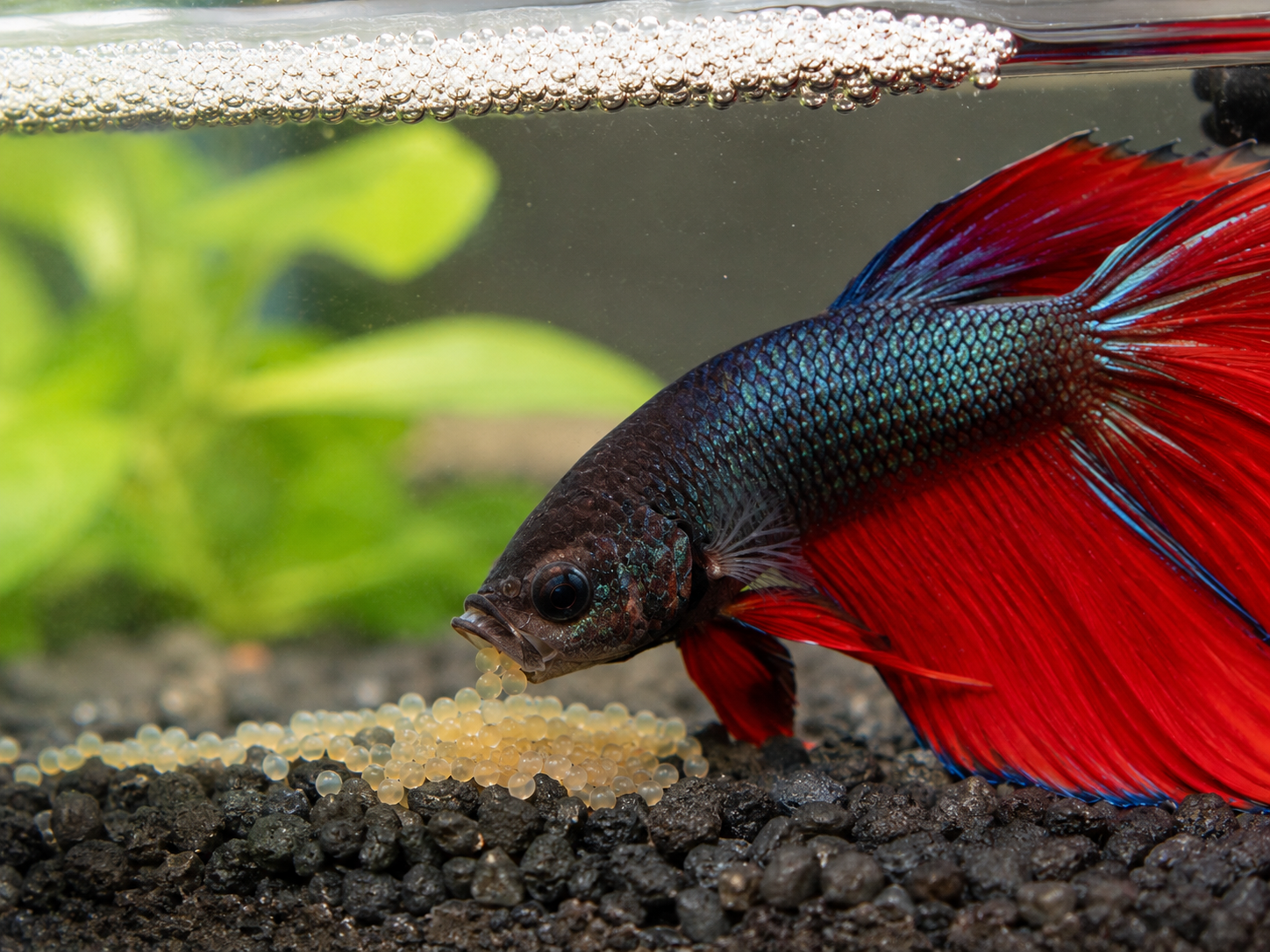
Watching a male Betta splendens build a bubble nest and wrap a female in a delicate embrace is a highlight for any fish keeper. However, the excitement often turns to confusion when the father begins consuming the very eggs he worked so hard to fertilize. This behavior, while frustrating, is actually quite common in the aquarium hobby.
The primary reason a male betta eats his eggs is usually related to stress, infertility of the eggs, or a lack of experience in first-time fathers. In the wild, this serves as a survival mechanism to reclaim energy from a “failed” clutch. If the male senses the eggs will not hatch or if he feels the environment is unsafe, he will eat them to prepare for a better spawning opportunity later.
To successfully raise a brood, you must identify the specific trigger causing this behavior. By adjusting the environment and improving conditioning, you can help your male betta transition from an egg-eater to a protective guardian.
The Most Common Reasons Male Bettas Eat Their Eggs
If you are wondering why the male betta is eating the eggs, the answer often lies in one of the following biological or environmental triggers. Understanding these factors is the first step toward preventing future losses.
1. Infertility and Non-Viable Eggs
Bettas have a keen instinct for detecting eggs that are not developing properly. If the eggs are not properly fertilized during the “wrap” or have a genetic defect, the male will often consume them. He does this to prevent fungus from growing on the dead eggs, which could spread and kill the healthy ones.
2. Extreme Environmental Stress
Bettas are sensitive to their surroundings during the breeding phase. High traffic in the room, bright lights, or sudden noises can make the male feel the nest is under threat. In his mind, eating the eggs is better than letting a predator find them.
3. Inexperience in Young Males
Breeding is a learned skill for many fish. A young male during his first or second spawn may not fully understand his role. He might accidentally eat the eggs while trying to move them back into the bubble nest or get confused by his hunger.
4. Poor Water Parameters
If the water temperature is too low or the $pH$ levels are fluctuating, the male may become lethargic or anxious. Proper water chemistry is vital for the survival of the eggs. If the male senses the water won’t support fry, he will terminate the clutch.
5. Nutritional Deficiencies
The process of tending to a bubble nest is exhausting. The male often stops eating for several days to guard the eggs. If he was not properly “conditioned” with high-protein foods before breeding, his hunger may eventually override his parental instincts.
How to Prevent Egg-Eating in Male Bettas?
Preventing this behavior requires a proactive approach before the breeding even begins. You cannot stop a male once he starts eating a current clutch, but you can ensure the next attempt is successful.
Condition the Father Properly
Before introducing the female, feed the male a diet rich in live or frozen foods. Bloodworms, brine shrimp, and daphnia are excellent choices. A well-fed male is much less likely to view his eggs as a snack.
Maintain a Strict Environment
Place the breeding tank in a quiet area with very little foot traffic. Cover the sides of the tank with dark paper or a towel to prevent the male from seeing shadows or movement. According to research on anabantoid behavior, stability is the biggest factor in successful nesting.
Monitor Water Temperature
Keep the water between 26°C and 28°C (80°F-82°F). Warmer water speeds up egg development, meaning the male has to guard them for a shorter period. This reduces the window of time when he might get stressed or hungry.
The Biological Purpose of Filial Cannibalism
In the scientific world, a parent eating its offspring is known as filial cannibalism. While it sounds harsh to humans, it is a calculated move for a fish.
In the wild, energy is hard to come by. If a male betta realizes that a particular spawn is small or weak, he chooses to “recycle” those nutrients. By eating the eggs, he gains the protein necessary to build a new nest and try again with a different female immediately.
This behavior ensures that only the strongest genetics move forward. It also protects the rest of the ecosystem from rotting organic matter. If a male betta eats his eggs, he is often following an ancient code of survival that has kept the species alive in the rice paddies of Southeast Asia for centuries.
Step-by-Step Guide to a Successful Betta Spawn
To minimize the risk that your male betta will eat the eggs, follow this structured routine.
- Preparation (Weeks 1-2): Feed both the male and female high-quality proteins 3 times a day.
- Introduction (Day 1): Place the female in a glass chimney or clear container inside the male’s tank so they can see each other without contact.
- The Nest (Day 2): Provide a “nesting site,” such as a floating Catappa leaf or a piece of Styrofoam.
- The Release (Day 3): Release the female only when the male has built a thick bubble nest and his aggression has turned into “dancing.”
- Post-Spawn (Immediate): Remove the female as soon as the mating is over. Her presence stresses the male and can trigger him to eat the eggs to “hide” them from her.
- The Guarding Phase: Do not perform water changes or turn on bright lights for the next 48 to 72 hours.
Identifying “Fake” Egg Eating
Sometimes, it looks like the male is eating the eggs, but he is actually being a good father. When an egg falls from the bubble nest, the male will quickly swim down, catch it in his mouth, and spit it back into the bubbles.
To the untrained eye, this looks like he is swallowing them. Before you panic, watch closely. If the male returns to the nest and “blows” into the bubbles, he is likely just repairing the nest or repositioning the eggs. Only worry if you see the nest thinning out and the male’s belly becoming noticeably rounder.
Role of the Female in Egg Cannibalism
While the focus is often on the father, the female can also be the culprit. If the female is not removed immediately after spawning, she may try to eat the eggs. This causes the male to become hyper-aggressive.
In the chaos of defending the nest, the male may accidentally eat some eggs, or he may become so stressed by the female’s presence that he gives up and eats the rest. Always have a net ready to move the female to a recovery tank the moment the “wrap” sessions conclude.
Water Quality and Its Impact on Parental Care
Poor water quality is a silent trigger for egg-eating. High ammonia or nitrite levels cause physical pain to the fish. A fish in pain will not focus on parenting.
- Ammonia: 0 ppm
- Nitrite: 0 ppm
- Nitrate: < 20 ppm
- TDS: Lower TDS (total dissolved solids) often mimics the rainy season, encouraging better breeding behavior.
Using Indian Almond Leaves (Catappa) is a secret weapon for many breeders. These leaves release tannins that have anti-fungal properties. This keeps the eggs healthy, which in turn reduces the male’s urge to cull “sick” eggs.
When to Intervene: Artificial Incubation
If you have a male who consistently eats his eggs despite perfect conditions, you may need to try artificial incubation. This involves removing the eggs from the nest and placing them in a shallow container with an air stone.
This is a difficult process and requires a very steady hand. You must use a pipette to move the eggs and add a drop of methylene blue to the water to prevent fungus. Most experts recommend fixing the male’s environment before resorting to this method.
Conclusion
The question of why male bettas eat the eggs rarely has a single answer. It is usually a combination of environmental factors and biological instincts. Breeding bettas is an art that requires observation and adjustments.
If your male fails his first few times, do not lose hope. Often, as the fish matures and becomes more comfortable in his tank, his protective instincts will overcome his confusion. Keep the water clean, the lights low, and the nutrition high.
By respecting the natural needs of the Betta splendens, you increase your chances of seeing those tiny eggs transform into a cloud of swimming fry. Stay patient and let nature take its course. For more information on fish health, check out resources like PetMD’s fish care guides.
