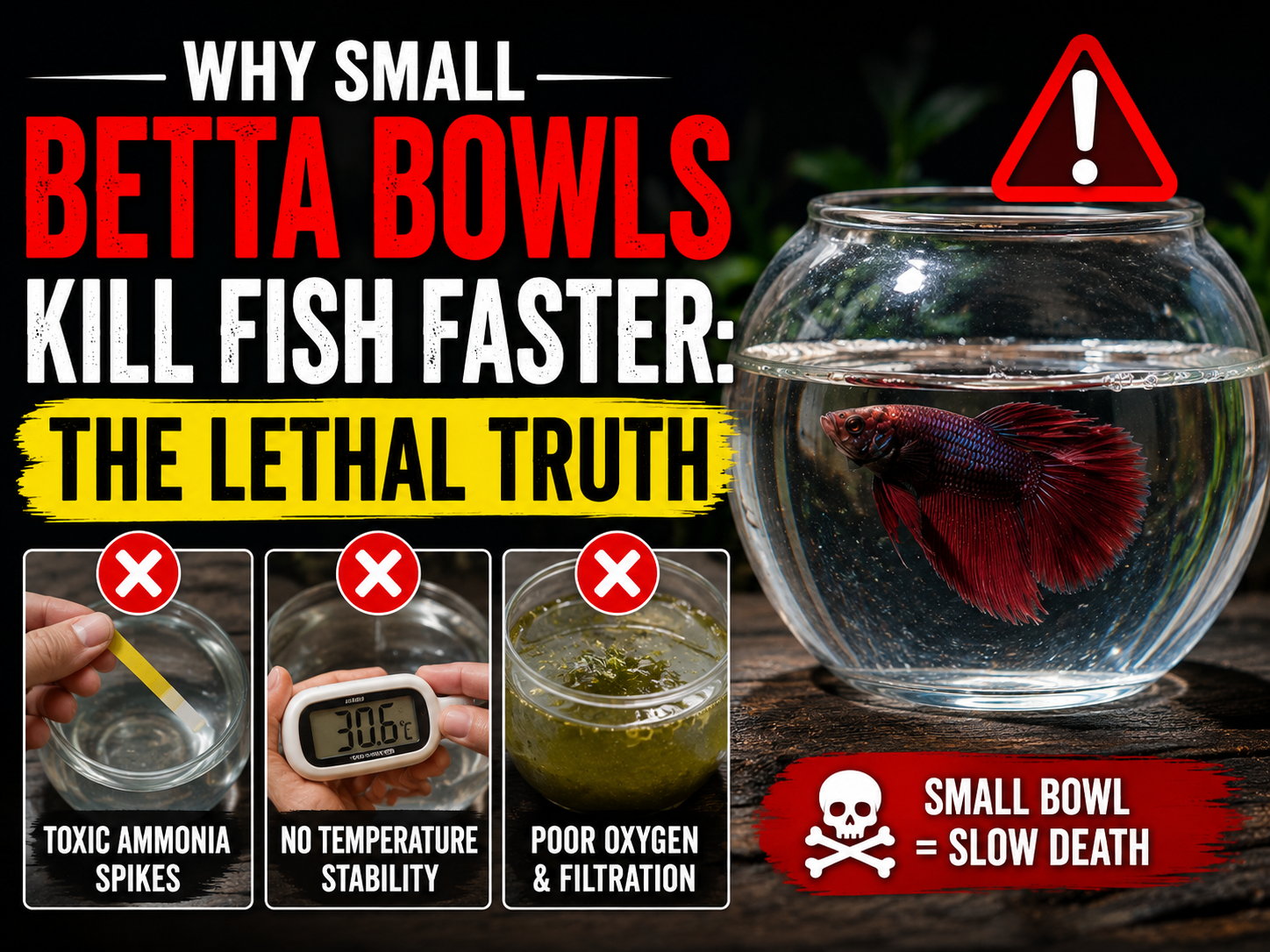
Many new pet owners believe that Siamese fighting fish are “low-maintenance” pets that thrive in tiny containers. This is a dangerous misconception. The reality is that keeping a fish in a small container often leads to a painful and premature death.
Why small betta bowls kill fish faster is a question rooted in biology and water chemistry. A tiny volume of water cannot support a stable environment. This leads to rapid toxic buildup and physical stress that the fish cannot survive for long.
If you want your pet to live its full lifespan of three to five years, you must understand the limitations of a bowl. Small spaces are not just cramped; they are biologically unstable. In this guide, we will break down the exact reasons why small environments are lethal and how to provide a proper home.
Why Do Small Betta Bowls Kill Fish Faster?
To understand the danger, we must look at how water quality affects fish health. In a small bowl, there is no room for error—small mistakes in feeding or cleaning become fatal very quickly.
Here are the primary reasons why small bowls lead to rapid fish death:
- Ammonia Spikes: Waste builds up instantly in low water volumes.
- Temperature Fluctuations: Small amounts of water lose or gain heat too fast.
- Lack of Filtration: Bowls rarely have filters, meaning toxins stay in the water.
- Oxygen Depletion: Limited surface area prevents proper gas exchange.
- Stress-Induced Illness: Constant environmental changes crush the fish’s immune system.
The Nitrogen Cycle Crisis in Tiny Spaces
Every aquarium relies on a biological process called the nitrogen cycle. Fish produce waste, which turns into toxic ammonia. In a large tank, “good” bacteria live in the filter and the gravel to break down ammonia.
Ammonia Poisoning: The Invisible Silent Killer
In a small bowl, there is not enough surface area for these beneficial bacteria to grow. Without a filter, ammonia levels rise to dangerous levels within hours. Ammonia burns the fish’s gills and skin. You might see your fish gasping at the surface or developing dark spots on its body.
Why Beneficial Bacteria Fail in Small Bowls
Beneficial bacteria need oxygenated, moving water to thrive. Most bowls are stagnant. Even if you add “bottled bacteria,” they will die without a proper filter medium to cling to. According to the RSPCA, stable water quality is the most important factor for fish health.
Temperature Instability and Immune System Collapse
Bettas are tropical fish. They originate from Southeast Asia and require consistent water temperatures between 78°F and 80°F.
Why You Can’t Heat a Small Bowl Safely
Most aquarium heaters are designed for tanks of 5 gallons or more. Putting a heater in a 1-gallon bowl is risky. It can easily malfunction and “cook” the fish because the water volume is too small to evenly distribute heat.
The Impact of “Cold Shock” on Metabolism
Without a heater, the bowl stays at room temperature. Room temperature is usually too cold for tropical fish. When a betta is too cold, its metabolism slows down.
This leads to:
- Lethargy: The fish stops moving and hides.
- Digestive Issues: Food rots in the stomach because it cannot be digested.
- Immune Failure: The fish can no longer fight off common parasites like Ich.
For more details on proper temperature requirements, check out the Veterinary Medicine guide on fish care.
Physical and Mental Stagnation
Fish are active creatures that need mental stimulation. A bowl offers no space for exploration or natural behaviors.
Muscle Atrophy in Small Enclosures
Imagine living your entire life in a small closet. Your muscles would eventually weaken. Bettas in bowls often lose the ability to swim strongly. They become “decorations” rather than pets, sitting at the bottom of the glass until they die.
Stress, Fin Rot, and Secondary Infections
Chronic stress is a major reason why small betta bowls kill fish faster. Stress releases cortisol, which weakens the immune system. This is why “bowl fish” frequently suffer from fin rot. Their fins literally melt away because their bodies are too stressed to maintain healthy tissue.
Debunking the “Puddle” Myth
You may have heard that bettas live in puddles in the wild. This is a common lie used to sell small plastic kits.
The Scale of Rice Paddies
In the wild, these fish live in rice paddies and marshes. While the water may be shallow, the surface area is massive. These ecosystems contain thousands of gallons of water. They are connected to larger bodies of water and have complex filtration through plants and soil.
Stagnant Water vs. Natural Ecosystems
A 1-gallon glass bowl is a closed loop. It has no plants to absorb nitrates and no flow to refresh oxygen. Comparing a glass jar to a tropical rice paddy is like comparing a bathtub to a lake. The University of Florida’s Tropical Aquaculture Laboratory emphasizes that water volume directly correlates to life expectancy in captive fish.
What is the Ideal Tank Size for a Betta?
If a bowl is a death trap, what does a healthy home look like? Most experts agree on a minimum standard for these fish to live a high-quality life.
| Feature | Small Bowl (Lethal) | 5-Gallon Tank (Healthy) |
|---|---|---|
| Water Stability | Very Low | High |
| Filtration | None | Low-flow Filter |
| Heating | Impossible/Dangerous | Easy to Regulate |
| Swimming Space | Minimal | Adequate |
| Lifespan | 6 months – 1 year | 3 – 5 years |
The 5-Gallon Minimum Rule
A 5-gallon tank is the “sweet spot” for beginners. It is large enough to stay chemically stable but small enough to fit on a desk. Larger volumes of water dilute waste. This gives you more time to react if something goes wrong.
Essential Equipment for a Healthy Betta
To avoid the pitfalls of a bowl, you need the right gear. Investing in these items will prevent your fish from dying prematurely.
- A Low-Flow Filter: Bettas have long fins and hate strong currents. Use a sponge filter to keep the water clean without blowing the fish around.
- An Adjustable Heater: Ensure it has a thermostat to keep the water at a steady 78°F.
- Live or Silk Plants: Plastic plants can tear delicate fins. Live plants help manage nitrogen levels.
- Water Conditioner: Never use tap water without removing chlorine. It will instantly burn the fish’s gills.
- Liquid Test Kit: You must be able to measure ammonia and nitrites. If you can’t see the toxins, you can’t fix them.
The Role of Surface Area and Oxygen
Bettas are “Labyrinth” fish. They have a special organ that allows them to breathe air from the surface. However, this does not mean they don’t need clean water.
Why Gas Exchange Matters
In a narrow-necked bowl, the surface area is very small. This limits how much oxygen can enter the water and how much CO2 can leave. Even if the fish can breathe air, the lack of oxygen in the water still harms its skin and overall health.
The Problem with Decorative Bowls
Many bowls are shaped for aesthetics, not fish health. Deep, narrow containers are the worst. A rectangular tank provides more horizontal swimming space, which is what these fish actually use.
How to Transition Your Betta to a Better Home?
If your fish is currently in a bowl, don’t panic. You can save it by moving it to a proper setup.
Step 1: Buy a Larger Tank
Get a 5-gallon or 10-gallon kit. These often come with a lid and light, which are necessary because bettas are excellent jumpers.
Step 2: Cycle the Tank
Ideally, you should run the new tank for a few weeks to build up “good” bacteria. If the fish is already sick in the bowl, an “uncycled” 5-gallon tank is still safer than a tiny bowl, provided you do frequent water changes.
Step 3: Acclimate the Fish
Don’t just drop the fish into the new tank. Float them in a bag for 20 minutes to match the temperature. Slowly add small amounts of the new tank water into the bag before releasing the fish.
Signs Your Fish is Suffering in a Bowl
If you notice these symptoms, your environment is likely the cause.
- Clamped Fins: The fish holds its fins close to its body instead of spreading them.
- Gilling: Rapid movement of the gill covers indicates a lack of oxygen or ammonia burns.
- Loss of Color: A healthy fish is vibrant. A stressed fish looks dull or grey.
- Hanging at the Surface: This is a sign that the water is toxic and the fish is desperate for air.
Common Mistakes That Kill Fish Faster
Even in a bowl, people make mistakes that accelerate death. Avoid these at all costs.
- Overfeeding: Extra food rots and creates ammonia instantly. One or two pellets are enough.
- Total Water Changes: Scrubbing everything clean kills any beneficial bacteria you might have.
- Using Soap: Never use soap on fish accessories. It is toxic and nearly impossible to rinse off completely.
- Direct Sunlight: This causes massive temperature spikes and algae blooms that choke the water.
Long-Term Benefits of a Proper Aquarium
When you move away from the bowl, you see the fish’s true personality. Bettas are known to be intelligent. They can recognize their owners and even learn simple tricks.
A healthy tank allows for:
- Natural Foraging: Watching your fish hunt for small organisms in the plants.
- Bubble Nesting: A sign of a healthy, mature male ready to breed.
- Vibrant Displays: Seeing the full spread of their fins in a wide space.
Final Thoughts on Why Small Betta Bowls Kill Fish Faster
The science is clear: small volumes of water cannot support a healthy tropical fish. The reason why small betta bowls kill fish faster is that they lack the biological stability needed for survival. Without filtration, heating, and adequate space, a fish is simply waiting for the water to become too toxic to breathe.
By choosing a 5-gallon tank or larger, you ensure that your pet lives a long, colorful life. Proper care is not difficult, but it does require moving past the myths of “bowl-dwelling” fish. Give your pet the space it deserves, and it will reward you with years of activity and beauty.
For further reading on fish biology and welfare standards, visit the American Veterinary Medical Association.