

To price betta fish for local buyers, research your local market rates ($3-$25 for common varieties, $30-$100+ for rare types), factor in your costs (food, housing, time), and set competitive prices based on fish quality, rarity, and local demand. Start with 20-30% above your total costs and adjust based on buyer response.
What Factors Determine Betta Fish Pricing?
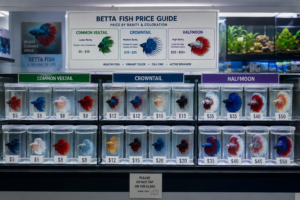
Several key elements influence how much local buyers will pay for betta fish. Fish quality, rarity, and local market conditions are the primary pricing drivers.
Quality indicators that justify higher prices:
- Vibrant, consistent coloration.
- Full, undamaged fins.
- Active, healthy behavior.
- Proper body proportions.
- Clear eyes and smooth scales.
Rarity and genetics affect value significantly:
- Common varieties (veiltail, crowntail): $5-$15.
- Popular types (halfmoon, plakat): $15-$25.
- Rare genetics (galaxy, koi, marble): $30-$50.
- Show-quality specimens: $50-$100+.
Local market factors to consider:
- Pet store prices in your area.
- Number of other local breeders.
- Aquarium club presence.
- Average income levels in your region.
How to Research Local Market Prices for Betta Fish
Start by surveying your immediate competition to establish realistic price ranges. Visit local pet stores, check online marketplaces, and connect with area fish clubs.
Physical location research:
- Visit 3-5 local pet stores and record their betta prices.
- Note the quality and varieties they stock.
- Ask about their most popular price points.
- Observe customer buying patterns during visits.
Online marketplace analysis:
- Check Facebook Marketplace, Craigslist, and OfferUp.
- Search within 25-50 miles of your location.
- Document prices for similar fish types and quality.
- Note how quickly listings sell or expire.
Community connections:
- Join local aquarium clubs and Facebook groups.
- Attend fish shows or swap meets in your area.
- Network with other breeders to understand pricing norms.
- Ask experienced hobbyists about fair market rates.
Price tracking over time:
- Monitor prices for 2-3 months before setting your own.
- Note seasonal fluctuations (holidays often see higher demand).
- Track which varieties sell fastest at different price points.
What Costs Should You Include When Pricing?
Calculate your total production costs before setting any prices to ensure profitability. Many new breeders underestimate the true cost of raising quality bettas.
Direct fish costs:
- Quality food: $2-4 per fish over 3-4 months.
- Housing (containers, dividers): $3-8 per fish.
- Water conditioner and treatments: $1-2 per fish.
- Breeding pair investment: $10-50+ per offspring.
Overhead expenses to factor:
- Electricity for heating and lighting: $5-15 monthly.
- Water costs and testing supplies: $2-5 monthly.
- Equipment maintenance and replacement.
- Time investment (feeding, cleaning, health monitoring).
Minimum pricing formula:
Total costs + 20-30% profit margin = Minimum selling price
Example calculation for a halfmoon betta:
- Food and supplies: $8.
- Housing and utilities: $5.
- Time investment: $7.
- Total cost: $20.
- Minimum price: $25-27.
Choose higher margins (40-50%) for rare varieties or exceptional quality fish that justify premium pricing.
How to Set Competitive Prices for Different Betta Types
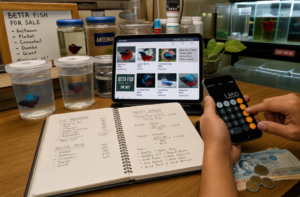
Match your pricing strategy to each fish category rather than using a one-size-fits-all approach. Different betta types have distinct market expectations and buyer demographics.
Entry-level pricing (veiltail, basic crowntail):
- Price 10-20% below pet store rates.
- Focus on health and value proposition.
- Target new hobbyists and casual buyers.
- Typical range: $5-12.
Mid-tier pricing (halfmoon, plakat, double tail):
- Match or slightly exceed pet store quality.
- Emphasize superior genetics and care.
- Appeal to serious hobbyists.
- Typical range: $15-30.
Premium pricing (rare colors, show quality):
- Price based on genetics and uniqueness.
- Target experienced breeders and collectors.
- Justify pricing with detailed lineage information.
- Typical range: $35-100+.
Pricing adjustment strategies:
- Start 10% higher than your target price.
- Offer bundle discounts for multiple fish purchases.
- Create “breeder grade” vs “pet grade” pricing tiers.
- Adjust prices monthly based on demand and inventory.
Where Should You Sell Bettas Locally?
Multiple sales channels maximize your reach and help establish fair market pricing through buyer feedback. Each platform attracts different customer types and price expectations.
Social media marketplaces:
- Facebook Marketplace: Largest local audience.
- Instagram: Great for showcasing fish beauty.
- Local aquarium Facebook groups: Targeted hobbyist audience.
- Nextdoor: Neighborhood-focused sales.
Traditional classified platforms:
- Craigslist: Wide reach, price-conscious buyers.
- OfferUp: Mobile-focused, quick transactions.
- Local newspaper classifieds: Older demographic.
Aquarium community sales:
- Local fish club auctions: Knowledgeable buyers, fair prices.
- Aquarium society meetings: Regular customer base.
- Fish shows and conventions: Premium pricing opportunities.
- Pet store partnerships: Consistent volume, lower margins.
Best practices for each channel:
- Use high-quality photos showing true colors.
- Include detailed descriptions of genetics and care.
- Respond promptly to inquiries.
- Offer health guarantees when possible.
- Build reputation through consistent quality.
Common Pricing Mistakes to Avoid
Overpricing kills sales momentum while underpricing devalues your breeding program. Most new sellers make predictable errors that hurt their success.
Pricing too high initially:
- Compared to rare show fish when selling pet-grade.
- Ignoring local market conditions.
- Overvaluing your time investment.
- Setting prices based on emotional attachment.
Undervaluing your fish:
- Pricing below production costs.
- Matching the lowest competitor regardless of quality.
- Failing to account for overhead expenses.
- Accepting lowball offers too quickly.
Inconsistent pricing strategies:
- Changing prices weekly based on single interactions.
- Pricing identical fish differently without reason.
- Failing to establish clear quality tiers.
- Not adjusting for seasonal demand patterns.
Communication mistakes:
- Hiding costs like shipping or containers.
- Overpromising fish characteristics.
- Not explaining the price differences between varieties.
- Failing to justify premium pricing with evidence.
Recovery strategies:
- If fish aren’t selling, reduce prices by 15-20% after 3-4 weeks.
- Bundle slow-moving fish with popular varieties.
- Reassess quality standards and adjust pricing tiers accordingly.
- Seek feedback from experienced local breeders.
Final Thoughts
Successfully pricing betta fish for local buyers requires balancing market research, cost analysis, and quality assessment. Start by thoroughly researching your local market through pet stores, online platforms, and aquarium communities to understand realistic price ranges.
Calculate all your costs, including food, housing, utilities, and time investment, then add a healthy profit margin of 25-50%, depending on fish quality and rarity.
Set competitive prices based on clear quality tiers – from pet-grade fish at $5-15 to show-quality specimens at $50-100+. Use multiple sales channels, including social media marketplaces, local classifieds, and aquarium clubs to reach different buyer types. Avoid common mistakes like overpricing initially or undervaluing your breeding efforts.
FAQ
What’s a fair profit margin for selling bettas locally?
Aim for a 25-40% profit margin above total costs for common varieties, and 50-75% for rare or high-quality fish. This covers your time investment and business sustainability.
Should I price male and female bettas differently?
Yes, males typically sell for 20-50% more than females due to their more vibrant colors and larger fins. Females appeal mainly to breeders and specific hobbyists’ needs.
How often should I adjust my betta prices?
Review prices monthly and adjust based on sales velocity. If fish sell within 1-2 weeks, consider raising prices. If they sit for over a month, they reduce by 15-20%.
What’s the best age to sell young bettas?
Sell bettas at 3-4 months old when colors and fins are well-developed but fish are still young enough to adapt to new homes easily. This age commands the best prices.
Should I offer payment plans for expensive bettas?
Avoid payment plans for local sales. They create complications and risk. Instead, offer bundle discounts or seasonal promotions to make premium fish more accessible.
How do I handle price negotiations with buyers?
Set your initial price 10-15% above your minimum acceptable price. Be willing to negotiate slightly, but don’t drop below your cost-plus-margin threshold.
What’s the difference between pet grade and show grade pricing?
Pet grade focuses on health and basic beauty ($5-25), while show grade emphasizes perfect form, rare genetics, and breeding potential ($30-100+). Clearly communicate these distinctions.
Should I match big box store prices?
Price slightly above chain stores but emphasizes superior quality, health guarantees, and personalized care advice. Your value proposition justifies a 10-20% premium.
