
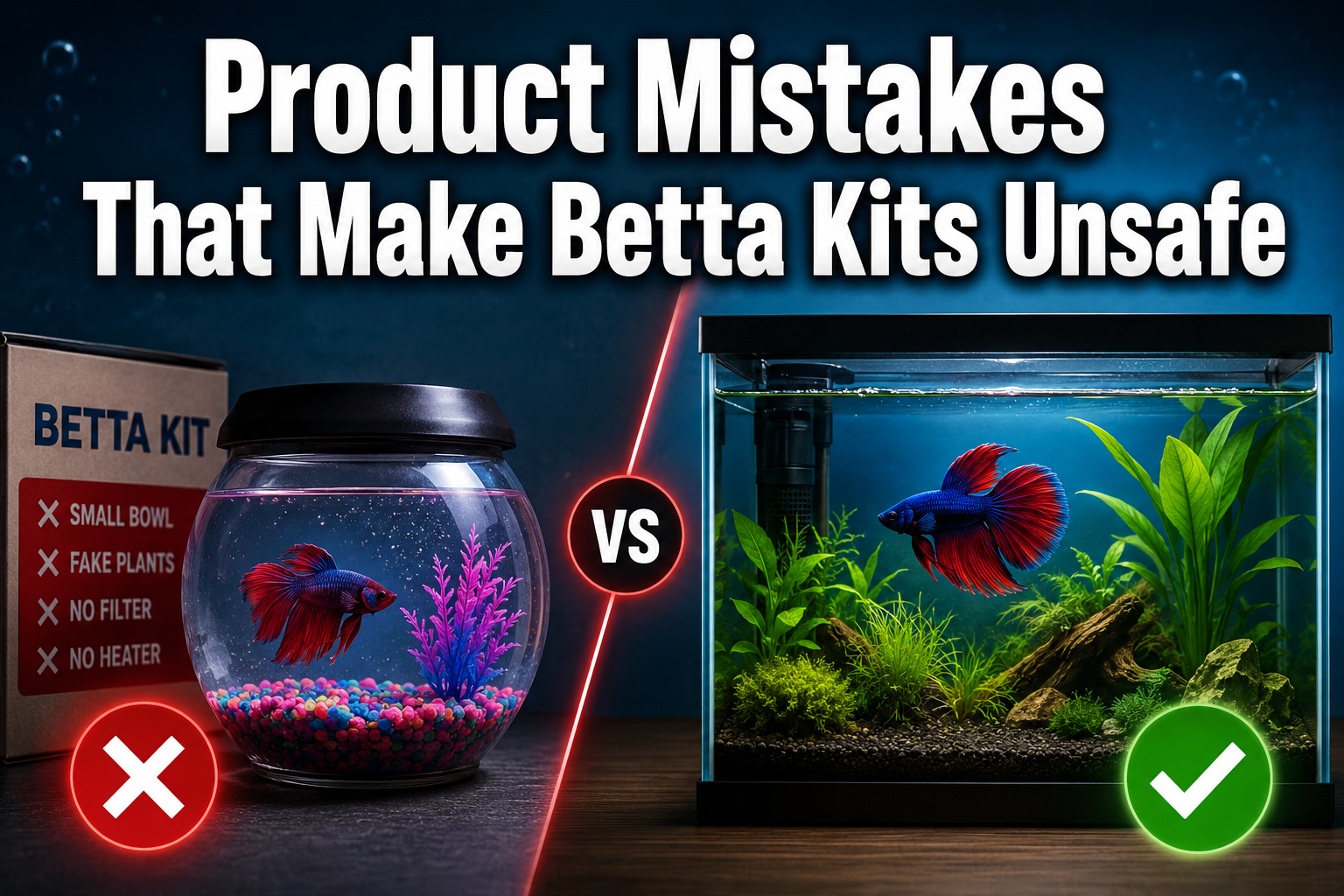
Most commercial betta kits contain dangerous product mistakes that can harm or kill betta fish, including undersized tanks (often 1-2 gallons instead of the required minimum 5 gallons), missing essential equipment like heaters and filters, and harmful decorations with sharp edges that damage delicate fins.
Key Takeaways
- Tank size errors: Most kits include 1-2 gallon containers when bettas need a minimum of 5 gallons.
- Missing heating systems: Bettas require consistent 76-82°F temperatures that kit heaters can’t maintain.
- Inadequate filtration: Cheap or missing filters fail to establish a proper nitrogen cycle.
- Dangerous decorations: Sharp plastic plants and rough ornaments tear betta fins.
- Poor food quality: Low-nutrition flakes cause malnutrition and digestive issues.
- Misleading marketing: “Easy care” claims ignore betta’s complex needs.
- Water treatment gaps: Kits often lack proper water conditioners and testing supplies.
- Lighting problems: Harsh LED lights stress bettas and promote algae growth.
What Makes Betta Kit Tank Sizes Dangerous?
The most critical product mistake in betta kits is undersized tanks that cause ammonia poisoning and stress-related death. Standard betta kits typically include 1-2 gallon bowls or tanks, but bettas require a minimum of 5 gallons to maintain stable water chemistry and adequate swimming space.
Small tanks create several life-threatening problems:
- Ammonia spikes: Waste builds up rapidly in small volumes, reaching toxic levels within hours.
- Temperature fluctuations: Small water volumes can’t maintain stable temperatures.
- Oxygen depletion: Limited surface area restricts gas exchange.
- Behavioral stress: Cramped conditions trigger aggression and depression.
Choose a 5+ gallon tank if you want a healthy betta. Larger volumes dilute waste products and provide stable water parameters that prevent common diseases like fin rot and ich.
Common Tank Size Marketing Tricks
Kit manufacturers use misleading terms to justify small tanks:
- “Betta bowls” (usually 0.5-1 gallon).
- “Desktop aquariums” (1-2 gallons).
- “Starter kits” (2-3 gallons).
These marketing terms ignore basic betta biology and water chemistry requirements.
Which Product Mistakes Create Equipment Failures?
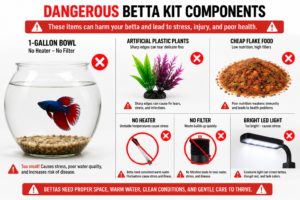
Betta kits consistently include inadequate or missing essential equipment that fails to maintain proper water conditions. The three most dangerous equipment mistakes are undersized heaters, weak filtration systems, and missing water testing supplies.
Heating System Problems
Most kit heaters are either missing entirely or too weak for proper temperature control:
- Preset heaters: Fixed at wrong temperatures (often 72-74°F instead of 78-80°F).
- Undersized wattage: 5-watt heaters can’t heat even small tanks effectively.
- No temperature monitoring: Kits rarely include thermometers for verification.
Install a 25-50 watt adjustable heater with a separate thermometer to maintain consistent temperatures between 76-82°F.
Filtration Failures
Kit filters often create more problems than they solve:
- Oversized flow rates: Strong currents stress bettas and damage their long fins.
- Missing biological media: Cheap filters lack space for beneficial bacteria growth.
- Poor mechanical filtration: Inadequate debris removal leads to water quality issues.
Look for gentle sponge filters or adjustable hang-on-back filters rated for your tank size.
How Do Decorative Product Mistakes Harm Bettas?
Sharp plastic plants and rough decorations in betta kits frequently tear delicate betta fins, leading to infections and permanent damage. These decoration mistakes are among the most preventable yet common causes of betta injury.
Dangerous Decoration Types
Avoid these common kit decorations:
- Hard plastic plants: Rigid edges slice through fin tissue.
- Rough ceramic ornaments: Abrasive surfaces scrape scales and fins.
- Sharp-edged rocks: Jagged surfaces cause cuts during normal swimming.
- Metal decorations: Can rust and release toxins into water.
Safe Decoration Alternatives
Use the “pantyhose test” to check decoration safety – if it snags pantyhose, it will damage betta fins:
- Live plants: Provide natural filtration and soft surfaces.
- Silk plants: Flexible fabric won’t tear fins.
- Smooth driftwood: Natural and betta-safe when properly prepared.
- Rounded river rocks: No sharp edges to cause injury.
What Food Product Mistakes Cause Malnutrition?
Low-quality flake foods included in betta kits lack proper protein content and contain harmful fillers that cause digestive problems and malnutrition. Bettas are carnivores requiring 40%+ protein, but kit foods often contain only 25-30% protein with grain fillers.
Kit Food Problems
Standard betta kit foods create these health issues:
- Insufficient protein: Causes muscle wasting and poor coloration.
- Grain fillers: Corn and wheat cause bloating and constipation.
- Poor digestibility: Low-quality ingredients pass through unprocessed.
- Oversized flakes: Large pieces can’t fit in betta mouths properly.
Feed high-quality pellets (3-4 pellets twice daily) instead of flakes to ensure proper nutrition and easy portion control.
Feeding Schedule Mistakes
Kit instructions often recommend dangerous feeding practices:
- Overfeeding (“as much as they can eat in 3 minutes”).
- Daily feeding without fasting days.
- Using flakes that expand in the stomach.
Which Water Treatment Product Mistakes Create Toxicity?
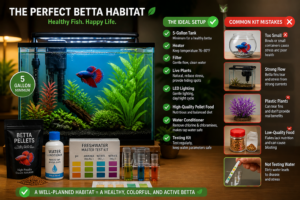
Missing or inadequate water conditioners in betta kits fail to neutralize chlorine and chloramines that burn betta gills and cause chemical poisoning. Many kits either include no water treatment or provide insufficient quantities for ongoing care.
Essential Water Treatment Components
Proper betta care requires these water treatment products (often missing from kits):
- Dechlorinator: Neutralizes tap water chlorine and chloramines.
- Beneficial bacteria: Establishes nitrogen cycle in new tanks.
- Water test strips: Monitor ammonia, nitrite, nitrate, and pH levels.
- pH buffer: Maintains stable water chemistry.
Test water parameters weekly using liquid test kits rather than relying on kit test strips, which are often inaccurate.
Cycling Mistakes in Kit Instructions
Most kit instructions ignore the nitrogen cycle entirely, leading to “new tank syndrome”:
- No mention of beneficial bacteria establishment.
- Immediate fish introduction without cycling.
- Missing ammonia and nitrite monitoring.
- No emergency water change protocols.
FAQ
Can I fix a dangerous betta kit by adding missing components?
Yes, but it’s often more expensive than buying proper equipment separately. Upgrade the tank to 5+ gallons, add an appropriate heater and filter, and replace plastic plants with silk or live alternatives.
How long do bettas live in typical kit conditions?
Bettas in proper kits with upgrades can live 3-5 years, while those in standard kit conditions often die within 6-12 months from stress and poor water quality.
Are expensive betta kits safer than cheap ones?
Not necessarily. Even premium kits often include undersized tanks and inappropriate equipment. Focus on individual component quality rather than kit price.
What’s the minimum safe tank size for a betta?
5 gallons is the absolute minimum for maintaining stable water chemistry. Larger tanks (10+ gallons) are easier to maintain and provide better betta health.
Do bettas really need heaters in warm climates?
Yes, bettas need consistent temperatures between 76-82°F. Room temperatures fluctuate too much, even in warm climates, causing stress and immune system problems.
Can I use kit decorations if I sand down sharp edges?
It’s possible but risky. Sanding may create rough surfaces or weaken plastic. Silk plants and smooth natural decorations are safer long-term options.
Conclusion
Product mistakes in commercial betta kits create dangerous conditions that harm fish through undersized tanks, inadequate equipment, and harmful decorations. The most critical errors include 1-2 gallon tanks that can’t maintain stable water chemistry, missing or undersized heaters that fail to provide proper temperatures, and sharp plastic plants that damage delicate fins.
Start with a 5+ gallon tank, adjustable heater, gentle filter, and silk plants instead of relying on pre-packaged kits. This approach costs slightly more upfront but prevents the health problems and replacement costs associated with kit failures.
Test water parameters weekly, feed high-quality pellets rather than flakes, and research proper betta care before purchase. Your betta will live longer and display better health, coloration, and behavior in a properly equipped environment that meets their biological needs.
